Outrage Erupts Over Police Brutality Against Maachhi Community in Sindh
Synopsis
Recent videos showing the Pakistani police's violent actions against the Maachhi community in Sindh have sparked widespread outrage. The shocking footage reveals the harsh treatment of vulnerable individuals during a police operation, raising questions about justice and equality.
Key Takeaways
Excessive police force used against vulnerable Maachhi community.
Operation conducted following a lower court's eviction order .
Concerns raised about justice and equality in law enforcement.
Possible legal recourse exists for the affected community.
The incident underscores systemic biases favoring the powerful.
Islamabad, March 31 (NationPress) Disturbing videos have emerged on social media, depicting Pakistani police employing excessive force against the Maachhi community, a traditional fishing group located in Sindh province. These clips have ignited serious concerns among the public.
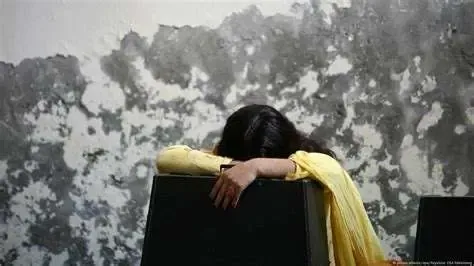
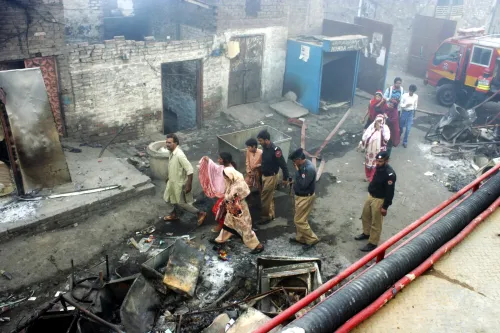
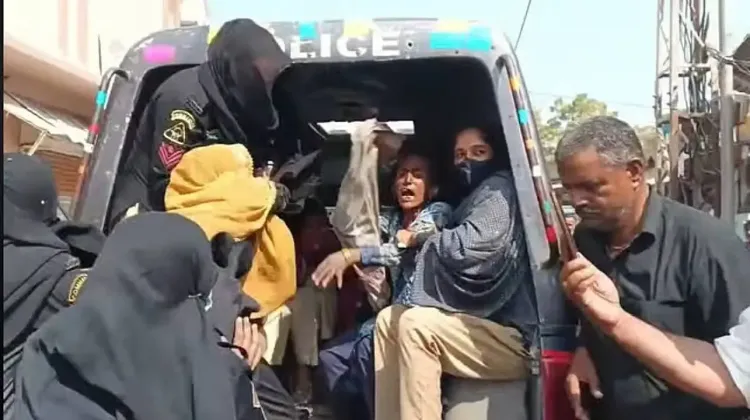
The footage reveals both male and female police officers invading the vulnerable shelters of the impoverished Maachhi community in the Umerkot area of Sindh. They are seen "dragging innocent, defenseless women and young girls, ripping their clothing, and forcing them into police vans," according to a report released on Tuesday.
“The scenes are chilling. One might initially think a significant operation was underway to apprehend hardened criminals involved in heinous acts. However, these were merely innocent women, young girls, and children. The male members of their families were either detained or out trying to earn a living,” elaborated a report in the Pakistani daily, Business Recorder.
According to reports, this police operation was executed following a lower court's directive to vacate a 10,000-square-foot land that the Maachhi community has long called home.
Yet, the report highlighted that the approach taken by law enforcement officials, who are meant to uphold life, dignity, and property, was profoundly troubling.
“Even if an eviction was necessary, was such brutal force warranted—especially during the holy month of Ramazan? Were attempts at peaceful negotiations and lawful restraint completely ignored before resorting to violence? The answer, painfully evident in the viral footage, seems to be no,” the report stated.
It was pointed out that the lower court's ruling was not final and could have been contested in the District and Sessions Court, subsequently in the High Court, and ultimately the Supreme Court. This legal process is widely recognized. Why, then, such unprecedented urgency and aggressive action when legal recourse was still available? Why was there such rapidity only when the residents were impoverished and vulnerable?
The report further criticized the Sindh police, stating they have developed a reputation for favoring elites and politically influential individuals, with the legal system often moving swiftly for those in power.
“For the less fortunate, justice is a slow crawl—frequently hindered by delays and bureaucratic obstacles. A poor villager attempting to file a report must revisit police stations time and again, testing his patience and dignity. Connections and money too often dictate access to justice,” it remarked.
In Umerkot, the report highlighted how the police misused their authority and overstepped boundaries, despite having options like dialogue available; yet “arrogance and unchecked power” prevailed.
Condemning the incident, the report emphasized, “This is not a trivial or avoidable occurrence. It is a collective disgrace. Poverty and vulnerability are not offenses. The law is meant to be equal and inviolable for all, without discrimination. Yet time and again, the powerless face repercussions while the powerful escape justice through influence and status.”
Point of View
It is crucial to highlight the systemic issues that allow such abuses of power to occur. The treatment of the Maachhi community by law enforcement not only raises ethical concerns but also emphasizes the need for accountability in a system that often favors the powerful over the vulnerable.
NationPress
10 Oct 2026
Frequently Asked Questions
What happened to the Maachhi community in Sindh?
The Maachhi community faced police brutality during an eviction operation in Sindh, with officers using excessive force against vulnerable women and children.
Why was the police operation conducted?
The operation was carried out following a lower court's order to vacate land occupied by the Maachhi community.
What are the concerns raised by this incident?
Concerns include the use of excessive force, the treatment of vulnerable populations, and the question of justice and equality under the law.
Is there a legal recourse for the Maachhi community?
Yes, the lower court's decision can be appealed in higher courts, but the urgency of the police action raises questions about the legal process.
What is the broader implication of this incident?
This incident highlights systemic issues in law enforcement that favor the powerful over marginalized communities, raising serious concerns about justice in Pakistan.