UNICEF praises India's girl education gains, says progress has global significance
Synopsis
UNICEF told a UN gathering that India's progress on girls' education — backed by 253 million adolescents — carries global weight. India's envoy went further, naming AI as the next male-dominated frontier and calling on member states to make it girl-friendly before the gender gap hardens into code.
Key Takeaways
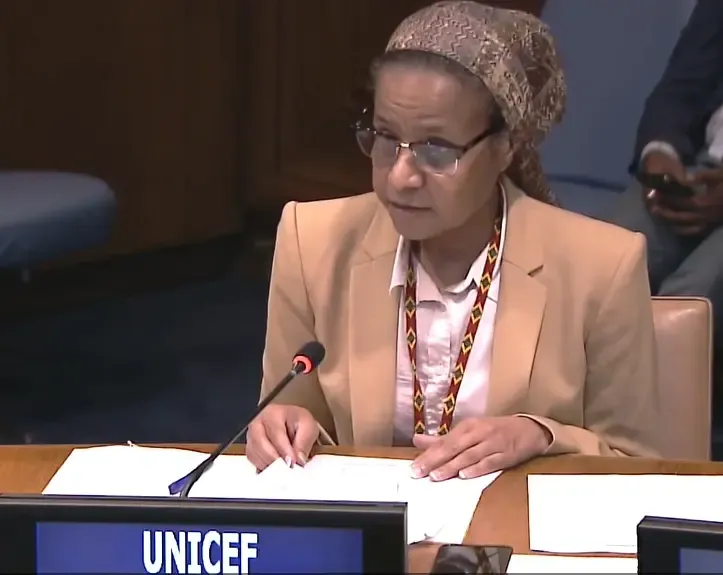
UNICEF Deputy Executive Director Hannan Suleman praised India's decade-long improvements in girls' education at a UN event on 13 October 2026 .
India is home to the world's largest adolescent population at 253 million , giving its progress outsized global significance, according to Suleman.
India's Permanent Representative P.
Harish noted that nearly 70 per cent of students at Osmania University College of Engineering in Hyderabad are now girls.
Harish called for global action to make artificial intelligence and digital public infrastructure girl-friendly and women-friendly.
Sierra Leone's Deputy Foreign Minister Jeneba Bangura and Algeria's Ambassador Amar Bendjama both emphasised girls' investment as a force multiplier for peace and prosperity.
Liberia's envoy Lewis Brown cited Women of Liberia Mass Action for Peace , which helped end the second civil war in 2003 , as proof of women's transformative power.
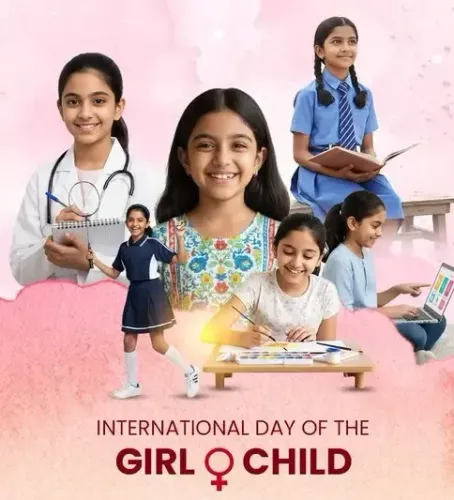
UNICEF Deputy Executive Director Hannan Suleman on 13 October 2026 lauded India's decade-long advances in girls' education and welfare, saying the country's progress carries consequences well beyond its own borders. The remarks came at a joint event organised by India and Sierra Leone at the United Nations to mark the International Day of the Girl Child.
UNICEF's Assessment of India's Progress
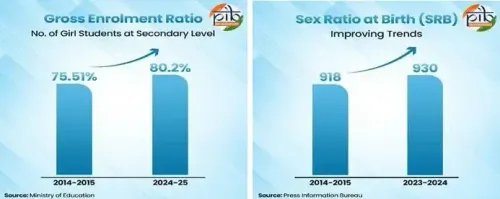
Over the past decade, girls' education has improved significantly, reflecting growing recognition of girls' value within families in India, Suleman said. She pointed to India's demographic weight as a key reason for the global stakes: India is home to the world's largest adolescent population, with 253 million adolescents, she noted, adding that progress for girls in India has significance far beyond its borders.
Suleman credited a combination of sustained financial commitment, large-scale community engagement, and policy action for driving what she called 'real, meaningful change' — a template she suggested other nations could study.
India's Envoy Cites Personal Experience
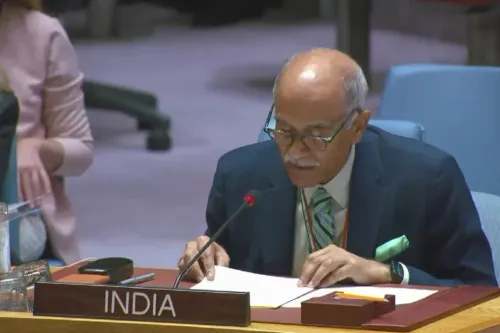
India's Permanent Representative P. Harish drew on his own academic background to illustrate how dramatically the landscape has shifted. Recalling his time as a mechanical engineering student at Osmania University College of Engineering in Hyderabad, he said there were no women in his class — a field then considered exclusively male.
'Today, almost 70 per cent of the class in my university are girls,' he said. 'So, it is making real progress in our own lifetimes.' Harish also flagged the remaining frontier: artificial intelligence. 'We only hear of tech bros. We don't hear of tech sisters,' he observed, calling on UN member states to ensure the emerging AI domain becomes 'girl-friendly and women-friendly.'
On the domestic front, Harish said India is deploying digital public infrastructure (DPI) as a force multiplier for girls' education, and that AI is increasingly being used to develop child-focused tutoring materials to improve educational outcomes.
Voices From Sierra Leone, Liberia and Algeria
Sierra Leone's Deputy Foreign Minister Jeneba Bangura argued that investing in girls is a force multiplier at every level of society. 'When we invest in a girl, we strengthen families, communities, nations, and build a more peaceful, fair, and prosperous world,' she said. Bangura declared that Sierra Leone is proud to join India and other partners in seeking a world where a girl's birthplace does not determine her future.
Liberia's Permanent Representative Lewis Brown offered a powerful historical example, recalling how Liberian women mobilised communities during the country's civil wars between 1989 and 2003. The organisation Women of Liberia Mass Action for Peace is credited with compelling leaders to hold peace talks that ended the second civil war in 2003. 'For Liberia, the truth simply is, women help secure our peace,' Brown said.
Algeria's Permanent Ambassador Amar Bendjama framed girls' rights as a collective investment: 'Investing in girls' rights, in their well-being, in their opportunities, is therefore an investment in our shared future.' He too underscored the importance of digital education for girls.
What This Signals for the Global Girls' Agenda
The event reflected a growing international consensus that national progress on girls' education — particularly in high-population countries such as India — has outsized global consequences. This comes amid renewed multilateral attention to gender equity in the digital age, with AI governance and digital literacy emerging as the next battleground for gender inclusion. Whether India's DPI-driven model can be adapted by lower-income countries with weaker digital infrastructure remains an open question that multilateral agencies are expected to address in the months ahead.
Point of View
But the more substantive moment was India's own envoy naming AI as the next gender fault-line — a rare instance of a diplomacy event getting ahead of the policy curve. The 70 per cent female enrolment figure at Osmania Engineering is striking, but a single university anecdote should not substitute for national STEM data, which remains uneven. The deeper challenge is that India's DPI-for-girls narrative is largely urban and connectivity-dependent; whether it reaches the adolescent girls in rural and semi-urban India is the question the multilateral applause tends to gloss over.
NationPress
13 Oct 2026
Frequently Asked Questions
What did UNICEF say about India's progress on girls' education?
UNICEF Deputy Executive Director Hannan Suleman said India's girls' education has improved significantly over the past decade, driven by investment, community engagement, and policy action. She highlighted that India's 253 million adolescents make its progress globally significant.
Why does India's progress for girls matter globally?
India is home to the world's largest adolescent population — 253 million — meaning shifts in girls' outcomes there ripple across global development indicators. UNICEF's Suleman noted that India has demonstrated that sustained, large-scale policy action can drive meaningful change that other nations can learn from.
What did India's UN envoy say about artificial intelligence and girls?
India's Permanent Representative P. Harish said AI remains male-dominated, noting 'we only hear of tech bros, we don't hear of tech sisters.' He called on UN member states to ensure the emerging AI domain becomes girl-friendly, and said India is using digital public infrastructure and AI-powered tutoring tools to boost girls' educational outcomes.
What role did the Women of Liberia Mass Action for Peace play?
The organisation mobilised Liberian women during the country's civil wars and is credited with forcing leaders to hold peace talks that ended the second civil war in 2003. Liberia's Permanent Representative Lewis Brown cited the group as evidence that women are essential to securing peace.
Which countries co-organised the International Day of the Girl Child event at the UN?
India and Sierra Leone jointly organised the UN event on 13 October 2026 to commemorate the International Day of the Girl Child. Representatives from Liberia and Algeria also participated.