PTI Denounces Court's 10-Year Sentences for Leaders in Absentia
Synopsis
In a strong response, the Pakistan Tehreek-e-Insaf condemns the 10-year prison sentences handed to 47 of its leaders and supporters, labeling the prosecution as political retribution. The ruling comes in the wake of significant unrest following Imran Khan's arrest, raising questions about justice and fairness.
Key Takeaways
PTI condemns 10-year sentences for its leaders.
Legal actions interpreted as political vendetta.
Charges stem from May 9 riots following Imran Khan's arrest.
Over 4,000 arrests made during protests.
Potential for retrial if absconders surrender within two months.
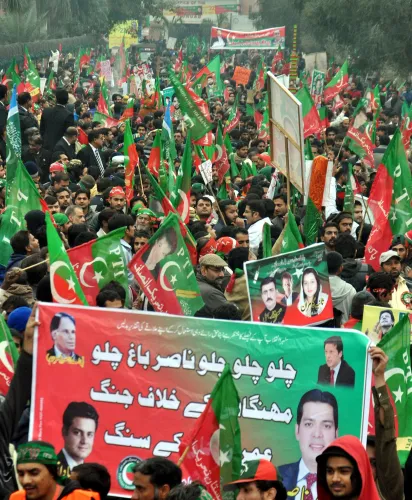
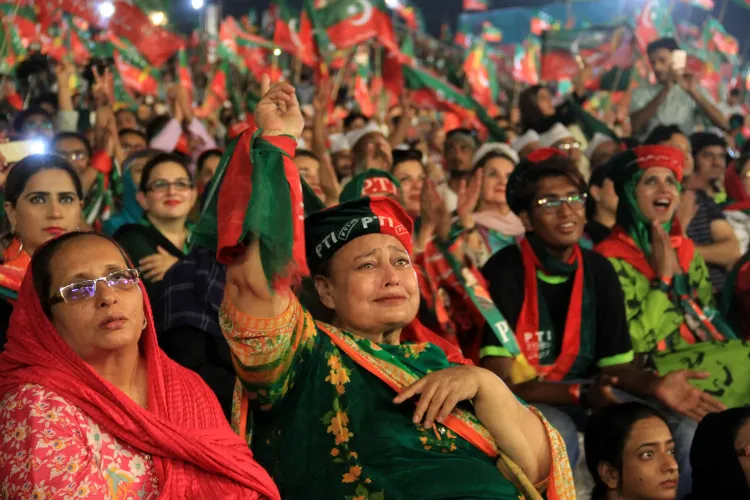
Islamabad, March 10 (NationPress) The Pakistan Tehreek-e-Insaf (PTI) has strongly criticized the sentencing of 47 of its leaders and supporters, who have been handed a 10-year prison term on terrorism allegations in absentia. The party has labeled the legal actions as part of a "political vendetta," as reported.
This statement from PTI followed the ruling by Judge Amjad Ali Shah of the Anti-Terrorism Court-1 in Rawalpindi, who convicted these individuals under section 21-L of the Anti-Terrorism Act (ATA) of 1997. This section prohibits those accused of offenses under the ATA from obstructing justice by evading arrest or avoiding participation in investigations. Violators may face sentences ranging from five to ten years, and the court has mandated a fine of 500,000 Pakistani Rupees (PKR) for each of the 47 individuals, as reported by Jurist News.
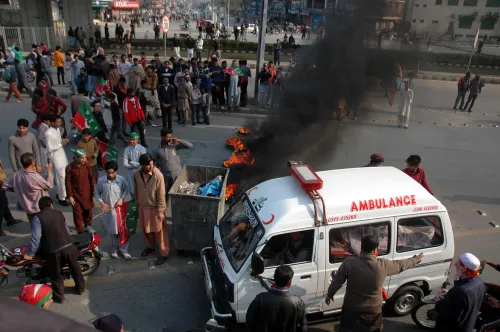
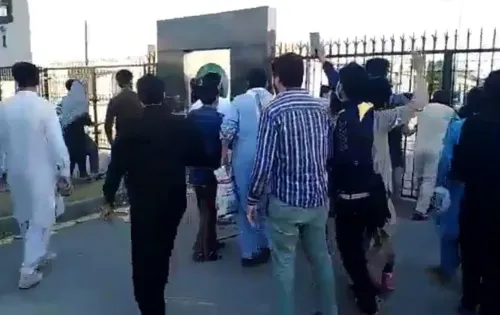
The charges stem from the riots on May 9, 2023, when thousands of demonstrators, incited by the arrest of PTI founder Imran Khan, assaulted military installations, including the General Headquarters (GHQ), resulting in property damage and the deaths of at least eight individuals. Subsequently, over 4,000 people, including numerous PTI members, were detained during the protests.
The 47 PTI leaders and supporters are accused of terrorism linked to the riots, with the court asserting that they led a mob of around 300 individuals to attack the GHQ's gate number 1 and engage military personnel with sticks and petrol bombs.
A total of 118 individuals were implicated in the original case, which includes former Prime Minister Imran Khan. Of these, 29 failed to appear in court, and 18 were absent during the trial. The court has ordered the trial for the 47 individuals classified as absconders, according to Jurist News. Should these accused surrender or be apprehended within two months, they will be eligible for a retrial.
In December 2024, a military court in Pakistan sentenced 25 civilians for their roles in the May 9 riots, despite leading human rights organizations claiming that the conviction of civilians violates international law.
Point of View
It’s crucial to approach this situation with a balanced perspective. The PTI's condemnation of the sentences highlights ongoing tensions within Pakistani politics. The legal proceedings raise important questions about due process and the implications of political motivations in judicial decisions. The incident reflects broader issues of governance and public dissent in the nation.
NationPress
17 Sept 2026
Frequently Asked Questions
What charges were the PTI leaders sentenced for?
The PTI leaders were sentenced on terrorism charges related to their involvement in the riots following Imran Khan's arrest.
What is the significance of the sentencing?
The sentencing is viewed by PTI as a politically motivated action, raising concerns about judicial independence and fairness.
What can the absconders do now?
The absconders can surrender or be arrested within two months to qualify for a retrial.
How many people were detained during the protests?
Over 4,000 individuals were arrested during the protests that ensued after the arrest of Imran Khan.
What were the outcomes of the riots on May 9, 2023?
The riots led to significant property damage and resulted in at least eight fatalities.