Putin Advocates for Peace in Middle East During Call with Iranian President Pezeshkian
Synopsis
In a significant conversation, Russian President Vladimir Putin and Iranian President Masoud Pezeshkian discussed the urgent need for diplomatic solutions to the escalating conflict in the Middle East, emphasizing political stability and humanitarian support.
Key Takeaways
Putin stresses the need for immediate de-escalation in the Middle East.
The conversation addresses Israeli-US aggression against Iran.
Russia advocates for political solutions as the path to stability.
Pezeshkian appreciates Russia's humanitarian support amidst the crisis.
The ongoing conflict raises fears of broader geopolitical consequences.
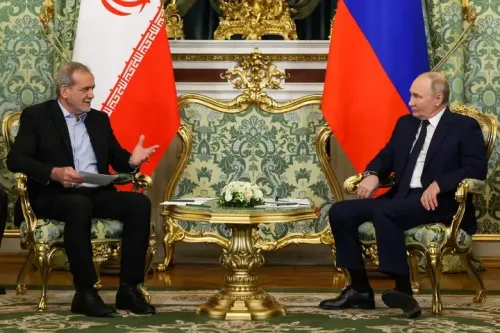
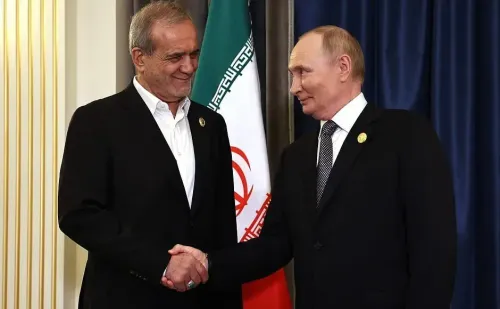
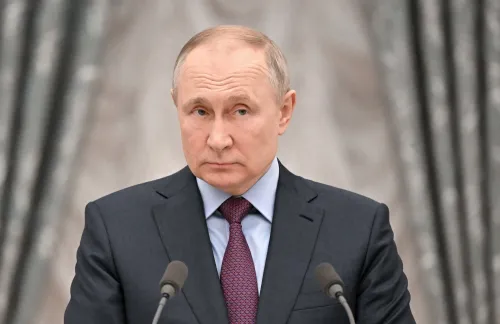
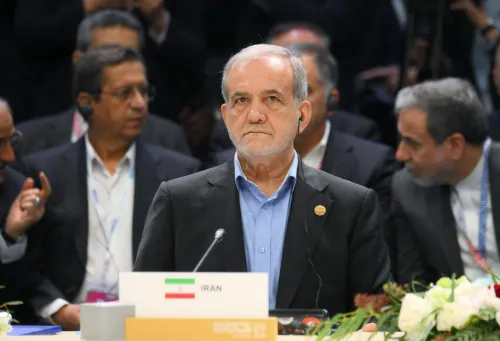
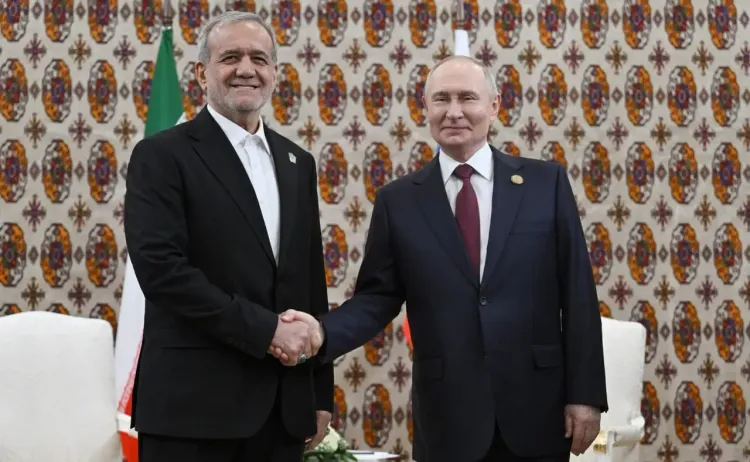
Moscow/Tehran, March 10 (NationPress) In a phone call on Tuesday, Russian President Vladimir Putin reiterated his nation's steadfast commitment to achieving immediate de-escalation of the conflict in the Middle East, advocating for a resolution through diplomatic channels during discussions with Iranian President Masoud Pezeshkian.
The leaders addressed the regional situation, which Iran has characterized as an instance of Israeli-US aggression against their nation.
Putin highlighted that Russia remains a proponent of dialogue and believes that political solutions are essential for stability.
He also reaffirmed Moscow's stance against further escalation and underlined the necessity of containing the crisis to prevent it from spreading throughout the broader Middle East.
In response, President Pezeshkian expressed his appreciation for Russia's support, particularly in terms of humanitarian aid provided to Iran during the ongoing turmoil.
The Iranian leader emphasized the significance of global unity in the face of external pressures and welcomed Russia's diplomatic and material support for Iran.
The Kremlin confirmed that both leaders agreed on the importance of maintaining close coordination regarding regional developments, with Moscow aiming to act as a mediator to alleviate tensions.
This conversation occurs amid rising instability, with concerns that the conflict could disrupt energy supplies and have significant geopolitical ramifications.
Historically, Russia and Iran have fostered strong ties, especially in the realms of energy collaboration and regional security.
Furthermore, this phone call highlights the increasing alignment between Moscow and Tehran as both nations encounter Western sanctions and seek to bolster their strategic associations.
The ongoing crisis in Iran intensified following the assassination of Supreme Leader Ayatollah Ali Khamenei, an event that has plunged the country into political chaos and escalated regional instability.
The attack, which Tehran widely condemns as foreign-backed aggression, has ignited protests and heightened tensions with Israel and the United States.
This precarious situation has raised alarms about a potential broader conflict, with neighboring nations and global powers vigilantly observing the developments.
Point of View
It's clear that the ongoing dialogue between Russia and Iran is crucial amid rising tensions in the Middle East. Both nations are facing significant challenges from Western sanctions, making their cooperation vital for regional stability and security. This conversation may pave the way for diplomatic solutions that could benefit not only the involved parties but also the broader international community.
NationPress
15 Oct 2026
Frequently Asked Questions
What was discussed during the call between Putin and Pezeshkian?
The call focused on the need for de-escalation of the Middle East conflict and emphasized the importance of political solutions and humanitarian support.
Why is the situation in the Middle East concerning?
There are fears that escalated conflict could disrupt energy supplies and lead to broader geopolitical consequences.
How have Russia and Iran historically cooperated?
Russia and Iran have maintained strong ties particularly in energy cooperation and regional security.
What recent events have heightened tensions in Iran?
The assassination of Supreme Leader Ayatollah Ali Khamenei has plunged the country into political turmoil and escalated regional instability.
What role is Russia playing in the Middle East conflict?
Russia is positioning itself as a mediator seeking to reduce tensions and promote dialogue among conflicting parties.