Putin, Pezeshkian vow to deepen Iran-Russia strategic cooperation amid West Asia tensions
Synopsis
With Iran-US talks stalled past their August deadline and the West Asia ceasefire under strain, Tehran and Moscow are doubling down on their strategic partnership. Putin's signal that Russia stands ready to play a mediating role adds a new diplomatic dimension — and raises questions about whose interests any Russian mediation would truly serve.
Key Takeaways
Iranian President Masoud Pezeshkian and Russian President Vladimir Putin spoke by phone on 8 October , reaffirming their strategic bilateral cooperation .
Putin stated that Russia-Iran collaboration under their comprehensive strategic cooperation treaty is continuing despite regional turbulence.
Putin expressed support for third-party mediation efforts between Iran and the United States and said Russia is ready to play a role.
Israel and the US reportedly launched joint attacks on Iranian cities on 28 February ; a ceasefire was reached on 8 April .
An Iran-US MoU signed on 18 June set a 60-day negotiation window ending 17 August , but the two sides reportedly failed to reach a final agreement.
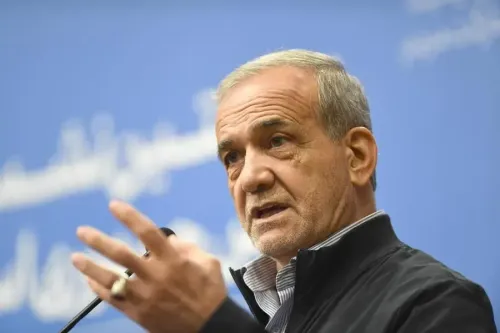
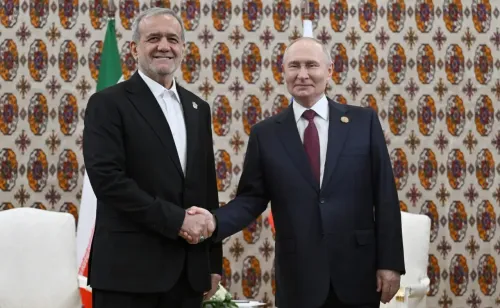
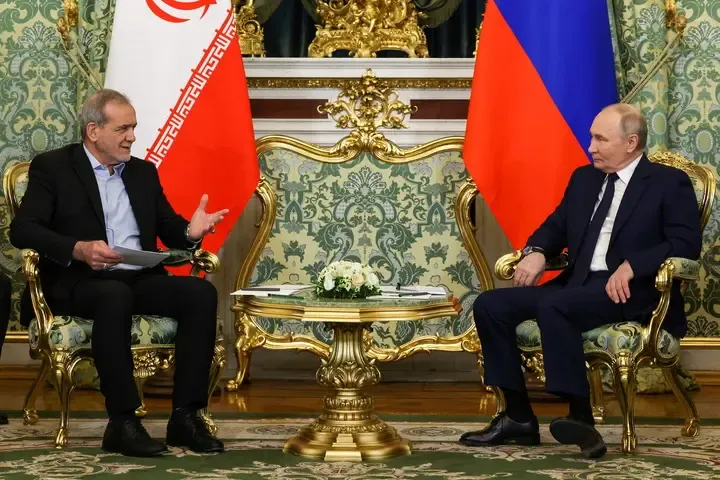
Iranian President Masoud Pezeshkian and Russian President Vladimir Putin have reaffirmed their commitment to strengthening the strategic bilateral partnership between Tehran and Moscow, according to a statement published on 8 October by the Iranian president's office. The two leaders spoke by phone on Wednesday, with both sides emphasising that deepening ties serves their common interests amid an increasingly volatile regional landscape.
Key Developments from the Phone Call
During the call, President Pezeshkian stressed the need to continue and enhance bilateral cooperation across multiple sectors, stating that such collaboration aligns with both nations' shared strategic objectives. President Putin, for his part, noted that joint activities under the framework of their comprehensive strategic cooperation treaty are continuing despite ongoing developments across the West Asia region. Putin underlined the importance of maintaining close ties between Moscow and Tehran at this critical juncture.
Russia's Position on Iran-US Mediation Efforts
Notably, Putin acknowledged the role of third-party mediators working to de-escalate tensions between Iran and the United States, expressing Russia's support for such diplomatic efforts and its readiness to contribute to that process. The remarks signal Moscow's intent to position itself as a relevant actor in any eventual Iran-US settlement, even as the broader conflict resolution process remains stalled.
The Conflict That Reshaped the Region
The backdrop to this call is a significant military confrontation that began on 28 February, when Israel and the United States reportedly launched joint attacks on Tehran and other Iranian cities. Iran responded with waves of missile and drone strikes targeting Israeli and US assets across the region, and tightened its control over the strategically vital Strait of Hormuz. A ceasefire was reached on 8 April, followed by a memorandum of understanding (MoU) signed by Iran and the United States on 18 June, aimed at ending hostilities on all fronts.
Stalled Negotiations and Ongoing Uncertainty
Under the terms of the MoU, both sides were required to hold negotiations within 60 days — a window that closed on 17 August — to reach a final agreement. However, according to reports, the two sides failed to make sufficient progress, with tensions continuing to escalate beyond the deadline. The failure to conclude a deal has renewed concerns about the durability of the ceasefire and the broader trajectory of West Asian geopolitics. The Putin-Pezeshkian call is being closely watched as an indicator of how the Russia-Iran axis intends to navigate an increasingly uncertain diplomatic environment.
Point of View
Moscow is quietly positioning itself as an indispensable broker — a role that conveniently deepens Russian strategic leverage over both Tehran and any eventual settlement architecture. Putin's endorsement of third-party mediation while simultaneously strengthening ties with Iran is not a contradiction; it is a calculated hedge. The Russia-Iran axis has been stress-tested by the regional conflict and appears to be holding, which complicates Washington's calculus on any future negotiations. What mainstream coverage underplays is that Moscow's 'readiness to mediate' is also a veto threat — a signal that any Iran deal forged without Russian involvement may face quiet sabotage.
NationPress
8 Oct 2026
Frequently Asked Questions
What did Putin and Pezeshkian discuss in their October 8 phone call?
The two presidents reaffirmed their commitment to deepening strategic bilateral cooperation across multiple areas, in line with their comprehensive strategic cooperation treaty. Putin also expressed Russia's support for mediation efforts between Iran and the United States and said Moscow is prepared to play a role in de-escalating West Asian tensions.
What is the Iran-Russia comprehensive strategic cooperation treaty?
It is a bilateral framework under which Russia and Iran coordinate on defence, economic, and diplomatic matters. Putin confirmed in the call that collaborations under this treaty are continuing despite ongoing regional developments and conflict fallout.
Why did the Iran-US negotiations fail to produce a deal?
Under an MoU signed on 18 June, Iran and the US were required to conclude negotiations within 60 days — a deadline that lapsed on 17 August. According to reports, the two sides failed to make sufficient progress toward a final agreement, with tensions continuing to escalate beyond the deadline.
What happened between Iran, Israel, and the US earlier in 2026?
On 28 February, Israel and the United States reportedly launched joint attacks on Tehran and other Iranian cities. Iran retaliated with missile and drone strikes on Israeli and US assets and tightened its hold on the Strait of Hormuz. A ceasefire was reached on 8 April, followed by an MoU on 18 June aimed at ending hostilities on all fronts.
What is Russia's role in the West Asia conflict?
Russia has positioned itself as a supporter of diplomatic mediation between Iran and the US. Putin, in the 8 October call, underlined Moscow's readiness to contribute to de-escalation efforts, signalling that Russia intends to remain a key player in shaping any eventual regional settlement.