Quad nations advance Indo-Pacific disaster logistics network at Tokyo exercise

Synopsis
The Quad's Indo-Pacific Logistics Network moved from concept toward reality after a two-day Tokyo tabletop drill — but with no timeline for completion and no disclosed resource commitments, the gap between political intent and operational capability remains the story to watch.
Key Takeaways
India , the US , Japan , and Australia held a two-day Quad tabletop exercise in Tokyo on 3–4 September 2026 .
A joint statement on 14 September reported 'significant progress' toward standard operating procedures for the Quad Indo-Pacific Logistics Network (IPLN) .
The network is designed to pool logistics capabilities for faster civilian disaster relief across the Indo-Pacific .
No timeline was given for completing the procedures or making the network operational.
Further development will proceed through additional tabletop and field training exercises , confidence-building measures, and expert exchanges.
The four governments expressed condolences to communities hit by recent floods and reaffirmed commitment to supporting regional partners.
India, the United States, Japan, and Australia have moved significantly closer to establishing common operating procedures for the Quad Indo-Pacific Logistics Network (IPLN), the four governments announced on 14 September 2026. The initiative is designed to accelerate coordinated disaster relief across the Indo-Pacific region, enabling the Quad partners to pool logistics capabilities and respond more swiftly to major natural disasters.
Tokyo Tabletop Exercise: What Happened
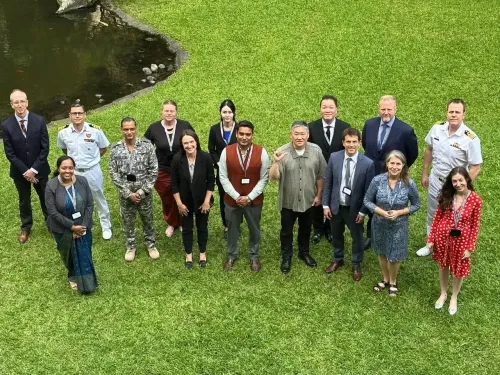
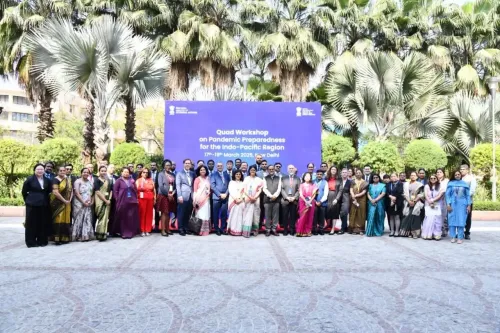
The four Quad nations held a two-day tabletop exercise (TTX) in Tokyo on 3 and 4 September, stress-testing how their combined logistics capabilities could support civilian disaster-response operations across the region. The exercise used natural disaster scenarios to examine real-time coordination between the four militaries and civil agencies, with a deliberate focus on civilian recovery efforts rather than military operations.
A joint statement issued on 14 September reported 'significant progress' towards developing standard operating procedures for the IPLN — the framework that would govern how the network is activated and run. Notably, the statement did not specify a timeline for completing those procedures or a target date for the network to become fully operational.
What the IPLN Aims to Achieve
The Indo-Pacific Logistics Network is intended to let the four Quad countries draw on shared assets — transport, medical, supply-chain — to save lives, support recovery operations, and assist regional partners more quickly and efficiently after large-scale natural disasters. For India, the network provides a structured mechanism for disaster cooperation with its three Quad partners, complementing its existing bilateral humanitarian frameworks in the region.
This comes amid heightened awareness of the Indo-Pacific's vulnerability to catastrophic weather events. In their joint statement, the four governments also expressed condolences to communities affected by recent floods. 'Quad partners expressed their deepest condolences to all those affected by the recent devastating floods and underscored their shared commitment to supporting regional partners in times of need,' the statement read.
Road Ahead: Exercises, Experts and Field Drills
The four governments confirmed that work on the IPLN will continue through additional tabletop and field training exercises, confidence-building measures, and structured exchanges among subject-matter experts. These activities are designed to progressively operationalise the network, though no specific milestones or resource commitments were disclosed in the statement.
The partners framed the initiative within the Quad's broader strategic agenda. 'This TTX reaffirmed the Quad's unwavering commitment to strengthen practical cooperation to address regional challenges and to ensure a free and open Indo-Pacific,' the joint statement said.
Strategic Significance for India
The IPLN exercise marks a concrete step in translating the Quad's political commitments into operational readiness. Analysts have noted that the network's civilian framing is deliberate — positioning the Quad as a humanitarian security provider in a region where China has expanded its own disaster-diplomacy outreach. The Tokyo exercise advanced procedural groundwork, but the absence of disclosed logistics contributions from each partner means the network's real capacity remains to be tested in a live scenario.
Point of View
Not just procedural documents.
NationPress
14 Sept 2026
Frequently Asked Questions
What is the Quad Indo-Pacific Logistics Network (IPLN)?
The IPLN is a shared logistics framework being developed by India, the US, Japan, and Australia to enable faster, coordinated civilian disaster relief across the Indo-Pacific. It is designed to let the four Quad nations pool transport, supply-chain, and recovery assets during major natural disasters.
What happened at the Tokyo tabletop exercise in September 2026?
The four Quad partners conducted a two-day tabletop exercise in Tokyo on 3 and 4 September 2026, using natural disaster scenarios to test how their logistics capabilities could be coordinated for civilian disaster response. The exercise advanced the development of standard operating procedures for the IPLN.
When will the Quad Indo-Pacific Logistics Network become operational?
No timeline has been announced. The joint statement issued on 14 September 2026 reported progress on standard operating procedures but did not set a date for completing them or for the network becoming fully operational. Further exercises and expert exchanges are planned.
Why does the IPLN matter for India?
For India, the network provides a structured framework for disaster-response cooperation with its three Quad partners — the US, Japan, and Australia — allowing India to contribute to and benefit from pooled regional logistics capabilities during large-scale natural disasters in the Indo-Pacific.
How does the Quad frame the IPLN within its broader mission?
The Quad has linked the IPLN to its commitment to a 'free and open Indo-Pacific' and to practical regional cooperation. The civilian and humanitarian focus of the network is intended to demonstrate that the grouping addresses development and resilience challenges, not just security concerns.