Quad Leaders Meet in Manila, Reaffirm Indo-Pacific Vision
Synopsis
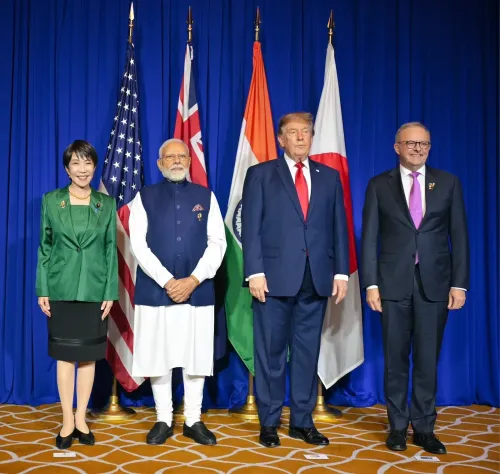
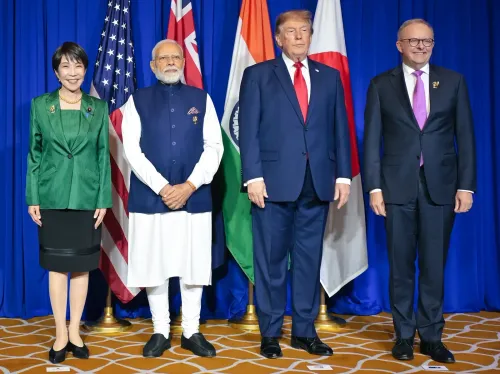
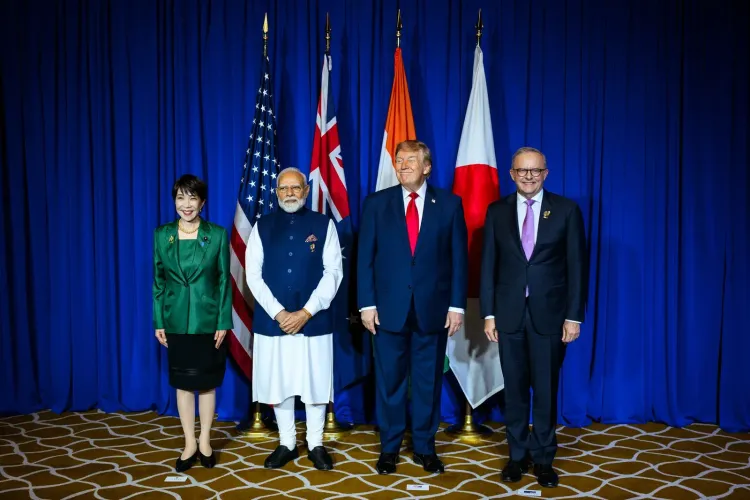
President Trump, PM Modi, PM Albanese, and PM Takaichi met in Manila on November 17, 2026 for a Quad Leaders' Summit, reaffirming the four-nation bloc's commitment to a free, stable, and prosperous Indo-Pacific.
Key Takeaways
Quad Leaders' Summit convened in Manila on November 17, 2026 , attended by all four member-nation leaders.
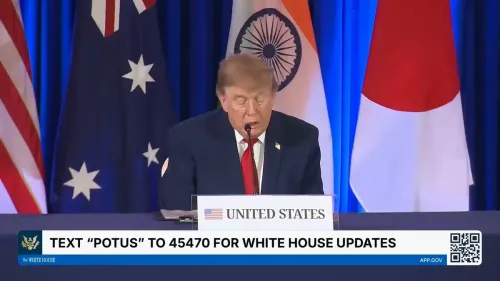
Trump , PM Narendra Modi , PM Anthony Albanese , and PM Sanae Takaichi all participated in person.
The summit reaffirmed collective commitment to peace, stability, and prosperity in the Indo-Pacific.
The Quad was revived at ministerial level in 2017 ; the first Leaders' Summit was held in March 2021 .
Manila's location near the South China Sea adds strategic symbolism to the summit's setting.
Watchers are tracking potential deliverables on critical technologies and maritime domain awareness from the joint statement.
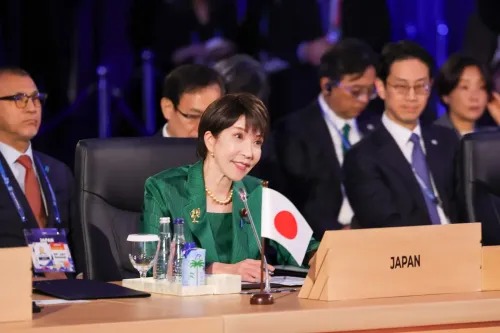
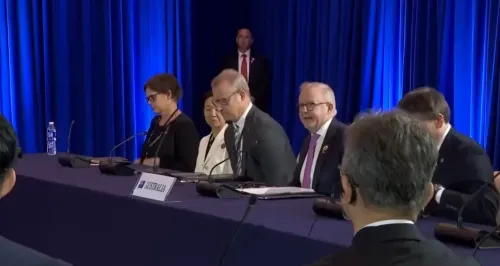
Four of the world's most consequential democracies gathered in Manila on Tuesday, November 17, 2026 — and the message was unmistakable: the Quad is not stepping back. The White House confirmed that President Donald J. Trump, Australian Prime Minister Anthony Albanese, Indian Prime Minister Narendra Modi, and Japanese Prime Minister Sanae Takaichi convened for a Quad Leaders' Summit, reaffirming their collective commitment to peace, stability, and prosperity across the Indo-Pacific.
Manila as the Stage for a High-Stakes Quad Gathering
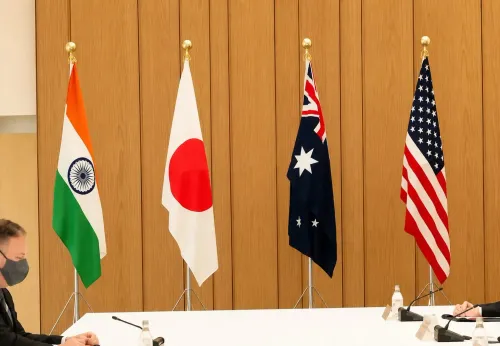
Hosting the summit in Manila carries unmistakable strategic weight. The Philippines sits at the crossroads of some of the most contested maritime space on earth — the South China Sea — making the choice of venue a signal in itself. The Quad, a grouping of the United States, Australia, India, and Japan, has consistently framed its purpose around a free and open Indo-Pacific, and convening in Southeast Asia places that principle front and centre.
The Quadrilateral Security Dialogue was revived at ministerial level in 2017 during Trump's first term, and the first Leaders' Summit was convened in March 2021. Since then, the grouping has evolved into an annual platform where the four democracies coordinate on maritime security, supply-chain resilience, and regional infrastructure — all without a formal secretariat or binding treaty architecture, operating instead through joint statements and working groups.
Modi, Trump, Albanese, Takaichi — The Weight of This Table
Narendra Modi, in power since May 2014, has been a consistent advocate for elevating the Quad from a diplomatic talking shop into a results-driven mechanism. Anthony Albanese, Australian Prime Minister since May 2022, has deepened Canberra's Indo-Pacific engagement across successive summits. For Sanae Takaichi, a veteran Japanese politician who has held multiple cabinet portfolios, the summit underscores Tokyo's sustained strategic investment in the grouping. And with Trump back at the table, the Quad carries the full diplomatic weight of a returning superpower with declared Indo-Pacific priorities.
The four leaders collectively represent economies and militaries that span the Pacific and Indian Oceans — a combined footprint that makes their joint statement, when it arrives, one of the most watched documents in regional security circles.
What the Manila Summit Is Expected to Produce
Observers are watching closely for any new working groups or deliverables on critical technologies and maritime domain awareness — two areas where the Quad has signalled ambitions in past summits. Supply-chain resilience and undersea cable security have also featured as recurring agenda items. The Manila gathering gives all four leaders a rare face-to-face moment to push those agendas forward, away from the margins of larger multilateral forums.
The Quad has no enforcement mechanism — its power lies in coordination, symbolism, and the implicit signal it sends to any actor that seeks to unilaterally reshape the region's rules-based order. A summit with all four principals present, in a city that neighbours the most disputed waters in Asia, sharpens that signal considerably.
Four leaders, one room, one message — the Indo-Pacific's most consequential security dialogue just got its loudest chapter yet, and the joint statement from Manila will tell the region exactly how far that commitment now stretches.
Point of View
Within sight of contested South China Sea waters, is a deliberate geographic statement. For India, Modi's consistent presence at every Quad summit underscores New Delhi's strategic bet on multilateral coalitions as a counterweight to unilateral regional coercion — a posture that sits alongside, rather than in contradiction to, India's traditional non-alignment instincts. The real test of the summit's durability will be whether the four leaders exit Manila with tangible working-group mandates rather than aspirational language alone.
NationPress
17 Nov 2026
Frequently Asked Questions
What is the Quad and which countries are members?
The Quad, or Quadrilateral Security Dialogue, is a strategic grouping of the United States, Australia, India, and Japan , focused on maintaining a free and open Indo-Pacific region. It has no formal secretariat and operates through joint statements and working groups.
Where was the 2026 Quad Leaders' Summit held?
The 2026 Quad Leaders' Summit was held in Manila, Philippines , as confirmed by The White House on November 17, 2026.
Who attended the Quad summit in Manila in 2026?
President Donald J. Trump of the United States, Prime Minister Narendra Modi of India, Prime Minister Anthony Albanese of Australia, and Prime Minister Sanae Takaichi of Japan attended the Manila summit.
When was the first Quad Leaders' Summit held?
The first Quad Leaders' Summit was convened in March 2021 in Washington, D.C. The Quad itself was revived at ministerial level in 2017 during Trump's first term in office.
What are the key issues discussed at Quad summits?
Quad summits have focused on maritime security, supply-chain resilience, regional infrastructure, critical technologies, and maritime domain awareness — all aimed at sustaining a free and open Indo-Pacific.