Ramaswamy Backs Ohio Photo ID Vote Amendment
Synopsis
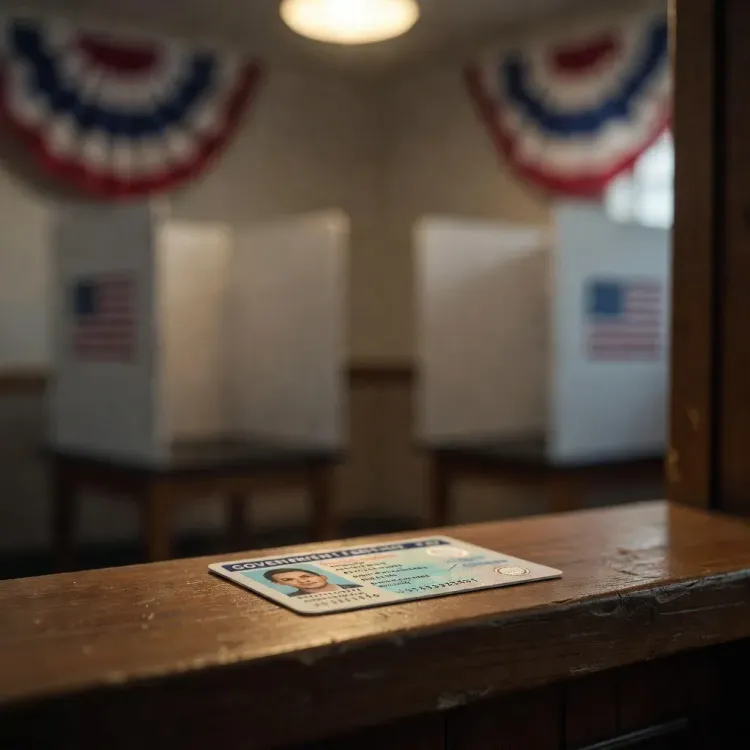
Entrepreneur Vivek Ramaswamy has endorsed Ohio's November 2026 ballot measure to constitutionally enshrine photo ID requirements for all voting, including mail-in ballots. He called on leaders from both parties to vote yes, citing broad public support and backing from President Trump.
Key Takeaways
Entrepreneur Vivek Ramaswamy publicly endorsed Ohio's proposed constitutional amendment requiring photo ID to vote, posted on June 25, 2026 .
The amendment, if passed by Ohio voters in November 2026 , would enshrine photo ID in the state constitution and allow lawmakers to extend the requirement to mail-in ballots.
Ramaswamy stated he would sign legislation applying photo ID to mail-in ballots into law.
President Donald Trump and most Ohio lawmakers also support the measure, according to Ramaswamy's post.
The federal SAVE Act , introduced in 2024 , pursues a parallel goal of requiring citizenship proof for federal voter registration.
Embedding ID requirements in the state constitution is a deliberate strategy to limit future legislative or judicial rollback.
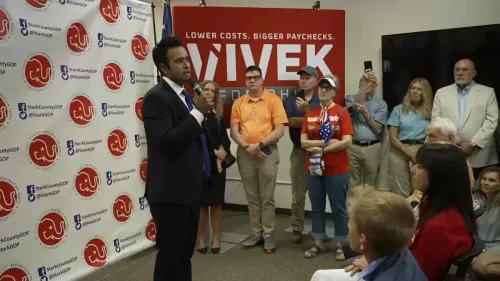
Entrepreneur Vivek Ramaswamy on Thursday, June 25, 2026, publicly endorsed Ohio's upcoming ballot measure to enshrine a photo identification requirement for voting in the state constitution, calling on leaders from both political parties to support it. Ramaswamy, founder of Strive Asset Management and a former co-lead of the US Department of Government Efficiency (DOGE) advisory effort, said he would sign into law any subsequent legislation extending the requirement to mail-in ballots if the amendment passes.
Context
Ramaswamy posted on X that requiring photo ID to vote is 'a common-sense measure that most Americans support, across demographic and partisan lines.' He noted that whether or not Congress passes the SAVE Act this year, Ohio voters have an independent opportunity in November to act at the state level. He added that the amendment would also empower Ohio lawmakers to apply the photo ID requirement to 'ALL ballots, including mail-in ballots,' a provision he said he would sign into law.
Ramaswamy stated that President Donald Trump and most Ohio lawmakers share his support for the measure. His call was directed at leaders and candidates in both parties, framing the amendment as a nonpartisan common-sense step.
Policy Backdrop
Voter identification rules in the United States have a long legislative history. The Help America Vote Act of 2002 first imposed federal ID requirements for certain first-time voters. Ohio enacted its own in-person voter ID law in 2006, which survived subsequent legal challenges in state and federal courts.
The SAVE Act, introduced in the US House in 2024, seeks to go further by mandating documentary proof of US citizenship at the point of federal voter registration. Republican-led states have broadly moved to strengthen voter ID rules since 2020, citing election integrity concerns. Embedding such requirements directly in state constitutions — as the Ohio ballot measure proposes — is a deliberate strategy to insulate them from future legislative reversal or judicial challenge.
Stakeholders and Impact
Ohio voters casting ballots in November 2026 will decide directly on the constitutional amendment. If it passes, the Ohio General Assembly would gain express authority to extend photo ID requirements to mail-in ballots, a category that expanded significantly during the 2020 election cycle and has remained a focal point of election-law debate.
Advocates of the measure argue it closes a gap between in-person and absentee voting rules. Critics of similar laws in other states have historically argued that strict ID requirements can create barriers for elderly, low-income, and minority voters — though Ramaswamy's post characterises support for the measure as broad across demographic and partisan groups.
What's Next
The immediate milestone is the November 2026 Ohio ballot, where voters will decide on the constitutional amendment. Separately, the SAVE Act's fate in the current Congress remains a parallel variable; its passage or failure at the federal level could shape the political momentum around state-level measures like Ohio's. Should the amendment succeed, the Ohio General Assembly would then be expected to move legislation extending photo ID to mail-in ballots — a bill Ramaswamy has said he would sign. The outcome could serve as a template for similar constitutional strategies in other Republican-led states.
Point of View
He frames the Ohio vote as an insurance policy — advancing the policy goal regardless of congressional gridlock. His call to bipartisan leadership is rhetorically notable but strategically aimed at neutralising Democratic opposition ahead of a high-turnout November ballot. The mail-in ballot extension is the sharpest edge of the proposal, as it targets the voting channel most associated with Democratic gains in recent cycles.
NationPress
25 Jun 2026
Frequently Asked Questions
What is the Ohio photo ID constitutional amendment Ramaswamy supports?
It is a ballot measure that Ohio voters will decide on in November 2026 to write a photo identification requirement for voting into the state constitution, and to allow the Ohio General Assembly to extend that requirement to mail-in ballots.
What is the SAVE Act and how does it relate to Ohio's ballot measure?
The SAVE Act is a federal bill introduced in the US House in 2024 that would require proof of US citizenship to register for federal elections. Ohio's constitutional amendment is a parallel state-level effort that would operate independently of whether the SAVE Act passes Congress.
Does Vivek Ramaswamy currently hold a government position?
As of June 2026, Ramaswamy is the founder and executive chairman of Strive Asset Management. He previously served as a co-lead of the DOGE advisory effort and ran for the Republican presidential nomination in 2024, but does not currently hold a federal government role.
Does the Ohio photo ID amendment cover mail-in ballots?
The amendment would give the Ohio General Assembly express authority to apply the photo ID requirement to all ballots, including mail-in ballots. Ramaswamy has said he would sign such legislation into law.
What has been Ohio's history with voter ID laws?
Ohio first enacted an in-person voter ID law in 2006, which was upheld by state and federal courts. The current ballot measure seeks to elevate such requirements to constitutional status, making them harder to repeal or challenge.