Ramaswamy Backs Ohio Photo ID Vote Mandate Push

Synopsis
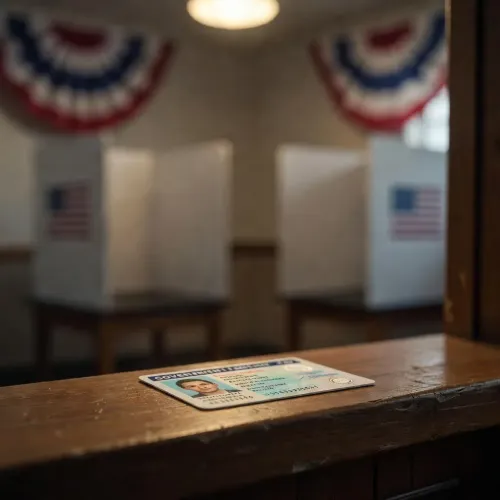
Entrepreneur Vivek Ramaswamy has publicly backed Ohio's Issue 3, a November 2026 ballot measure to enshrine mandatory photo ID requirements for voting in the state constitution. The push adds a prominent national voice to a debate over election integrity versus voter access that has defined US electoral politics for over a decade.
Key Takeaways
Vivek Ramaswamy on July 16, 2026 , called on Ohio voters to approve Issue 3 , a proposed constitutional amendment mandating photo ID to vote.
If passed, the requirement would be embedded in the Ohio state constitution , making it far harder for future legislatures to reverse.
Ramaswamy is founder and executive chairman of Strive Asset Management and former co-lead of the DOGE advisory effort.
Voter photo ID laws are in effect in a majority of US states, though stringency and legal challenges vary widely.
Ohio is a key swing state; changes to its electoral rules carry national implications for future federal elections.
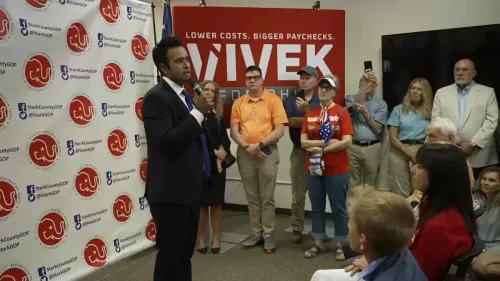
Entrepreneur and former DOGE co-lead Vivek Ramaswamy on Thursday, July 16, 2026, publicly urged Ohio voters to approve a constitutional amendment requiring photo identification as a mandatory condition for casting a ballot, calling on residents to vote 'YES on Issue 3' in the upcoming November election.
Context
In his post on X, Ramaswamy stated: 'Photo ID requirements should be mandatory as a condition to vote, and Ohioans have a chance to enshrine that in our state constitution this year. Vote YES on Issue 3 in November.' The appeal is directed at registered voters in Ohio, where Issue 3 is set to appear on the November 2026 ballot as a proposed constitutional amendment.
Ramaswamy, who was born and raised in Ohio, has long maintained political ties to the state. He ran in the 2024 Republican presidential primary before suspending his campaign and endorsing Donald Trump, and later served as co-lead of the Department of Government Efficiency (DOGE) advisory effort before returning to the private sector as founder and executive chairman of Strive Asset Management.
Policy Backdrop
Voter photo ID laws have been a sustained flashpoint in United States electoral policy. Proponents argue such requirements are essential to prevent impersonation fraud and bolster public confidence in election integrity. Critics contend that strict photo ID mandates disproportionately burden low-income voters, minorities, the elderly, and students who may lack qualifying documents.
As of 2026, a majority of US states have some form of voter ID law, though the stringency varies widely — from requests for any government-issued document to strict photo-only requirements with no alternatives. Enshrining such a requirement in a state constitution, as Issue 3 proposes for Ohio, would make it significantly harder for future legislatures to roll back the measure, raising the stakes of the November vote considerably.
Stakeholders and Impact
Ohio is a perennial battleground state, and changes to its electoral rules carry national significance. A constitutional photo ID mandate would affect millions of voters across the state, requiring election authorities to expand document verification infrastructure and potentially invest in programmes to help eligible voters obtain qualifying identification.
Civil liberties organisations have consistently challenged strict voter ID laws in federal courts, arguing they function as a modern barrier to the franchise. Supporters, including many Republican lawmakers and figures like Ramaswamy, frame such measures as a basic safeguard comparable to ID requirements in everyday civic and commercial life. Ramaswamy's public endorsement lends the initiative a high-profile national voice at a critical campaign window ahead of the November election.
What's Next
Ohio voters will decide the fate of Issue 3 at the November 2026 general election. If passed, the amendment would embed photo ID requirements directly into the Ohio state constitution, setting a precedent that other states may look to replicate or contest. The outcome is likely to reverberate well beyond Ohio, feeding into the broader national debate over voting access and election security heading into future federal election cycles.
Point of View
Keeping him relevant in Republican circles as a policy voice on election integrity. The move to constitutionalise photo ID — rather than legislate it — reflects a broader conservative strategy of locking in electoral rules beyond the reach of legislative majorities. For a figure who built his national profile on institutional disruption, backing a constitutional entrenchment is a notable pivot toward durable rule-making. The November vote will test whether his national platform translates into on-the-ground influence in his home state.
NationPress
16 Jul 2026
Frequently Asked Questions
What is Ohio Issue 3 on the November 2026 ballot?
Ohio Issue 3 is a proposed constitutional amendment on the November 2026 ballot that would make photo identification a mandatory requirement for casting a vote in the state, embedding the rule directly in the Ohio state constitution.
Why is Vivek Ramaswamy supporting Ohio's voter ID amendment?
Ramaswamy stated that photo ID requirements 'should be mandatory as a condition to vote' and urged Ohioans to vote YES on Issue 3, framing it as an election integrity measure. He has not elaborated further beyond his July 16, 2026 post.
What is the difference between a voter ID law and a constitutional amendment for voter ID?
A voter ID law passed by a legislature can be repealed or amended by a future legislature, whereas a constitutional amendment requires a much higher threshold — typically a supermajority vote or a separate referendum — to overturn, making the requirement far more durable.
Is Vivek Ramaswamy still involved in DOGE?
No. Ramaswamy served as co-lead of the Department of Government Efficiency advisory effort but has since returned to the private sector as founder and executive chairman of Strive Asset Management.
Do most US states already require photo ID to vote?
As of 2026, a majority of US states have some form of voter ID requirement, though the rules differ significantly — some accept a wide range of documents while others enforce strict photo-only mandates. Ohio's Issue 3 would place a photo-specific requirement in the state constitution.