Ramaswamy Pushes Ohio Energy, Medicaid, Tax Reform Agenda
Synopsis
Entrepreneur Vivek Ramaswamy, former DOGE co-lead, outlined a three-point Ohio agenda on July 30, 2026 — boosting energy output, fighting Medicaid fraud, and cutting bureaucracy — to lower electric bills, healthcare costs, and property taxes for Ohioans.
Key Takeaways
On July 30, 2026 , Vivek Ramaswamy posted a three-plank state-level agenda focused on Ohio .
The agenda targets energy production expansion to reduce electric bills, Medicaid fraud reduction to combat healthcare costs, and bureaucracy cuts to lower property taxes.
The framing mirrors the cost-cutting philosophy Ramaswamy championed as co-lead of the federal DOGE advisory effort in 2024–2025 .
Medicaid , a federal-state program for low-income Americans, is cited as a fraud-prone cost driver — a long-standing Republican governance argument.
The post signals Ramaswamy's continued political engagement in Ohio , with the Ohio General Assembly actively debating energy and Medicaid reform.
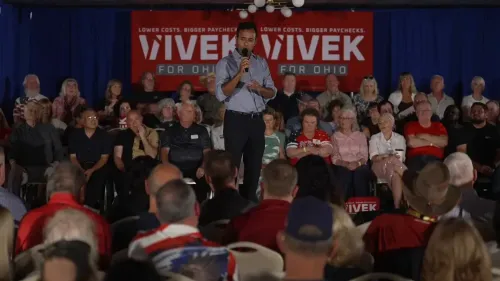
Fresh from his high-profile role co-leading the federal Department of Government Efficiency (DOGE) advisory effort, entrepreneur Vivek Ramaswamy is now training that same cost-cutting lens on his home state of Ohio — laying out a three-point agenda on Thursday, July 30, 2026 that targets energy output, healthcare fraud, and bureaucratic overhead as the levers to ease everyday financial pressure on residents.
Three levers, one promise: lower bills for Ohioans
Ramaswamy's post is blunt and sequenced like a policy brief compressed into four lines: produce more energy to cut electric bills, fight Medicaid fraud to reduce healthcare costs, and slash bureaucracy to lower property taxes. The throughline is direct relief for what he calls 'law-abiding Ohioans' — a phrase that signals the political audience as much as the policy one. Each plank maps to a cost that hits households monthly, making the argument visceral rather than abstract.
The DOGE playbook comes home to Ohio
The framing is no accident. Ramaswamy spent a significant stretch of 2024–2025 co-leading the DOGE advisory effort alongside Elon Musk, an initiative built on the premise that federal waste and bureaucratic sprawl inflate costs for ordinary Americans. Bringing that logic to the state level — where energy permitting, Medicaid administration, and local regulatory overhead are live legislative fights — is a natural next move. Ohio's General Assembly has active debates on energy permitting reform and Medicaid integrity measures, giving Ramaswamy's agenda concrete legislative terrain to land on.
Medicaid fraud and the cost-of-living calculation
Medicaid, the federal-state health coverage program for low-income Americans, has long been a flashpoint in Republican governance debates. Fraud reduction is a perennial talking point, but it carries real fiscal stakes: improper payments in the program run into billions of dollars nationally each year, and states bear a share of that burden. Ramaswamy's invocation of Medicaid fraud as a healthcare cost driver plugs directly into that debate — positioning administrative discipline, not coverage cuts, as the path to affordability.
The energy plank follows an equally well-worn but potent argument: that restricting domestic production keeps utility rates artificially high. For Ohio households facing elevated electricity costs, the promise of supply-side relief through expanded output carries immediate kitchen-table resonance. Property tax relief tied to bureaucracy reduction is the third rail — connecting government overhead to a cost that homeowners feel every single year.
Whether Ramaswamy translates this agenda into a formal political vehicle — a gubernatorial run, a legislative push, or an advocacy campaign — is the question Ohio's political calendar will answer. For now, the post reads less like a tweet and more like a campaign brief looking for a ballot line.
Point of View
Waste-reduction logic he applied at the federal level is now being packaged for a state electorate. By anchoring each plank to a household bill — electricity, healthcare, property tax — he sidesteps ideological abstraction and speaks directly to cost-of-living anxiety, which has dominated American politics since the post-pandemic inflation surge. The 'law-abiding Ohioans' framing is a deliberate political signal, drawing a line between the intended beneficiaries and those perceived as gaming public systems. Whether this is groundwork for a gubernatorial bid or a policy influence campaign, it positions Ramaswamy as the most prominent voice applying DOGE-style governance pressure at the state level.
NationPress
30 Jul 2026
Frequently Asked Questions
What is Vivek Ramaswamy's Ohio agenda?
Ramaswamy has outlined three priorities for Ohio: expanding domestic energy production to lower electric bills, fighting Medicaid fraud to reduce healthcare costs, and cutting bureaucracy to bring down property taxes.
Is Vivek Ramaswamy running for governor of Ohio?
Ramaswamy has not formally announced a gubernatorial run. His July 2026 post reads as a policy platform, but whether it precedes a formal candidacy has not been confirmed.
What was Vivek Ramaswamy's role in DOGE?
Ramaswamy co-led the Department of Government Efficiency (DOGE) advisory effort alongside Elon Musk in 2024–2025, focused on identifying and cutting federal waste and bureaucratic overhead.
How does Medicaid fraud affect state costs in Ohio?
Medicaid is a joint federal-state program, meaning states like Ohio share in the cost of improper payments. Reducing fraud is a recurring Republican argument for lowering the program's fiscal burden on state budgets.
How does more energy production lower electric bills?
The argument is supply-side: increasing domestic energy output — through expanded permitting and production — raises supply and puts downward pressure on utility rates for consumers.