Ramaswamy enters Ohio governor race with property tax diagnosis
Synopsis
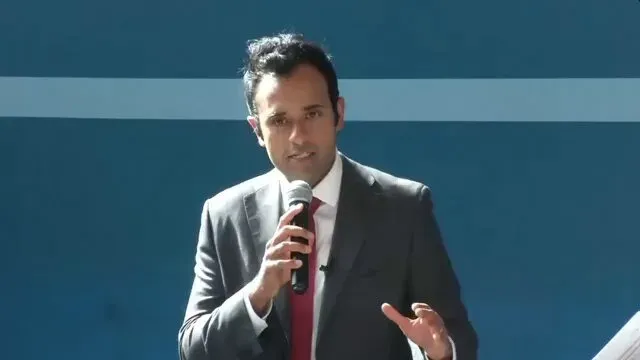
Vivek Ramaswamy posted a video on 16 October 2026 arguing that fixing Ohio's property tax crisis requires understanding its structural roots, signalling a policy-forward entry into the 2026 Ohio gubernatorial debate and pointing to decades of unresolved school-funding dysfunction.
Key Takeaways
Vivek Ramaswamy posted a video on 16 October 2026 framing Ohio's property tax crisis as the defining issue for the next governor.
Ohio has long relied on local property taxes to fund public schools, creating systemic inequity when home values rise.
The Ohio Supreme Court ruled this funding model unconstitutional in the DeRolph v.
State cases between 1997 and 2003 , but a structural fix was never fully enacted.
Post-pandemic home value surges have turned the old structural flaw into an acute household crisis in counties across the state.
Ramaswamy's diagnostic framing echoes his first-principles approach from his 2024 Republican presidential campaign and his DOGE advisory role.
The post positions him — formally or informally — as a serious contender in the 2026 Ohio gubernatorial cycle .
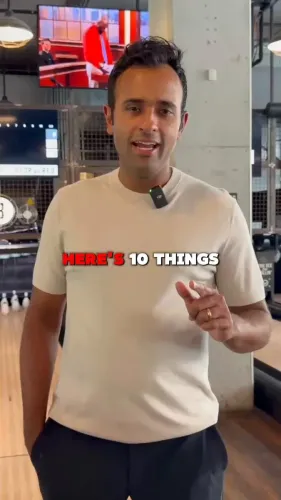
With a video post and a direct challenge to whoever wants Ohio's highest office, entrepreneur Vivek Ramaswamy is framing the 2026 Ohio gubernatorial race around a single, urgent question: why are homeowners getting crushed by property taxes — and does the next governor actually understand why? Ramaswamy posted the explainer on 16 October 2026, signalling he intends to drive the policy debate on his own terms.
The property tax trap Ohio built for itself
Ohio's property tax structure carries decades of structural baggage. The state has historically leaned on local property taxes to fund public school districts — a model that concentrates both wealth and risk at the county level. When home values rise, tax bills follow, even if the statutory rate never changes. The result is a stealth tax hike that hits long-term homeowners and fixed-income residents hardest, without a single legislator casting a visible vote.
The tension is not new. Between 1997 and 2003, the Ohio Supreme Court issued a series of rulings in DeRolph v. State, finding the state's heavy dependence on local property taxes for school funding unconstitutional. The court repeatedly ordered the legislature to restructure the system. The legislature repeatedly failed to do so to the court's satisfaction. The legal standoff ended without a clean resolution — leaving the structural fault lines intact.
Rising values, frozen fixes, and a compounding crisis
What DeRolph exposed in the courtroom, the post-pandemic housing market has made visceral on kitchen tables across Ohio. Surging home valuations in counties like Franklin, Hamilton, and Cuyahoga have driven reassessment cycles that shock homeowners with bills that bear no relationship to their income or ability to pay. State-level relief measures have offered partial shelter but no structural cure.
This is the pattern playing out across the United States: property-tax-based school funding systems, designed for an era of stable home values, become engines of inequity when real estate markets overheat. Ohio is a concentrated example of a national problem.
Why Ramaswamy is making this his opening frame
Ramaswamy's post is a deliberate positioning move. By leading with 'here's the truth about what happened,' he is casting himself as the candidate who does the homework — invoking the same diagnostic, first-principles persona he built during his 2024 Republican presidential campaign and his time as co-lead of the US Department of Government Efficiency (DOGE) advisory effort. The argument is implicit but pointed: you cannot fix a system you do not understand, and understanding it requires going back further than the last budget cycle.
The video format matters too. A detailed explainer — rather than a policy press release — is a direct play for the voter who feels gaslit by politicians offering tax freezes while the underlying machine keeps grinding. Whether Ramaswamy is formally a declared candidate or positioning ahead of one, the property tax frame gives him a concrete, kitchen-table issue to own entering the cycle.
Ohio's next governor will inherit a school-funding architecture the state's own Supreme Court called unconstitutional more than two decades ago. The question Ramaswamy is raising has no easy answer — but it is finally getting asked out loud at the right political volume.
Point of View
Not just a relief cheque. The DeRolph lineage gives him a powerful historical hook: the state's own Supreme Court declared the system broken over twenty years ago, and no one fixed it. By owning that history, he frames every rival who offers incremental relief as complicit in a structural failure. The deeper play is identity — 'the candidate who does the homework' is a durable brand in a cycle where governing competence is back on the ballot.
NationPress
16 Oct 2026
Frequently Asked Questions
Why is Vivek Ramaswamy talking about Ohio property taxes?
Ramaswamy posted a video on 16 October 2026 arguing that the next Ohio governor must understand the structural roots of the state's property tax crisis, signalling his engagement with the 2026 gubernatorial race.
What caused Ohio's property tax crisis?
Ohio has historically funded public schools through local property taxes, meaning rising home values automatically raise tax bills even without a rate change. Post-pandemic housing surges have made this structural flaw acutely painful for homeowners.
What is DeRolph v. State and why does it matter?
DeRolph v. State was a series of Ohio Supreme Court rulings between 1997 and 2003 that found Ohio's reliance on local property taxes for school funding unconstitutional. The legislature never fully resolved the issue, leaving the structural problem intact.
Is Vivek Ramaswamy running for Ohio governor in 2026?
Ramaswamy has not been confirmed as a formal declared candidate per available information, but his policy-focused video on Ohio's property tax crisis is a clear signal of engagement with the 2026 Ohio gubernatorial race.
How does DOGE experience relate to Ramaswamy's Ohio governor push?
Ramaswamy co-led the US Department of Government Efficiency advisory effort under the Trump administration, building a public profile around cutting bureaucratic dysfunction — a credential he appears to be translating into a state-level diagnostic role on Ohio's broken tax structure.