White House touts 'largest tax cuts in history,' slams Democrats

Synopsis
The White House declared the 'largest tax cuts in history' passed with unanimous Democratic opposition, sharpening a decade-long partisan fault-line over U.S. tax policy and setting up a high-stakes fight over future legislative extensions.
Key Takeaways
The White House posted on October 15, 2026 claiming the 'largest tax cuts in history' received zero Democratic votes.
The messaging echoes the Tax Cuts and Jobs Act of 2017 , which also passed on a strict party-line vote with no Democratic support in either chamber.
The 2017 law cut the corporate tax rate from 35% to 21% and lowered individual income tax brackets across most rates.
Highlighting unanimous Democratic opposition is a consistent post-passage communications strategy used by Republican administrations to assign political ownership of tax policy.
Congress faces ongoing pressure over the expiration of key provisions from prior tax legislation, making the fiscal and political stakes especially high.
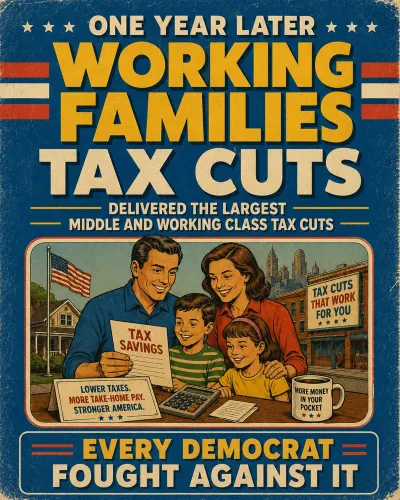
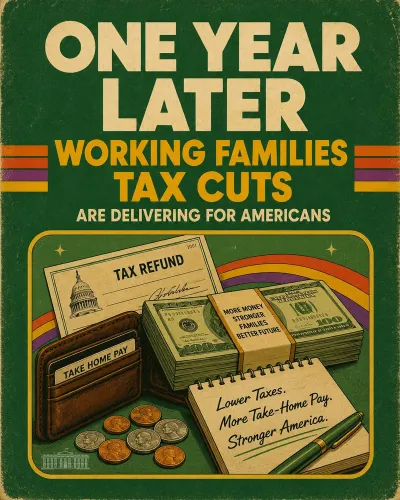
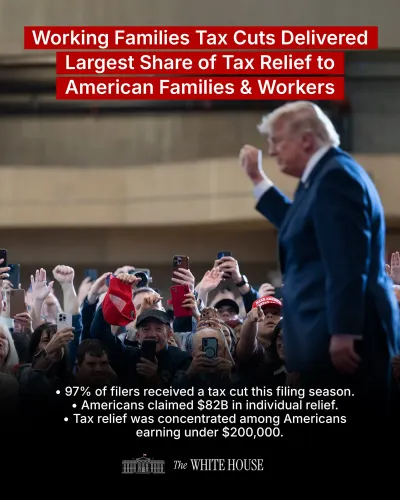
The White House drew a sharp partisan line on Thursday, declaring that the 'largest tax cuts in history' passed without a single Democratic vote — and daring the record to speak for itself.
In a pointed post on October 15, 2026, the official White House account amplified the claim with emphatic caps: 'EVERY. SINGLE. DEMOCRAT VOTED AGAINST THEM.' The message is a direct callback to a pattern stretching back nearly a decade — Republican-backed tax legislation has consistently met with zero Democratic support in Congress.
The partisan fault-line that has defined U.S. tax policy
The template is not new. The Tax Cuts and Jobs Act of 2017 — which slashed the corporate tax rate from 35% to 21% and restructured individual income tax brackets — passed on a strict party-line vote with no Democratic votes in either chamber of Congress. Republicans argued it unleashed business investment; Democrats countered it disproportionately benefited corporations and the wealthy. That debate never really ended. The White House post arrives as Congress faces the question of what to do with provisions from earlier tax legislation approaching scheduled expiration — a high-stakes fiscal fight that will define household finances and corporate balance sheets for years.Why 'unanimous opposition' is the message, not just the record
Highlighting unanimous Democratic opposition is a deliberate communications strategy, not merely a factual recitation. When Republicans frame a tax bill as something every Democrat rejected, they are asking voters to assign ownership — and, in their framing, blame — exclusively to the other side if the cuts are reversed or expire. It converts a legislative record into a campaign weapon. The White House's choice to post this now signals the administration is moving to lock in credit for the cuts while casting Democrats as the obstacle to working-family relief — precisely the framing that tends to dominate the pre-expiration political window. Whether the specifics of this latest round of cuts will hold up to independent scrutiny is a question Congress and analysts will continue to press. But the political signal is already in the air.Point of View
The administration is pre-emptively shielding the cuts from reversal while building a mid-cycle political contrast. This mirrors the communications playbook deployed after the 2017 Tax Cuts and Jobs Act, suggesting a durable Republican strategy of linking tax relief to party identity. With key provisions facing potential expiration, the timing is calculated: stoke credit now, before the debate over extensions forces uncomfortable trade-offs. The fight over who 'owns' tax cuts is inseparable from the fight over whether they survive.
NationPress
16 Oct 2026
Frequently Asked Questions
What are the 'largest tax cuts in history' the White House is referring to?
The White House referenced tax cuts it describes as the largest in U.S. history, passed without a single Democratic vote. The specific legislation tied to the October 2026 post has not been independently verified, but the claim draws on a lineage stretching back to the Tax Cuts and Jobs Act of 2017 .
Did Democrats really vote against the tax cuts?
According to the White House post, every Democrat in Congress voted against the cuts. This is consistent with the historical record of the 2017 Tax Cuts and Jobs Act , which passed on a strict party-line vote with no Democratic support in either chamber.
What did the 2017 Tax Cuts and Jobs Act do?
The Tax Cuts and Jobs Act of 2017 cut the U.S. corporate tax rate from 35% to 21% and lowered individual income tax rates across most brackets. It remains the most significant overhaul of the U.S. tax code in decades.
Why is the White House posting about tax cuts now?
The timing coincides with congressional debate over the expiration of provisions from prior tax legislation. The White House appears to be locking in political credit for the cuts while framing Democrats as the opposition ahead of those high-stakes extension votes.
How does U.S. tax policy affect India?
U.S. corporate tax rates influence where multinational companies invest and how they structure global operations, affecting Indian IT firms, exporters, and the broader Indo-Pacific trade and investment environment.