Ramaswamy Outlines Ohio Cost-Cut Plan on Energy, Housing
Synopsis
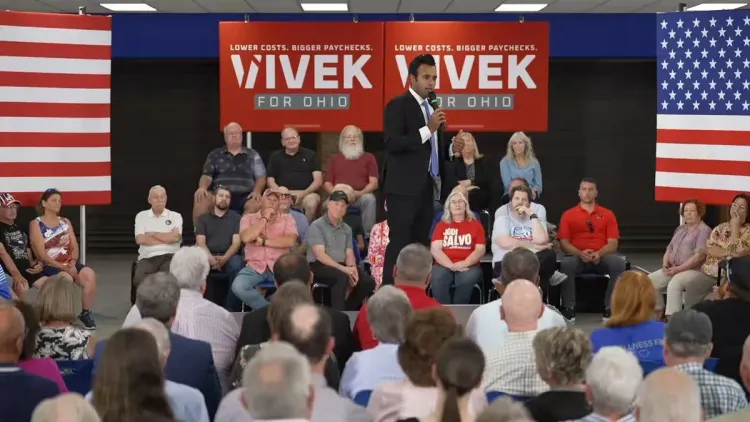
Entrepreneur Vivek Ramaswamy has laid out a four-point Ohio agenda targeting energy production, property-tax relief, housing construction, and Medicaid fraud — framing each as a direct cost-saving measure for state residents without new public spending.
Key Takeaways
Ramaswamy pledged to expand energy production in Ohio to lower electric bills for households.
He committed to rolling back property taxes , addressing a key affordability pressure in the state.
Faster permitting for home construction is proposed to ease Ohio's housing supply crunch.
Medicaid fraud elimination is central to the plan, with savings directed to law-abiding Ohioans rather than general revenue.
The agenda closely mirrors DOGE advisory priorities Ramaswamy championed at the federal level in 2025.
Ohio's General Assembly and the 2026 electoral calendar will determine how quickly these proposals advance.
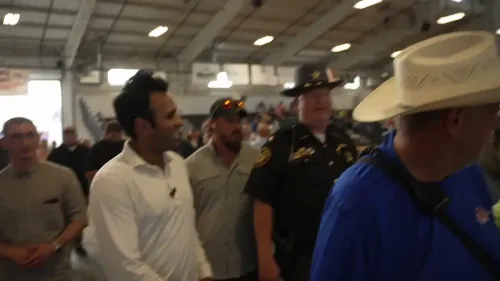
Entrepreneur Vivek Ramaswamy, founder of Strive Asset Management and former co-lead of the federal Department of Government Efficiency advisory effort, outlined a four-point plan on Monday, June 8, 2026, to reduce everyday costs for residents of Ohio, the Midwestern state where he has signalled growing political interest.
Context
Ramaswamy posted the agenda on X, stating he would 'produce more energy to reduce electric bills, roll back property taxes, permit more home construction, and crush Medicaid fraud while putting savings in the pockets of law-abiding Ohioans.' The statement is framed as a personal commitment — 'Basic things I'll do in Ohio' — rather than a legislative proposal, underscoring his positioning as a prospective executive actor in the state.
Ohio has faced elevated electricity rates and persistent property-tax pressures in recent years, compounding affordability concerns for working- and middle-class households already strained by post-pandemic inflation.
Policy Backdrop
Each of the four planks has precedent in recent Ohio and national policy debates. The state's 2023-2025 energy policy updates expanded natural gas and renewables permitting specifically to address grid reliability and ratepayer costs, providing an administrative runway for faster energy production approvals.
On Medicaid, Ohio has recorded improper payment rates above the national average in multiple federal audits. During Ramaswamy's tenure with the DOGE advisory effort in 2025, Medicaid fraud reduction and permitting reform were identified as priority cost-cutting areas at both federal and state levels — making his Ohio agenda a direct extension of that federal work.
Housing supply constraints have also drawn bipartisan attention. Republican-led states including Texas and Florida pursued zoning deregulation and construction permitting reforms after 2022, pairing them with anti-fraud drives as an alternative to new spending programmes.
Stakeholders and Impact
Ohio taxpayers stand as the stated primary beneficiaries, with Ramaswamy explicitly promising to route recovered Medicaid savings back to 'law-abiding Ohioans' rather than into general revenue. Home builders and developers would benefit from streamlined construction permitting, potentially easing a supply crunch that has kept home prices elevated across the state's major metros.
Medicaid providers and managed-care organisations operating in Ohio would face heightened scrutiny under any fraud-enforcement push. Energy producers — both conventional and renewable — could see expanded siting and permitting opportunities if the energy production plank advances through the Ohio General Assembly.
The broader pattern mirrors the DOGE advisory framework: identify administrative waste, redirect savings to residents through rate or tax relief, and avoid new spending commitments. It is a model that has found traction with fiscally conservative voters anxious about government overreach and rising living costs.
What's Next
Attention will now turn to the Ohio General Assembly, where property-tax reform bills and energy siting legislation are expected to feature in the 2027 session. Any formal announcement of a statewide candidacy by Ramaswamy ahead of the 2026 election cycle would sharpen the political stakes around this agenda considerably.
For now, the post plants a marker: a cost-of-living platform built on energy expansion, housing supply, tax relief, and anti-fraud enforcement — a package designed to resonate with Ohio's broad middle-income electorate without requiring new public expenditure.
Point of View
Deregulate supply-side bottlenecks, and return savings directly to residents — all without a new spending line. The framing as 'basic things I'll do' signals executive ambition rather than legislative lobbying, positioning him as a candidate-in-waiting rather than a policy advocate. Ohio's mix of industrial-belt economic anxiety and suburban property-tax fatigue makes it fertile ground for this message. Whether the agenda translates into formal candidacy and legislative action will define its real political weight.
NationPress
24 Oct 2026
Frequently Asked Questions
What is Vivek Ramaswamy's plan for Ohio?
Ramaswamy has outlined four priorities for Ohio: expanding energy production to cut electric bills, rolling back property taxes, permitting more home construction, and eliminating Medicaid fraud while returning savings to residents.
Is Vivek Ramaswamy running for office in Ohio?
Ramaswamy has not formally announced a candidacy as of this report, but his post — framed as 'Basic things I'll do in Ohio' — signals strong political intent ahead of the 2026 election cycle.
What is Medicaid fraud costing Ohio?
Ohio has recorded improper Medicaid payment rates above the national average in multiple federal audits; exact recent recovery figures have not been independently confirmed in this report.
How does Ramaswamy's Ohio plan connect to DOGE?
During his 2025 tenure as co-lead of the federal DOGE advisory effort, Ramaswamy championed Medicaid fraud reduction and permitting reform as priority areas — the same two pillars now central to his Ohio agenda.
Which states have tried similar cost-cutting packages?
Texas and Florida pursued comparable combinations of zoning deregulation, construction permitting reform, and anti-fraud initiatives after 2022, serving as models for the Republican approach Ramaswamy is now proposing for Ohio.