Vivek Ramaswamy blames government spending for US affordability crisis

Synopsis
Vivek Ramaswamy, Strive founder and former DOGE co-lead, argues that affordability pressures in Ohio and across America stem from excessive government spending, and prescribes energy production, housing supply growth, property tax cuts, and fiscal restraint as the corrective.
Key Takeaways
Ramaswamy posted on August 5, 2026 attributing US affordability challenges directly to government spending policies.
He specifically cited Ohio as a state experiencing these pressures alongside the broader national trend.
His four-point remedy: more energy production, increased housing supply, slashed property taxes, and government fiscal restraint.
The post targets what he calls 'the new socialists,' framing the debate as a clash of economic philosophies.
The conservative critique echoes longstanding Republican criticism of the American Rescue Plan Act of 2021 as an inflation driver.
Ohio property tax relief legislation and federal energy permitting moves are the near-term policy tests for this agenda.
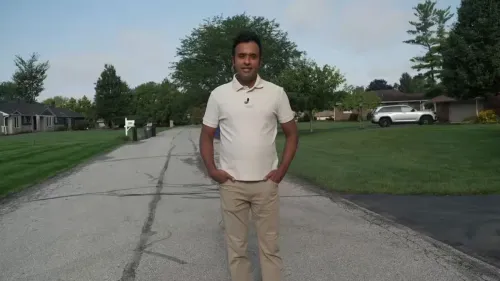
America's cost-of-living crunch has a culprit, and entrepreneur Vivek Ramaswamy is naming it directly: government spending. In a post on Wednesday, August 5, 2026, the founder of Strive Asset Management and former co-lead of the US Department of Government Efficiency (DOGE) advisory effort argued that affordability pressures in Ohio and across the United States flow from the same policy instincts now being championed by what he called 'the new socialists.'
The Ohio affordability flashpoint
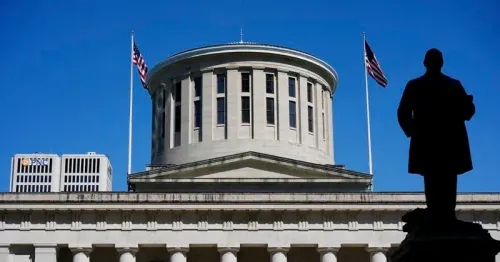
Ohio has become a recurring reference point in national debates over housing costs, property taxes, and energy prices — a Midwestern state where working-class voters have felt the squeeze of post-pandemic inflation acutely. Ramaswamy framed the state's struggles not as an isolated regional problem but as a mirror of a national policy failure. His argument: more government spending does not solve affordability — it creates it.
The conservative critique has a specific legislative target in its lineage. The American Rescue Plan Act of 2021 — which dramatically expanded federal outlays — was later attacked by Republican figures as a primary accelerant of the inflation wave that eroded household purchasing power through 2022 and 2023. Ramaswamy's framing slots neatly into that argument, extending it into the present political moment.
Four-point supply-side prescription
Rather than stopping at the diagnosis, Ramaswamy laid out a four-part remedy: more energy production, increasing the supply of housing, slashing property taxes, and fiscal restraint from government. Each plank targets a specific cost pressure — fuel bills, rents and home prices, the annual tax burden on homeowners, and the broader inflationary effect of deficit spending.
The supply-side logic is deliberate. Where progressive critics typically point to corporate pricing power or inadequate social support as the drivers of unaffordability, Ramaswamy's framework locates the problem in constrained supply and excess public expenditure — and the solution in deregulation and fiscal discipline rather than new outlays.
The 'new socialists' label and the political stakes
The phrase 'new socialists' is pointed but unspecified — a rhetorical move that signals a target without naming one. It positions the debate as a contest between two fundamentally different economic philosophies rather than a technical disagreement over fiscal multipliers. For Ramaswamy, who built his 2024 presidential campaign on sharp ideological contrast, that framing is characteristic.
What to watch: Ohio state legislative proposals on property tax relief are live, and any federal movement on energy permitting or housing deregulation in the coming congressional sessions will test whether this supply-side agenda moves from rhetoric to policy.
The affordability argument is now a central fault line in American politics — and Ramaswamy just drew it in sharp relief.
Point of View
A move that has defined Republican economic messaging since 2021. By invoking Ohio, he anchors a national argument in a battleground-state reality that resonates with working-class voters both parties are competing for. The 'new socialists' tag is a deliberate escalation, designed to collapse the distinction between mainstream Democratic spending and further-left proposals. Whether this framing gains legislative traction depends on whether the Republican congressional majority translates it into concrete deregulation and tax-relief bills in the current session.
NationPress
20 Sept 2026
Frequently Asked Questions
What did Vivek Ramaswamy say about Ohio's affordability problems?
Ramaswamy argued that affordability challenges in Ohio and across America are a direct consequence of government spending policies, and called for more energy production, increased housing supply, property tax cuts, and fiscal restraint as solutions.
What is Vivek Ramaswamy's economic policy position?
Ramaswamy advocates a supply-side approach: expanding domestic energy production, deregulating housing markets to increase supply, cutting property taxes, and reducing government spending to bring down costs for American households.
Who are the 'new socialists' Ramaswamy refers to?
Ramaswamy did not name specific individuals. The phrase is a rhetorical label aimed at advocates of expanded government spending programs, consistent with his longstanding contrast between conservative fiscal restraint and progressive social expenditure.
How does the American Rescue Plan relate to US inflation arguments?
The American Rescue Plan Act of 2021 significantly expanded federal spending and was subsequently criticised by conservative economists and Republican politicians as a contributor to the inflation surge that peaked in 2022, a line of argument Ramaswamy's post echoes.
What is Vivek Ramaswamy's current role?
Ramaswamy is the founder and executive chairman of Strive Asset Management. He previously served as co-lead of the US Department of Government Efficiency (DOGE) advisory effort and ran for the Republican presidential nomination in 2024.