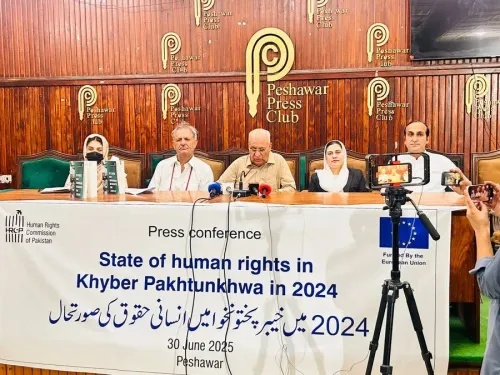
HRCP writes to Pakistan PM Shehbaz over torture in detention centres

Synopsis
On the International Day in Support of Victims of Torture, Pakistan's top rights body formally accused the government of running detention facilities where torture is widespread — and pointed to a 2022 law that, by design, leaves psychological abuse entirely unpunished. The HRCP's letter to PM Shehbaz Sharif is one of the most detailed domestic indictments of Pakistan's custodial rights framework to date.
Key Takeaways
The Human Rights Commission of Pakistan (HRCP) wrote to PM Shehbaz Sharif on 26 June 2025 over widespread torture in detention facilities nationwide.
The Torture and Custodial Death (Prevention and Punishment) Act (TCDA), 2022 omits 'mental and psychological pain and suffering' from its definition of torture, the HRCP said.
The Federal Investigation Agency (FIA) holds exclusive investigative jurisdiction over torture cases despite its senior officers being drawn from the police service — a conflict of interest the HRCP flagged as unresolved.
The NCHR 's supervisory role over investigations remains ambiguous, undermining accountability for victims.
The HRCP demanded TCDA amendments, independent investigations, victim reparations, and ratification of the Optional Protocol to the Convention against Torture (OPCAT) .
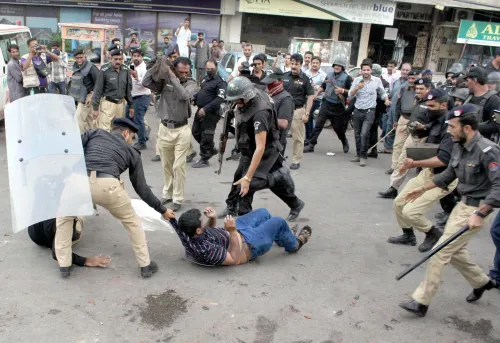
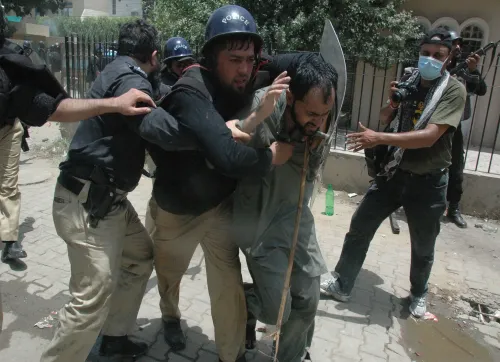
The Human Rights Commission of Pakistan (HRCP) on Friday, 26 June formally wrote to Prime Minister Shehbaz Sharif, raising grave concern over the widespread use of torture and cruel, inhuman, and degrading treatment — both physical and psychological — in detention facilities across Pakistan. The letter, timed to coincide with the International Day in Support of Victims of Torture, warned that the country's legal framework remains structurally inadequate to prevent such abuses.
Gaps in the 2022 Torture Law
Despite the enactment of the Torture and Custodial Death (Prevention and Punishment) Act (TCDA) in 2022, the HRCP contended that the law's definition of torture unjustifiably omits 'mental and psychological pain and suffering.' This exclusion, the commission argued, leaves practices such as threats of death or serious harm, intimidation, coercion, humiliation, mock executions, threats against family members, and prolonged or indefinite solitary confinement entirely outside the statute's reach.
The HRCP also flagged a structural conflict of interest embedded in the legislation: the Federal Investigation Agency (FIA) — whose senior officers are drawn from the police service itself — holds exclusive investigative jurisdiction over torture allegations, with no adequate safeguards against institutional bias.
Accountability Mechanisms Under Scrutiny
Although the National Commission for Human Rights (NCHR) is mandated to oversee investigations, the HRCP noted that concerns over the FIA's independence continue to undermine accountability. The supervisory role of the NCHR, it observed, remains ambiguous in practice, leaving victims with limited recourse.
The rights body further warned that the absence of systematic monitoring and reporting has left the true scale of torture and ill-treatment in detention facilities largely unknown — inaccessible both to policymakers and to civil society and international accountability mechanisms.
Key Demands Placed Before the Government
The HRCP placed a series of specific demands before the Pakistani government. It called for amendments to the TCDA to explicitly recognise mental and psychological suffering as a constituent element of torture, and for the establishment of criminal liability and proportionate penalties for acts of psychological torture.
The commission also urged that victims of psychological torture be granted access to effective remedies, rehabilitation, and reparations, in line with Pakistan's obligations under the Convention against Torture. It further demanded that procedural barriers causing undue delays be removed, that the NCHR's oversight powers be clearly defined, and that no institution implicated in torture allegations be permitted to exercise exclusive control over any investigation into those allegations.
Call to Ratify International Protocol
In a significant international dimension, the HRCP urged the Pakistani government to ratify the Optional Protocol to the Convention against Torture (OPCAT) and designate a credible, independent national preventive mechanism for regular monitoring of detention facilities — with findings made public and acted upon.
The letter represents one of the most detailed formal indictments of Pakistan's custodial rights framework in recent years, and places the Sharif administration under renewed pressure to align domestic law with international human rights standards ahead of upcoming UN review cycles.
Point of View
Yet built into the law an exclusion of psychological torture that critics argue was deliberate. Handing investigative authority to the FIA, an agency staffed by the same police cadre implicated in custodial abuse, is not an oversight; it is a structural guarantee of impunity. With UN review cycles approaching and OPCAT ratification still pending, the Sharif government faces a credibility test: whether it will treat the HRCP letter as a reform mandate or as another document to be acknowledged and archived.
NationPress
26 Jun 2026
Frequently Asked Questions
What did the HRCP write to Pakistan PM Shehbaz Sharif about?
The Human Rights Commission of Pakistan wrote to Prime Minister Shehbaz Sharif on 26 June 2025 to flag the widespread use of torture and cruel, inhuman, and degrading treatment — both physical and psychological — in detention facilities across the country. The letter was released on the International Day in Support of Victims of Torture.
What is wrong with Pakistan's 2022 Torture and Custodial Death Act, according to the HRCP?
The HRCP says the TCDA's definition of torture unjustifiably excludes mental and psychological pain and suffering, leaving practices such as mock executions, threats against family members, coercion, and prolonged solitary confinement outside the law's reach. It also grants exclusive investigative authority to the FIA, whose officers are drawn from the police service — creating an inherent conflict of interest.
What reforms has the HRCP demanded from the Pakistani government?
The HRCP has called for amendments to the TCDA to include psychological torture, establishment of independent investigative mechanisms, removal of procedural delays, clarification of the NCHR's oversight powers, and access to remedies and reparations for victims. It has also urged Pakistan to ratify the Optional Protocol to the Convention against Torture (OPCAT).
Why is the FIA's role in torture investigations controversial?
The Federal Investigation Agency holds exclusive jurisdiction to investigate torture allegations, but its senior officers are drawn from the police service — the same cadre often implicated in custodial abuse. The HRCP argues this arrangement generates an unavoidable conflict of interest and undermines any credible accountability process.
What is OPCAT and why is Pakistan's ratification significant?
The Optional Protocol to the Convention against Torture (OPCAT) requires signatory states to establish independent national mechanisms for regular, unannounced monitoring of detention facilities. Pakistan has not yet ratified OPCAT; the HRCP's demand for ratification would, if accepted, subject the country's prisons and holding centres to systematic external oversight for the first time.