Romania names Adrian Vestea PM after Tomac quits amid political crisis
Synopsis
Romania is on its third prime ministerial nomination in weeks. Adrian Vestea, a National Liberal Party figure with local government experience, has been tasked with forming a government after Eugen Tomac failed to secure parliamentary backing — the second consecutive PM nominee to fall short since the Bolojan government collapsed in May.
Key Takeaways
Romanian President Nicusor Dan designated Adrian Vestea as Prime Minister on 14 June 2025 .
Vestea is President of the Brasov County Council and Vice-President of the National Liberal Party .
Previous nominee Eugen Tomac resigned on Sunday morning after failing to secure parliamentary support.
The crisis stems from a no-confidence motion approved by 281 lawmakers — above the 233 threshold — that ousted the Ilie Bolojan government in early May.
Vestea has 10 days to form a government and win a parliamentary vote of confidence.
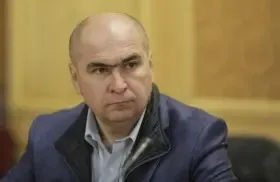
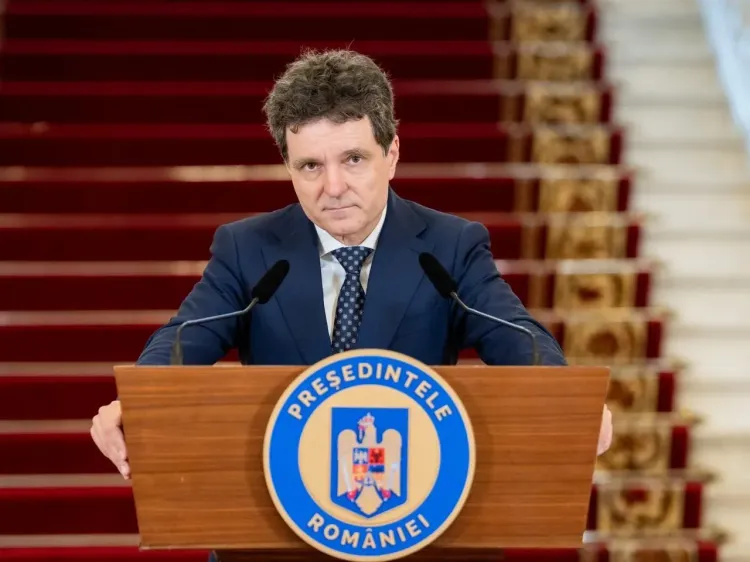
Romanian President Nicusor Dan on Sunday, 14 June designated Adrian Vestea, President of the Brasov County Council and Vice-President of the National Liberal Party (NLP), as the country's new Prime Minister. The nomination came hours after independent candidate Eugen Tomac resigned his PM mandate on Sunday morning, deepening Romania's ongoing political crisis.
Why Vestea Was Chosen
Dan said at a press conference that he nominated Vestea after consulting with political parties and concluding that a politically grounded candidate was now necessary. He cited Vestea's track record — as a Mayor, County Council President, and Minister — as evidence of his administrative competence. 'He has gone through all the administrative stages successfully,' Dan said, expressing confidence in the new nominee.
Vestea acknowledged the gravity of the moment. 'I assume this responsibility at a time of political crisis. I know the Romanian state well, and I know from the ground up what people's expectations are, what problems they face, and what needs to be done,' he said.
The Tomac Chapter Closes
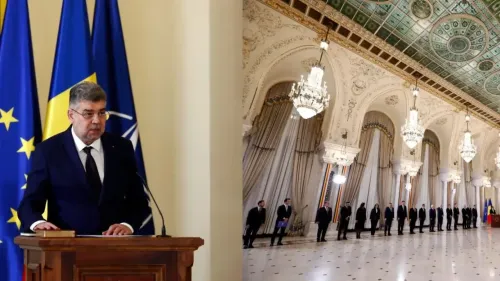
Tomac, a presidential adviser, had been nominated on 4 June as Prime Minister following the Romanian Parliament's approval of a no-confidence motion against Ilie Bolojan's government in early May, which forced Bolojan and his Cabinet to resign. Tomac, however, failed to secure sufficient parliamentary support to form a government and stepped down on Sunday morning.
President Dan acknowledged Tomac's efforts in a post on X: 'I thank Eugen Tomac for the seriousness he has shown, for his accountability, and for his responsibility. Neither Tomac nor I played at governing. We went in this direction following consultations with the political parties. At this moment, however, it is clear that a political solution is the appropriate one.'
The No-Confidence Chain That Triggered the Crisis
Romania's two largest parliamentary parties — the Social Democratic Party (PSD) and the Alliance for the Union of Romanians (AUR) — had jointly submitted a no-confidence motion against the Bolojan government in late April. The Parliament approved the motion with 281 votes, well above the 233 required for it to pass. The collapse of the Bolojan government set off the current succession crisis, with Tomac's failed bid now adding a second failed attempt at stability.
What Happens Next
Under Romanian constitutional procedure, Vestea now has 10 days to form a government and secure a parliamentary vote of confidence. His success will depend on whether he can build a coalition broad enough to survive the same parliamentary arithmetic that undid both Bolojan and Tomac. If he fails, Romania risks a prolonged governance vacuum at a time of elevated political tensions.
Frequently Asked Questions
Who is Adrian Vestea, Romania's newly designated Prime Minister?
Adrian Vestea is the President of the Brasov County Council and Vice-President of the National Liberal Party. He has previously served as Mayor and Minister, and was designated Prime Minister by President Nicusor Dan on 14 June after Eugen Tomac resigned the mandate.
Why did Eugen Tomac resign as Romania's PM designate?
Eugen Tomac resigned on Sunday morning after failing to secure sufficient support from political parties in Parliament to form a government. He had been nominated on 4 June following the collapse of Ilie Bolojan's government.
What triggered Romania's current political crisis?
The crisis began when the Social Democratic Party and the Alliance for the Union of Romanians submitted a no-confidence motion against the Bolojan government in late April. Parliament approved it with 281 votes — above the 233-vote threshold — forcing Bolojan's Cabinet to resign in early May.
How long does Vestea have to form a government?
Under Romanian constitutional rules, Vestea has 10 days from his designation to form a government and win a parliamentary vote of confidence. Failure to do so would prolong the political vacuum.
What did President Dan say about Tomac's resignation?
President Dan posted on X that he thanked Tomac 'for the seriousness he has shown, for his accountability, and for his responsibility,' adding that 'a political solution is the appropriate one' at this stage.