Rubio: Iran economic pressure so severe Trump sees no need for major strikes
Synopsis
US Secretary of State Marco Rubio told reporters after a G-7 meeting that Iran's economic pain — from a blockade and sweeping sanctions — is so severe that the Trump administration sees no immediate need for major combat operations. But the message comes with a sharp conditional: any Iranian attack on civilian infrastructure would, in Rubio's words, make Tehran 'pay a terrible price.'
Key Takeaways
US Secretary of State Marco Rubio said on 11 November that economic pressure on Iran was severe enough that President Trump saw no immediate need for major military strikes.
A combination of a blockade and sanctions is squeezing Iran's oil revenues; Rubio said once at-sea oil stocks are exhausted, 'almost all' of Iran's oil revenue will dry up.
Rubio warned that any Iranian attack on civilian infrastructure would result in Iran paying 'a terrible price.' Treasury Secretary Scott Bessent and US intelligence agencies are working to close sanction-evasion routes.
Mediation efforts are continuing via Qatar and other countries; the Qatari prime minister met President Trump the day before the G-7 meeting.
Rubio called Iran's negotiating conditions unrealistic and ruled out reparations or cash payments, but left the door open to a civilian nuclear programme deal.
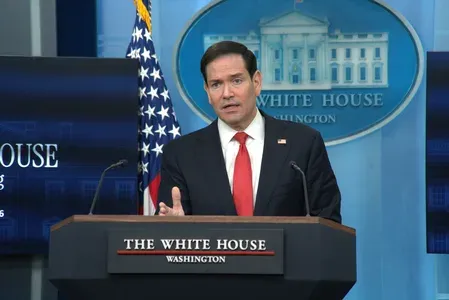
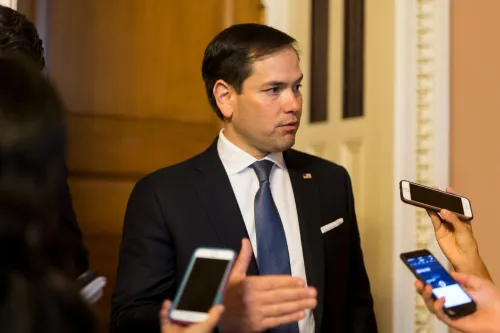
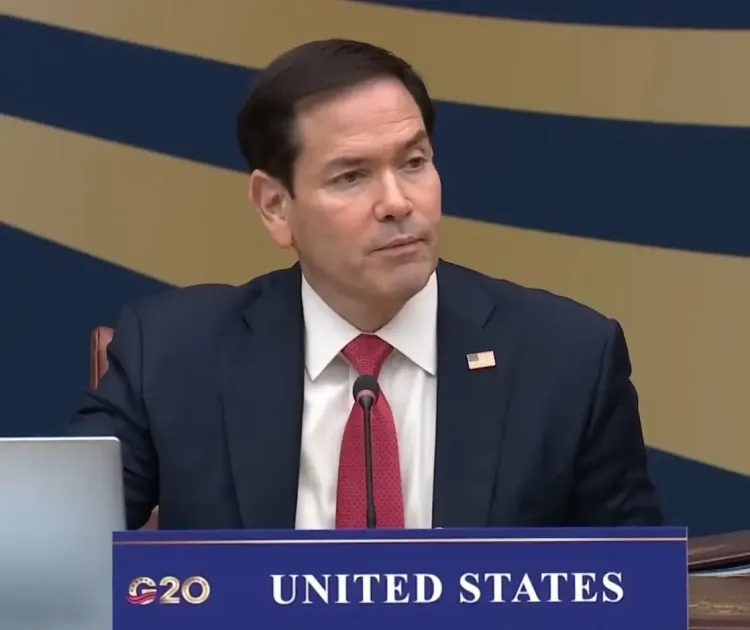
US Secretary of State Marco Rubio said on 11 November that economic pressure on Iran had grown so severe that President Donald Trump saw no immediate need for major combat operations — while making clear that Washington retained the capability and will to respond militarily if Tehran chose to escalate. Rubio made the remarks to reporters following a G-7 meeting that also drew representatives from Saudi Arabia, Brazil, Egypt, and South Korea.
Economic Campaign Over Combat Operations
Rubio described a combination of a blockade and sweeping sanctions as steadily squeezing Iran's oil revenues. He pushed back firmly against characterisations of the situation as a stalemate, arguing that the economic damage would only deepen with time.
'What I'm saying to you is that the economic campaign is so devastating that right now there really is no need for major combat operations,' Rubio said, adding that he had conveyed this assessment to US partners at the meeting.
Iran's Oil Revenues Running Dry
Rubio said Iran was nearing the exhaustion of oil supplies already at sea — shipments that had passed through during a temporary ceasefire when the blockade was suspended. Once those inventories were depleted, he argued, almost all Iranian oil revenue would effectively cease.
'Once that dries up, almost all of their oil revenue will dry up,' he said. Treasury Secretary Scott Bessent and US intelligence agencies were, he noted, actively working to close the remaining routes used to evade sanctions. The revenue contraction, Rubio argued, would limit Iran's capacity to fund its nuclear programme and armed partners. The transcript provided no independent figures to substantiate his assessment of the economic damage.
Military Warning and Civilian Infrastructure Threat
Rubio did not rule out military action, issuing a pointed warning when asked about the possibility of Iranian strikes on civilian infrastructure. 'If they do that, then they'll pay a terrible price,' he said. The statement signals that Washington's restraint is conditional rather than categorical, and that any Iranian escalation targeting civilian targets would trigger a sharp US response.
Negotiations Remain Open, but Iran's Terms Called 'Unrealistic'
Rubio maintained that Washington remained open to a diplomatic settlement. Qatar and other countries were continuing mediation efforts, he noted, adding that the Qatari prime minister had met President Trump in Washington the previous day. However, he described Iran's negotiating conditions as unrealistic, saying the US would reject demands for reparations and cash payments. He maintained that Iran could pursue a civilian nuclear energy programme on terms comparable to other nations.
'If there's a deal to be done, the President will be the first one to be in favour of it, but it's not going to be a stupid deal,' Rubio said.
Strait of Hormuz and Regional Stability
Rubio disputed suggestions that Gulf economies were being devastated, saying oil shipments continued despite Iranian drone attacks on commercial vessels. He said flows on some nights were reaching 80 to 85 per cent of pre-conflict levels, attributing the remaining shortfall to the disruption of Iranian exports. He called on other nations to help protect shipping through the Strait of Hormuz, acknowledging that he had received no response from G-7 counterparts on this — though he noted such commitments would likely require decisions at the heads-of-government level.
Separately, Rubio rejected any linkage between Lebanon's future and the broader negotiations with Tehran. Washington, he said, was mediating directly between Lebanon and Israel, and was working on a verification system for Israeli withdrawals and Lebanese armed forces deployments.
Point of View
Sanctions campaigns that have been declared decisive have a mixed record of actually changing state behaviour, and Iran has demonstrated a long capacity for economic adaptation. The more revealing moment was Rubio's admission that he received no response from G-7 allies on protecting Strait of Hormuz shipping — suggesting Washington's coalition-building on the Iran file remains incomplete even as it asserts the economic campaign is working.
NationPress
11 Nov 2026
Frequently Asked Questions
Why does the US say it does not need major military strikes on Iran right now?
US Secretary of State Marco Rubio said on 11 November that economic pressure — through a blockade and sanctions — was already so damaging to Iran's oil revenues that President Trump saw no immediate need for large-scale combat operations. Rubio argued the economic squeeze would deepen further as Iran's remaining at-sea oil stocks ran out.
What warning did Rubio issue to Iran?
Rubio warned that if Iran attacked civilian infrastructure, it would 'pay a terrible price,' making clear Washington's military option remained on the table. He said the current restraint was contingent on Iran not escalating.
What is happening with US-Iran diplomacy?
Rubio said Washington remained open to negotiations, with Qatar and other countries continuing mediation efforts. However, he described Iran's conditions — including demands for reparations and cash payments — as unrealistic, while saying Iran could have a civilian nuclear energy programme similar to other nations.
How are oil flows through the Strait of Hormuz being affected?
Rubio said oil shipments were continuing despite Iranian drone attacks on commercial vessels, with flows on some nights reaching 80 to 85 per cent of pre-conflict levels. He attributed the remaining shortfall to the disruption of Iranian exports and called on other nations to help protect shipping through the strait.
Who else participated in the G-7 meeting where Rubio spoke?
In addition to G-7 member representatives, the meeting included participants from Saudi Arabia, Brazil, Egypt, and South Korea. Discussions focused principally on the Middle East and Ukraine.