South Korea deploys 4,400-tonne destroyer to Cheonghae unit amid Iran war tensions
Synopsis
South Korea's ROKS Wang Geon destroyer has shipped out for the Gulf of Aden — but this isn't just another anti-piracy rotation. With Washington pressing Seoul to join the Strait of Hormuz mission and Defence Minister Ahn Gyu-back signalling 'phased' contributions at the Pentagon, this deployment could be a stepping stone into a far more volatile theatre.
Key Takeaways
The ROKS Wang Geon , a 4,400-tonne destroyer , departed Busan on 15 May for a six-month deployment with the Cheonghae unit in the Gulf of Aden .
This is the destroyer's ninth overseas deployment and the 48th vessel assigned to the Cheonghae unit.
Approximately 260 troops — including naval special warfare personnel and a Lynx helicopter aviation unit — are on board.
Defence Minister Ahn Gyu-back told US Defence Secretary Pete Hegseth at the Pentagon that Seoul will review 'phased' contributions to the Strait of Hormuz mission.
Any expansion of the Cheonghae unit's mandate beyond Somali waters requires approval from South Korea's National Assembly .
The Strait of Hormuz has been disrupted since late February following US-Israeli strikes against Iran .
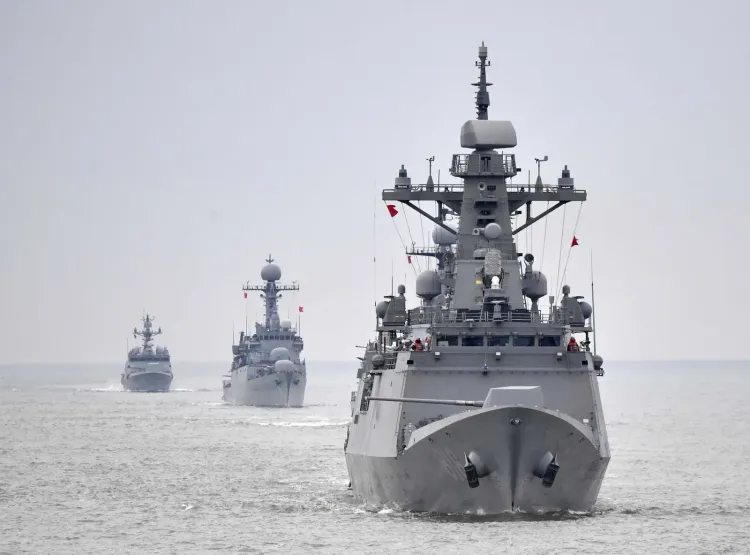
South Korea's Navy on Friday, 15 May dispatched the ROKS Wang Geon, a 4,400-tonne destroyer, from the southeastern port city of Busan for a rotational deployment with the Cheonghae unit — Seoul's long-running anti-piracy mission in the Gulf of Aden off the Somali coast. The deployment comes at a strategically sensitive moment, as Washington presses allies to help reopen the Strait of Hormuz following US-Israeli strikes against Iran.
Key Deployment Details
The ROKS Wang Geon departs Busan — approximately 330 kilometres southeast of Seoul — marking its ninth overseas deployment and making it the 48th vessel to serve with the Cheonghae unit since the mission's inception. A contingent of roughly 260 troops will accompany the destroyer on a six-month tour, comprising the ship's crew, a boarding team from the naval special warfare flotilla, and an aviation unit operating Lynx helicopters.
Cheonghae Unit's Mandate and Possible Expansion
The Cheonghae unit is currently mandated to operate exclusively in waters off Somalia, primarily escorting South Korean vessels and supporting international maritime safety efforts. However, the possibility of expanding its operational reach to the Strait of Hormuz remains open, subject to a government decision and approval by the National Assembly.
Notably, the mission has also conducted air defence drills and reinforced counter-drone systems in recent months to prepare for an evolving threat environment — a signal that Seoul is anticipating a broader operational role. In any contingency, the unit is authorised to participate in maritime security operations led by the Combined Maritime Forces and the EU Naval Force Somalia.
US Pressure and Seoul's Measured Response
The deployment unfolds against a backdrop of sustained pressure from US President Donald Trump, who has repeatedly called on allies — including South Korea and Japan — to back multinational efforts to restore safe shipping through the Strait of Hormuz. The waterway was effectively shut down in late February following US-Israeli strikes against Iran, disrupting a critical global oil route.
During ministerial-level talks at the Pentagon earlier this week, South Korean Defence Minister Ahn Gyu-back told his US counterpart Pete Hegseth that Seoul would review making 'phased' contributions to Washington's initiative. Ahn outlined possible participation modalities including declaring political support, dispatching personnel, sharing intelligence, and providing military assets — a formulation that leaves considerable flexibility without committing troops to a new theatre.
Strategic Context: Hormuz vs. Gulf of Aden
Seoul's calibrated language reflects the political complexity of expanding a mission originally framed around piracy into a conflict-adjacent zone. South Korea is a major oil importer and has deep economic ties with both the United States and regional Gulf states. Joining the US-led Maritime Freedom Construct (MFC) — or the parallel multinational mission led by France and Britain — would mark a significant shift in Seoul's overseas military posture.
With the National Assembly's approval required for any expansion, the government's timeline for a decision remains unclear. The current deployment, however, positions the Cheonghae unit geographically closer to any potential Hormuz operation, should the political calculus shift.
Point of View
Where any Hormuz expansion will face scrutiny from opposition lawmakers wary of entangling South Korea in a US-led military operation with open-ended risk. South Korea's economy is acutely sensitive to both oil prices and US alliance optics, which means the government is simultaneously under pressure to act and to not act. The Cheonghae unit's counter-drone upgrades suggest the military is already preparing for a more contested environment — the political authorisation may be the only thing lagging behind.
NationPress
22 Sept 2026
Frequently Asked Questions
What is the Cheonghae unit and what does it do?
The Cheonghae unit is South Korea's overseas naval mission, primarily tasked with escorting South Korean vessels in the Gulf of Aden and supporting international anti-piracy and maritime security efforts off the Somali coast. It operates in coordination with the Combined Maritime Forces and the EU Naval Force Somalia.
Why is the ROKS Wang Geon deployment significant right now?
The deployment comes as the United States pressures South Korea to contribute to multinational efforts to reopen the Strait of Hormuz, which has been disrupted since late February following US-Israeli strikes against Iran. Seoul is weighing whether to expand the Cheonghae unit's mandate beyond Somali waters into the Hormuz region.
What did South Korea's Defence Minister say at the Pentagon?
Defence Minister Ahn Gyu-back told US Defence Secretary Pete Hegseth during ministerial-level talks at the Pentagon that Seoul would review making 'phased' contributions to Washington's Strait of Hormuz initiative. He cited declaring support, dispatching personnel, sharing intelligence, and providing military assets as possible forms of participation.
Can South Korea expand the Cheonghae unit's mission to the Strait of Hormuz?
Yes, but it requires both a government decision and approval from South Korea's National Assembly. Currently, the unit's operational scope is restricted to waters off Somalia. Any expansion to the Strait of Hormuz would represent a significant shift in Seoul's overseas military posture.
How large is the current Cheonghae deployment?
The current deployment consists of approximately 260 troops aboard the ROKS Wang Geon, including the destroyer's crew, a boarding team from the naval special warfare flotilla, and an aviation unit operating Lynx helicopters. The six-month tour is the destroyer's ninth overseas deployment.