CM Hemant Soren Orders Departments to Curb Illegal Mining, Boost GST
Synopsis
Chief Minister Hemant Soren has directed all Jharkhand departments to complete work on time, halt illegal mining, introduce biometric systems, boost GST and VAT collections, curb tax evasion, and simplify taxpayer procedures through coordinated inter-departmental action.
Key Takeaways
CM Hemant Soren issued multi-point governance directives to all state departments on 25 May 2026 .
Departments have been ordered to complete tasks within set deadlines and work in coordination for better outcomes.
A biometric system is to be implemented across departments to improve accountability.
Directives include stopping illegal mining , a persistent revenue and law-enforcement challenge in Jharkhand .
Departments must raise GST and VAT collections , prevent tax evasion, and simplify procedures for taxpayers.
Jharkhand is a mineral-rich state where unauthorised extraction has historically undermined government revenues.
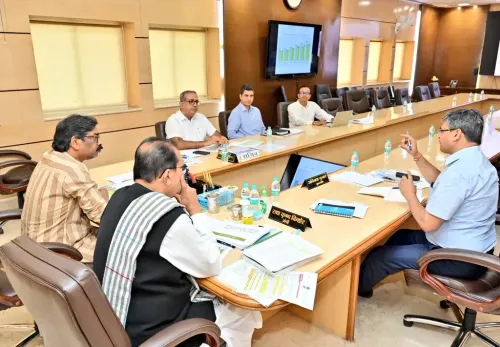
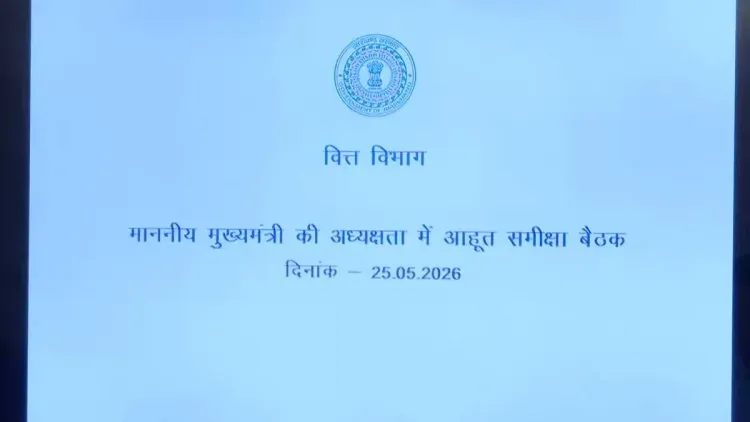
The Chief Minister's Office of Jharkhand announced on Monday, 25 May 2026 that Chief Minister Hemant Soren has issued a sweeping set of governance directives to all state departments, covering deadline-bound work completion, illegal mining suppression, biometric system deployment, and improved tax collections.
In a post on X, the Chief Minister's Office quoted Soren's instructions: 'समय सीमा में काम पूरा करने, अवैध खनन रोकने, बायोमैट्रिक प्रणाली लागू करने' ('completing work within deadlines, stopping illegal mining, implementing biometric systems') alongside orders to raise GST and VAT collections, prevent tax evasion, simplify procedures for taxpayers, and ensure all departments work in coordination for better outcomes.
Context
Jharkhand is one of India's most mineral-rich states, with coal, iron ore, and other resources forming a substantial pillar of government revenue. Despite this natural wealth, the state has historically grappled with large-scale unauthorised extraction that drains the exchequer and fuels parallel economies. Soren's latest directive signals a renewed push to bring enforcement and fiscal administration under tighter central oversight. The instruction to deploy a biometric system across departments points to a technology-first approach to plugging attendance and accountability gaps — a method increasingly adopted by state governments to reduce ghost employees and ensure on-ground presence of field staff, particularly in remote mining zones.Policy Backdrop
Jharkhand governments have periodically launched anti-illegal mining task forces, with notable drives initiated after 2014 targeting unauthorised coal and mineral extraction. Following the nationwide rollout of GST in 2017, the state introduced complementary measures to align its VAT administration with the new indirect tax framework and improve compliance among traders and businesses. The twin focus on GST and VAT collection reflects a broader challenge facing mineral-producing states: while royalties and mining levies are significant, commercial tax buoyancy depends on formalising supply chains and deterring under-reporting. Soren's directive to simplify procedures for taxpayers alongside stricter evasion checks suggests an attempt to balance compliance incentives with enforcement pressure.Stakeholders and Impact
The directives touch several constituencies simultaneously. Mining operators — both large firms and small-scale contractors — face heightened scrutiny under the illegal mining crackdown. Taxpayers and traders across the state stand to benefit if procedural simplification reduces compliance costs, even as anti-evasion measures tighten oversight. State revenue department officials are now on notice to deliver measurable collection improvements within defined timelines. The biometric mandate, if implemented uniformly, could affect tens of thousands of state government employees spread across Jharkhand's 24 districts, including field inspectors in mining-heavy districts such as Dhanbad, Bokaro and East Singhbhum. Inter-departmental coordination, explicitly called for in the directive, is seen as critical to preventing jurisdictional gaps that illegal mining networks have historically exploited.What's Next
The measurable impact of these directives will become visible in Jharkhand's quarterly commercial-tax and mining-department reports. Budget documents for the next fiscal cycle will be watched closely for upward revision in projected GST and VAT receipts. If biometric rollout proceeds on schedule and inter-departmental task forces are constituted, the state could see a tightening of enforcement timelines before the next legislative session. The broader test for the Soren administration will be translating these instructions into verifiable outcomes — a challenge that has historically separated intent from impact in resource-rich states.Point of View
Biometrics, tax collection, and inter-departmental coordination — reads as a mid-term governance reset aimed at shoring up state finances ahead of the next budget cycle. For a mineral-dependent state like Jharkhand, the link between illegal extraction and revenue leakage is direct, and bundling enforcement with technology deployment signals an attempt to close multiple loopholes simultaneously. The biometric mandate is particularly telling: it targets the accountability deficit within the bureaucracy itself, not just external actors. Whether these directives translate into measurable collection gains or remain aspirational will define the Soren administration's fiscal credibility in its current term.
NationPress
9 Oct 2026
Frequently Asked Questions
What did CM Hemant Soren order Jharkhand departments to do?
CM Hemant Soren directed all Jharkhand departments to complete work within deadlines, stop illegal mining, implement biometric systems, increase GST and VAT collections, prevent tax evasion, simplify taxpayer procedures, and work together across departments for better results.
Why is illegal mining a problem in Jharkhand?
Jharkhand is one of India's most mineral-rich states, and unauthorised extraction of coal, iron ore and other minerals has historically drained government revenue and enabled parallel economies, making it a persistent governance challenge.
What is the biometric system Hemant Soren wants to implement?
The directive calls for deploying a biometric system across state government departments, a technology-based measure commonly used to ensure employee attendance and on-ground accountability, particularly relevant for field staff in mining-heavy districts.
How does Jharkhand plan to improve GST and VAT collections?
CM Soren's directive asks departments to simultaneously tighten anti-evasion enforcement and simplify compliance procedures for taxpayers, aiming to broaden the tax base while reducing the burden on honest filers.
When did CM Hemant Soren issue these governance directives?
The Chief Minister's Office of Jharkhand announced the directives on Monday, 25 May 2026 , via a post on X.