CM Soren Reviews Jharkhand Finance Dept, Pushes Revenue Reforms
Synopsis
Chief Minister Hemant Soren on 25 May 2026 reviewed Jharkhand's Finance and Commercial Tax Department, discussing revenue collection, budget implementation, and suggesting technology-driven reforms to strengthen the state's fiscal position.
Key Takeaways
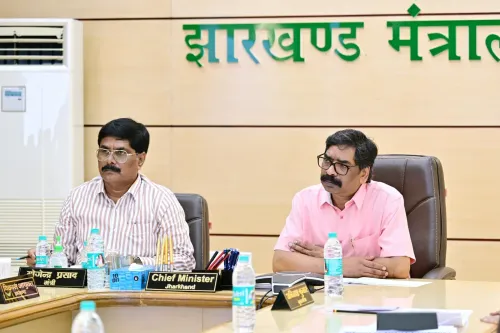
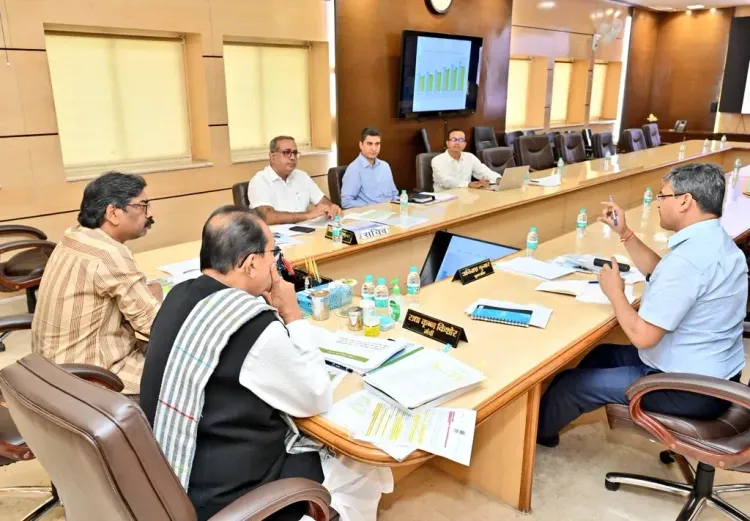
Chief Minister Hemant Soren chaired a review meeting of the Finance and Commercial Tax Department on 25 May 2026 .
Discussions covered the state's financial condition , revenue collection , and budget provision implementation .
Soren offered suggestions on necessary reforms and technology adoption to increase state finance and revenue.
Jharkhand has faced fiscal pressures since the GST regime of 2017 restructured state-level commercial tax dynamics.
The state's revenue base depends significantly on mining royalties alongside own-source tax revenues.
Implementation of any technology-driven changes will be tracked in subsequent quarterly revenue reports and the next budget cycle.
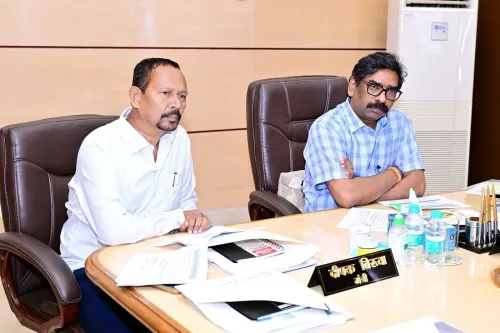
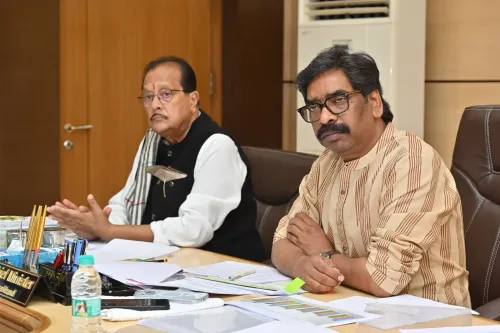
Jharkhand Chief Minister Hemant Soren on Monday, 25 May 2026, chaired a review meeting of the state's Finance and Commercial Tax Department, discussing the state's financial health, revenue collection performance, and the effective implementation of budget provisions. Soren also offered several suggestions to the department on reforms and technology adoption to boost state finances and revenue.
Context
Posting on X, Chief Minister Soren wrote — 'aaj vitt aur vanijyik kar vibhag ki samiksha baithak mein rajya ki vittiya sthiti, rajasva sangrah, bajat pravadhanon ke prabhavi kriyanvayan, aadi vishyon par charcha ki' — ('Today, in the review meeting of the Finance and Commercial Tax Department, discussions were held on the state's financial condition, revenue collection, and effective implementation of budget provisions'). He added that he gave several suggestions to the department on necessary reforms and use of technology to increase finance and revenue.
The meeting reflects routine but important executive oversight by the Chief Minister over one of the state's most critical departments. The Finance and Commercial Tax Department is the primary arm responsible for the state's own-source revenue, commercial tax administration, and ensuring that allocated budget funds are drawn down and utilised effectively.
Policy Backdrop
Jharkhand, carved out as a separate state in 2000, has an economy heavily tied to its mineral wealth, with mining royalties forming a significant share of non-tax revenue. However, the state, like many others, has faced fiscal pressures following the restructuring of indirect taxation under the national GST regime adopted in 2017, which altered the dynamics of state-level commercial tax collection and prompted a sustained push to widen the tax base.
Post-GST compensation dynamics have made it imperative for mineral-rich states like Jharkhand to strengthen own-source revenues beyond royalties. Successive administrations have leaned on administrative efficiency drives, digital tools for tax administration, and tighter budget utilisation monitoring to manage fiscal stress — a pattern that the current review meeting squarely fits into.
Stakeholders and Impact
The primary stakeholders in any reforms emerging from this review are state commercial taxpayers, businesses operating in Jharkhand's mining and allied sectors, and the broader public that depends on the state government's capacity to fund welfare schemes and infrastructure. Improved revenue collection directly determines the fiscal space available for social sector spending.
Technology-driven reforms in tax administration — such as digital filing, real-time compliance monitoring, and data analytics for detecting evasion — have been adopted by several states to measurable effect. Chief Minister Soren's emphasis on technology use signals an intent to align Jharkhand's tax machinery with these best practices, though specific outcomes of Monday's meeting remain to be seen.
What's Next
The real test of Monday's review will be visible in the next quarterly revenue collection figures and in any administrative or procedural changes the Finance and Commercial Tax Department announces in the coming weeks. Observers will also watch whether the suggestions on technology adoption translate into concrete initiatives in the next state budget cycle.
For a state that has consistently sought to balance developmental spending with fiscal discipline, sustained executive attention to revenue performance — as demonstrated by this review — remains a key indicator of the government's fiscal management priorities going forward.
Point of View
Closing the gap between budgeted and actual revenue collection is a perennial challenge — one that technology-driven tax administration can meaningfully address. The emphasis on 'necessary reforms' and technology use also fits a broader national pattern of state governments leveraging digital tools to widen the GST compliance net and reduce leakage. Whether this review translates into measurable revenue gains will be the metric by which the initiative is ultimately judged.
NationPress
20 Sept 2026
Frequently Asked Questions
Why did CM Hemant Soren hold a Finance Department review meeting?
Chief Minister Hemant Soren held the review to assess Jharkhand's financial condition, evaluate revenue collection performance, and suggest reforms including technology adoption to strengthen the state's fiscal position.
What is the Jharkhand Finance and Commercial Tax Department?
It is the state government department responsible for managing Jharkhand's revenue collection, commercial taxes, and overseeing the effective utilisation of budget allocations.
How does GST affect Jharkhand's state revenue?
Since the national GST regime was adopted in 2017, it restructured state-level commercial tax collection, reducing direct state control and making it critical for Jharkhand to improve own-source revenue and compliance.
What reforms did Hemant Soren suggest to the Finance Department?
According to his post, Soren suggested necessary reforms and the use of technology to increase state finances and revenue, though specific details of the suggestions have not been officially disclosed.
What is Jharkhand's main source of revenue?
Jharkhand relies on a combination of mining royalties from its mineral-rich geography and own-source tax revenues, including commercial taxes, for its state budget.