CM Hemant Soren Orders War-Footing Drive Against Urban Water Body Encroachments

Synopsis
Jharkhand Chief Minister Hemant Soren on 29 May 2026 ordered a war-footing crackdown on illegal constructions on urban rivers, ponds, dams and drains, directing surveys, FIRs and demolitions — framing water-body protection as the lifeline of Jharkhand's cities.
Key Takeaways
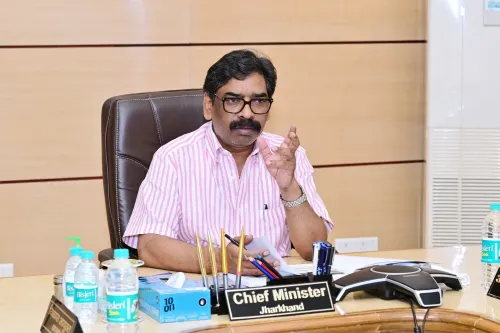
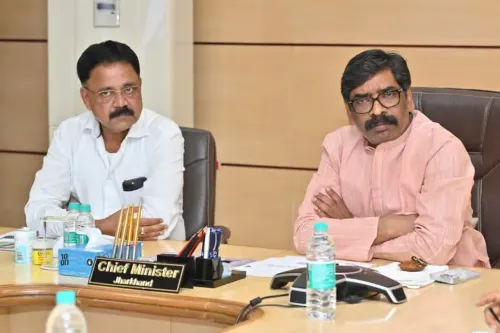
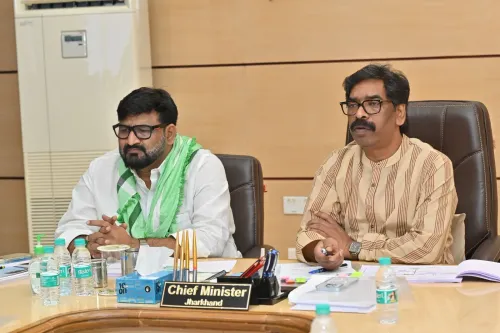
CM Hemant Soren chaired an Urban Development and Housing Department review meeting on 29 May 2026 and issued strict anti-encroachment orders.
Officials were directed to immediately stop all new illegal construction on rivers, ponds, dams and drains passing through urban areas.
An intensive survey of existing encroached structures must be conducted, followed by written notices to violators.
FIRs will be registered against encroachers who refuse to vacate, and illegal structures will be demolished.
The Chief Minister appealed directly to citizens not to build on water-body land, calling environmental protection a collective responsibility .
The drive aligns with the AMRUT framework, which mandates urban water-body preservation and encroachment removal across Indian states.
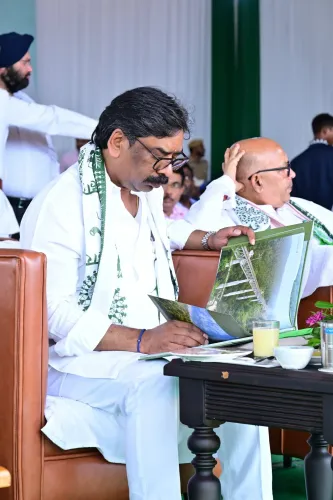
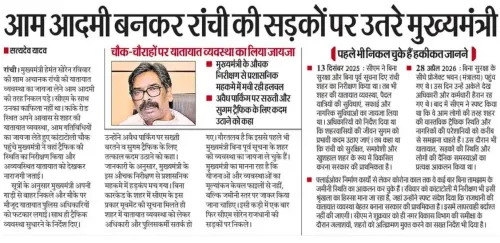
Jharkhand Chief Minister Hemant Soren on Friday, 29 May 2026, issued sweeping orders to the state's Urban Development and Housing Department, directing officials to immediately halt all illegal construction on rivers, ponds, dams, drains and other water bodies passing through urban areas — and to demolish existing encroachments on a war footing.
Context
Posting in Hindi on X, CM Soren declared that 'शहरों की नदियां, तालाब, डैम, नाले और अन्य जलस्रोत झारखंड की जीवनरेखा हैं' ('The rivers, ponds, dams, drains and other water sources of cities are the lifeline of Jharkhand'), adding that illegal encroachment on them 'will not be tolerated at any cost.' He said the directive was issued during a departmental review meeting held the same day.
The Chief Minister announced a multi-step enforcement protocol: an immediate and intensive survey of all houses built on encroached water-body land, issuance of written notices to violators, registration of FIRs against those who refuse to vacate, and demolition of illegal structures. He described the pace of action as 'युद्ध स्तर पर' — 'at the level of war.'
Policy Backdrop
The directive aligns with the framework of the Atal Mission for Rejuvenation and Urban Transformation (AMRUT), launched in 2015, which mandates states to preserve urban water bodies, improve drainage and remove encroachments as part of sustainable city planning. Jharkhand's urban centres, including Ranchi, have faced recurring flooding and drainage failures linked partly to construction on natural water channels.
Multiple Indian states have in recent years intensified drives against illegal constructions on urban water bodies, often following court directions and central-government urban scheme guidelines. CM Soren's order fits this broader national pattern of administrative action on civic and environmental compliance, with the added emphasis of criminal accountability through FIRs.
Stakeholders and Impact
The order directly affects urban local bodies — municipal corporations and town committees across Jharkhand — which will be responsible for conducting surveys, serving notices and executing demolitions. Residents who have built on encroached water-body land face the prospect of FIRs and structural demolition.
CM Soren also made a direct public appeal, urging citizens not to construct any structure on water-body land, framing environmental protection as a collective responsibility: 'झारखंड की प्रकृति, पर्यावरण और भविष्य की रक्षा हम सभी की सामूहिक जिम्मेदारी है' ('Protecting the nature, environment and future of Jharkhand is the collective responsibility of all of us'). He said such encroachments pose a 'serious threat to the environment and drainage,' and are 'simply not pardonable.'
The Jharkhand Mukti Morcha-led government's move is likely to be watched closely by urban communities near water bodies, environmental groups, and opposition parties who may scrutinise the pace and fairness of implementation.
What's Next
Urban local bodies across Jharkhand are now expected to initiate ground surveys, identify encroachments and begin the notice-and-demolition cycle in the coming weeks. The government's stated intent to file FIRs against non-compliant encroachers signals a legal escalation beyond routine civic enforcement.
How swiftly and uniformly the drive is executed across all urban centres — and whether it withstands legal challenges from affected residents — will determine its long-term impact on urban water-body conservation in the state.
Point of View
When encroachments on urban drains and rivers directly amplify flood risk in cities like Ranchi. By coupling demolition orders with criminal FIRs, the government is raising the legal stakes beyond routine civic notices — a shift that distinguishes this drive from earlier, less consequential anti-encroachment announcements. The move also lets the JMM government occupy the politically safe ground of environmental stewardship, appealing to both urban middle-class voters concerned about flooding and the party's core tribal constituency that frames land and water as communal heritage. The real test, as with similar drives elsewhere in India, will be whether enforcement is uniform or selectively applied.
NationPress
20 Sept 2026
Frequently Asked Questions
What did Hemant Soren announce about water body encroachments in Jharkhand?
On 29 May 2026, CM Hemant Soren ordered the Urban Development and Housing Department to survey, serve notices on, file FIRs against, and demolish illegal constructions built on urban rivers, ponds, dams and drains across Jharkhand.
Which department will carry out the anti-encroachment drive in Jharkhand cities?
The Urban Development and Housing Department, along with urban local bodies such as municipal corporations and town committees, will execute the surveys, notices and demolitions.
Will FIRs be filed against people who built homes on water body land in Jharkhand?
Yes. CM Soren specifically directed that FIRs be registered against encroachers who do not remove their illegal structures after receiving written notices.
How does the Jharkhand water body encroachment order relate to AMRUT?
The Atal Mission for Rejuvenation and Urban Transformation (AMRUT), launched in 2015, requires states to preserve urban water bodies and remove encroachments; Jharkhand's directive is consistent with those central-scheme obligations.
Why is illegal construction on water bodies considered dangerous in Jharkhand?
CM Soren stated that encroachments on rivers and other water sources pose a serious threat to the environment and urban drainage, contributing to flooding and ecological degradation in Jharkhand's cities.