CM Hemant Soren Orders Drinking Water Relief Across Jharkhand
Synopsis
Chief Minister Hemant Soren on 23 May 2026 ordered all Jharkhand district officials, police officers, BDOs, and panchayat representatives to ensure public drinking water access and deploy tankers where scarcity exists, as the state faces intensifying heatwave conditions.
Key Takeaways
CM Hemant Soren issued a statewide directive on 23 May 2026 ordering public drinking water arrangements amid a heatwave in Jharkhand.
All Deputy Commissioners, Superintendents of Police, Circle Officers, BDOs, and panchayat representatives are covered by the order.
Officials must display clear notices at public locations so passers-by can locate water points.
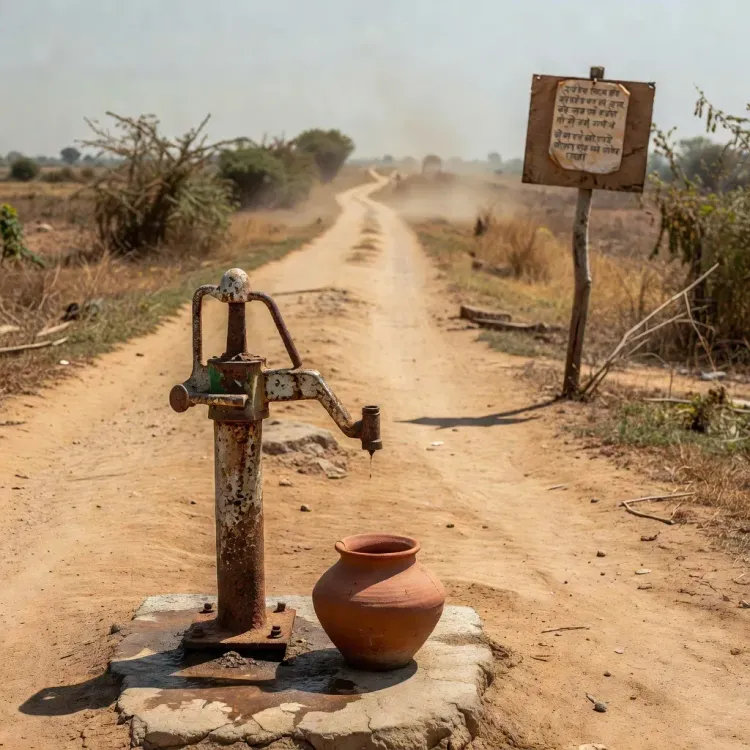
Wherever water scarcity exists, Deputy Commissioners must immediately deploy tankers and repair handpumps.
The order explicitly states no village, hamlet, or neighbourhood should face hardship due to drinking water shortage.
CM Soren invoked the principle 'जनहित सर्वोपरि है' — 'Public interest is paramount' — as the closing mandate of the directive.
Jharkhand Chief Minister Hemant Soren on Saturday, 23 May 2026, issued a sweeping administrative directive ordering all district officials, police officers, block development officers, and panchayat representatives across Jharkhand to ensure adequate drinking water arrangements at public places and government offices, as the state grapples with intensifying summer heat and heatwave conditions.
Context
Posting in Hindi on X, CM Soren said: 'झारखंड में लगातार बढ़ती गर्मी और हीटवेव को देखते हुए' ('In view of the continuously rising heat and heatwave in Jharkhand'), all Deputy Commissioners, Superintendents of Police, station in-charges, Circle Officers, Block Development Officers, and panchayat representatives have been directed to ensure proper drinking water availability outside their offices and at public locations. The directive also mandates that clear information notices be displayed so that passers-by and the general public can access relief.
The Chief Minister further instructed that wherever water scarcity exists, Deputy Commissioners must immediately arrange tanker-based water supply, repair of handpumps, and other alternative measures. He stated: 'किसी भी गाँव, टोला या मोहल्ले में पेयजल की कमी के कारण लोगों को परेशानी न हो' ('No village, hamlet, or neighbourhood should face hardship due to shortage of drinking water — this is our collective responsibility').
Policy Backdrop
The directive fits within a well-established pattern of seasonal governance in Jharkhand. The state government has issued summer preparedness circulars since at least 2019, directing district machinery to deploy tankers and repair handpumps in drought-prone blocks ahead of the peak summer months. The National Disaster Management Authority issued national heatwave management guidelines in 2016, requiring states to maintain active action plans — frameworks that Jharkhand's district administration is expected to operationalise at the ground level.
Jharkhand, an eastern Indian state with a large tribal population and a predominantly rural economy, faces recurring summer water scarcity, particularly in its interior and mining-belt districts. The state's decentralised administrative structure — through Deputy Commissioners, Block Development Officers, and Circle Officers — is the primary vehicle for delivering emergency relief in remote areas.
Stakeholders and Impact
The directive directly affects rural villagers, urban commuters, and daily wage workers who are most exposed to outdoor heat. Panchayat representatives have been specifically included in the order, signalling an expectation that relief arrangements reach the last mile — including remote villages and hamlets (tolas) that may not be served by piped water infrastructure.
For the district administration, the order carries an explicit accountability signal: CM Soren closed the post with 'जनहित सर्वोपरि है' ('Public interest is paramount'), and called on the administration to work with 'full sensitivity, promptness, and a humanitarian outlook' during this period of extreme heat.
What's Next
District-level compliance reports on tanker operations and handpump repairs are expected in the coming weeks as Deputy Commissioners respond to the directive. India Meteorological Department heatwave bulletins for Jharkhand districts are anticipated to remain active through June 2026, keeping administrative pressure on district officials to sustain relief measures. The broader test will be whether block-level machinery can translate the Chief Minister's order into on-ground action in the state's most water-stressed and geographically isolated pockets.
Point of View
From Deputy Commissioners down to panchayat representatives, the order creates a visible accountability chain that is difficult for officials to ignore. The inclusion of panchayat representatives is notable: it extends responsibility beyond the formal bureaucracy into elected local government, which has historically been the weakest link in last-mile relief delivery in Jharkhand. This fits a broader pattern across Indian states of using heatwave seasons as governance stress-tests, with outcomes depending almost entirely on district-level execution capacity rather than the directive itself.
NationPress
16 Sept 2026
Frequently Asked Questions
What did Hemant Soren order regarding the Jharkhand heatwave?
CM Hemant Soren directed all Deputy Commissioners, police officers, BDOs, Circle Officers, and panchayat representatives in Jharkhand to ensure adequate drinking water at public places and government offices, and to deploy tankers and repair handpumps wherever water scarcity exists.
Which officials are responsible for implementing the Jharkhand water relief order?
Deputy Commissioners, Superintendents of Police, station in-charges, Circle Officers, Block Development Officers, and panchayat representatives are all named in the directive and are responsible for implementation at district and block levels.
What happens if a village in Jharkhand has no drinking water during the heatwave?
CM Soren's order requires Deputy Commissioners to immediately arrange tanker-based water supply, repair non-functional handpumps, and put in place other alternative arrangements in any area facing water scarcity.
Is Jharkhand prone to water scarcity in summer?
Yes, Jharkhand has a recurring history of summer water scarcity, particularly in its interior and tribal areas. The state government has issued similar summer preparedness directives since at least 2019 to address this seasonal challenge.
What does 'Janahit sarvopari hai' mean in CM Soren's post?
The Hindi phrase means 'Public interest is paramount.' CM Soren used it as the closing line of his directive to emphasise that citizen welfare must be the overriding priority for all officials during the heatwave.