CM Hemant Soren Directs Water Quality Monitoring, Plastic-Free Villages
Synopsis
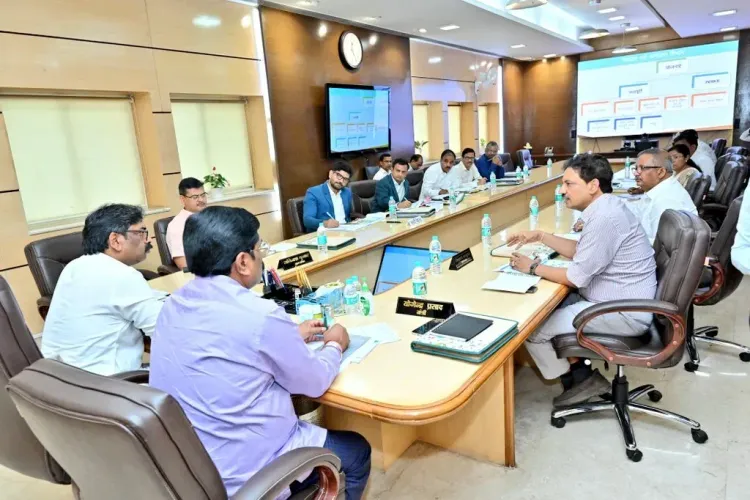
Jharkhand CM Hemant Soren has directed regular water quality monitoring to ensure safe drinking water for all citizens and called for public awareness campaigns to build plastic-free villages, with incentives for top-performing gram panchayats — reinforcing state-level implementation of the Jal Jeevan Mission and Swachh Bharat Mission.
Key Takeaways
CM Hemant Soren issued a two-point directive on June 9, 2026 covering water quality and plastic-free villages.
Officials are directed to conduct regular water quality monitoring and ensure safe drinking water reaches every citizen.
A public awareness campaign is to be run to promote plastic-free villages across Jharkhand .
Villages that perform better on plastic-free targets are to be incentivised and encouraged .
The directive aligns with the central Jal Jeevan Mission (2019) and Swachh Bharat Mission Phase-II (2020) .
Rural households and gram panchayats are the primary implementing units and beneficiaries.
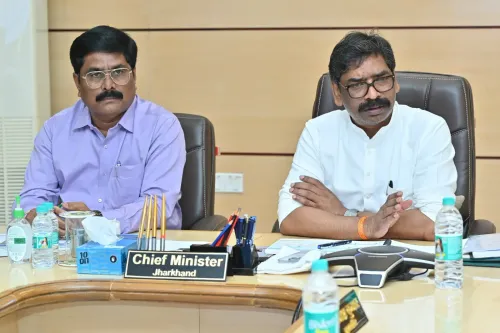
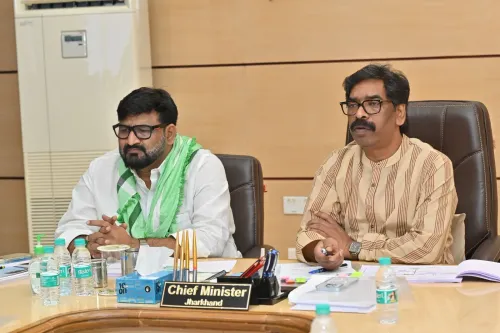
Jharkhand Chief Minister Hemant Soren on Tuesday, June 9, 2026, issued a two-point directive on social media calling for regular water quality monitoring across the state and a sustained public awareness drive to make villages plastic-free, with incentives for high-performing gram panchayats.
Context
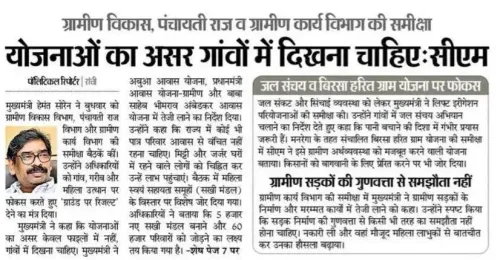
The directive, posted on X, instructs officials to conduct regular monitoring of water quality and ensure clean, safe drinking water reaches every citizen — 'jal guṇvattā kī niyamit nigrānī kar sabhī nāgarikōṃ tak svaccha evaṃ surakṣit peyajal pahuncāe' [conduct regular water quality monitoring and deliver clean and safe drinking water to all citizens]. The second point calls for running public awareness campaigns to create plastic-free villages and for recognising and encouraging villages that perform better.
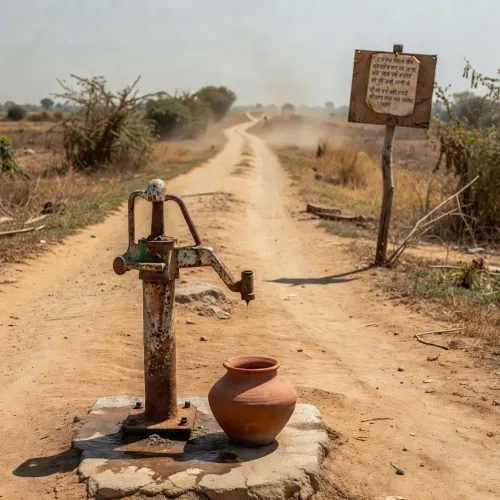
Jharkhand is home to a large tribal and rural population spread across difficult terrain, where last-mile water delivery and waste management have historically posed logistical challenges. The directive appears to be part of a periodic administrative review of scheme implementation at the ground level.
Policy Backdrop
The instructions align with two major national programmes. The Jal Jeevan Mission, launched in 2019 by the central government, aims to provide functional household tap connections for safe drinking water in every rural home. Swachh Bharat Mission Phase-II, rolled out in 2020, places explicit emphasis on solid waste management and plastic reduction at the village level.
State governments are responsible for operationalising both schemes through district administrations and gram panchayats. Regular water quality testing and plastic-free village certifications are among the key performance indicators used in national reviews of these programmes. Jharkhand's scattered habitations and forested belts make consistent monitoring particularly demanding.
Stakeholders and Impact
Rural households and village panchayats are the primary stakeholders. For households — especially in tribal belts — access to tested, piped drinking water directly reduces exposure to waterborne diseases. The proposal to incentivise better-performing villages adds a competitive dimension that has been used in other states to accelerate behavioural change on sanitation.
Gram sabhas and local elected bodies will likely be the implementing units for both the monitoring protocols and the plastic-free awareness campaigns. The mention of encouragement for better-performing villages suggests a ranking or reward mechanism, though the specific form of that incentive was not detailed in the post.
What's Next
Attention will now turn to whether the state government follows through with formal orders to district water and sanitation committees and panchayati raj institutions. District-level water quality reports and progress on plastic-free village certifications are expected to feature in upcoming state review meetings or gram sabha sessions.
If a structured incentive framework is announced, it could set a template for other states grappling with similar implementation gaps under the Jal Jeevan Mission and Swachh Bharat Mission in rural and tribal geographies.
Point of View
As reward-based frameworks have shown traction in accelerating sanitation outcomes in comparable tribal states. Whether this translates into a formal order with measurable targets will determine if it moves the needle or remains a rhetorical push.
NationPress
19 Sept 2026
Frequently Asked Questions
What did Jharkhand CM Hemant Soren say about drinking water?
CM Hemant Soren directed officials to conduct regular water quality monitoring and ensure clean, safe drinking water is delivered to all citizens in Jharkhand.
What is the plastic-free village campaign in Jharkhand?
Soren called for public awareness campaigns to encourage villages to become plastic-free and proposed that better-performing villages be recognised and incentivised.
How does Jharkhand's water directive relate to Jal Jeevan Mission?
The Jal Jeevan Mission, launched by the central government in 2019, aims to provide piped tap water to all rural households; Soren's directive reinforces state-level monitoring and implementation of this scheme in Jharkhand.
What is Swachh Bharat Mission Phase-II?
Swachh Bharat Mission Phase-II was rolled out in 2020 with a focus on solid waste management and plastic reduction in villages, forming the policy backbone for plastic-free village initiatives like the one Soren has directed.
Which communities are most affected by water quality issues in Jharkhand?
Rural and tribal communities in Jharkhand are most affected, as the state's difficult terrain and scattered habitations make consistent water quality monitoring and last-mile delivery particularly challenging.