SAFIR to study South Asia cross-border power grid, eyes regional energy market
Synopsis
SAFIR is commissioning a 120-day study on cross-border power transmission across five South Asian nations — with a potential India-Sri Lanka undersea electricity link among the proposals on the table. At a time when regional electricity demand is surging and renewable capacity is growing unevenly, this study could lay the groundwork for a competitive, interconnected South Asian power market.
Key Takeaways
SAFIR has initiated a study titled 'Cross-Border Transmission' covering India , Nepal , Bhutan , Bangladesh , and Sri Lanka .
The selected consultant must complete the study within 120 days of signing the agreement; the application deadline was 18 September 2026 .
The study will assess existing transmission links, identify new corridors, and examine the feasibility of a regional transmission master plan , including a potential India-Sri Lanka subsea link .
Nepal and Bhutan hold significant hydropower potential, while India and Bangladesh have major coal-based and growing renewable capacity — creating strong complementarity.
SAFIR was established in 1999 and is headquartered in New Delhi , with member representatives from five South Asian nations.
The study will propose short-, medium-, and long-term measures for harmonising regulatory frameworks and advancing regional electricity integration.
The South Asia Forum for Infrastructure Regulation (SAFIR) is set to commission a comprehensive study on cross-border electricity transmission across South Asia, with the aim of strengthening grid connectivity, integrating renewable energy, and advancing a more competitive regional power market. The study will cover India, Nepal, Bhutan, Bangladesh, and Sri Lanka.
What the Study Will Cover
According to the Terms of Reference (ToR) published by SAFIR, the study — formally titled 'Cross-Border Transmission' — was initiated by the forum's Executive Committee in view of the urgent need to ensure energy sufficiency and make cross-border electricity trade a success across the region. The forum has invited consultant applications, with the submission deadline having passed on Friday, 18 September. The selected consultant will be required to complete the study within 120 days of signing the agreement.
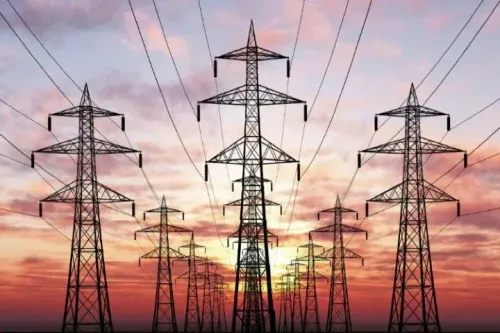
The study will assess the capacity, technology, operational performance, and bottlenecks of existing transmission links. It will also examine grid integration challenges such as scheduling, dispatch, and frequency control, while mapping electricity demand alongside generation resources — including hydropower, solar, wind, and thermal — to identify potential complementarities among the five member countries.
New Corridors, Investment Needs and a Subsea Link
Among the more ambitious components of the study is an assessment of new transmission corridors and expansion opportunities, as well as the feasibility of a regional transmission master plan. Notably, this includes a potential India-Sri Lanka subsea electricity link — a proposal that has been discussed for years but not yet formally progressed. The scope also covers investment and financing requirements for upgrades across the network.
The study will further examine regional power market models and institutional mechanisms, including competitive power exchanges, electricity scheduling, settlement procedures, and dispute resolution frameworks. It will look at the economic and strategic benefits of regional trade — including energy security gains, renewable integration, and emissions reduction — alongside regulatory, financial, technical, and geopolitical risks.
Why South Asia Needs Regional Power Integration
South Asia's energy resources are significant but unevenly distributed. Nepal and Bhutan hold substantial hydropower potential, while India and Bangladesh have sizeable coal-based generation capacity alongside rapidly growing renewable portfolios. Electricity demand is rising steeply across the subcontinent, creating both pressure and opportunity.
According to the ToR, cross-border electricity trade has emerged as a practical means of making better use of regional resources, improving grid reliability, and deepening regional cooperation. Critics and energy analysts have long argued, however, that regulatory fragmentation and geopolitical sensitivities have slowed integration despite the clear economic logic.
About SAFIR
Established in 1999 and headquartered in New Delhi, SAFIR is a regional forum of infrastructure regulators and related institutions in South Asia. Its Executive Committee includes representatives from India, Bangladesh, Bhutan, Nepal, and Sri Lanka. The forum focuses on capacity building, training, and research related to infrastructure regulation.
The study's findings are expected to propose short-, medium-, and long-term measures for harmonising regulatory frameworks and facilitating greater regional electricity integration — a blueprint that, if acted upon, could reshape energy flows across one of the world's most populous regions.
Point of View
But it is also a reminder of how slowly South Asian energy integration has moved — nearly three decades after the forum was founded. The India-Sri Lanka subsea link has been discussed for years without a concrete timeline, and regulatory fragmentation across five jurisdictions remains the defining obstacle, not a lack of analysis. What the region arguably needs is not another roadmap but a binding multilateral commitment with teeth. Whether this study translates into infrastructure or joins a growing archive of well-intentioned reports will depend on political will, not the quality of the consultancy.
NationPress
19 Sept 2026
Frequently Asked Questions
What is the SAFIR cross-border transmission study?
It is a comprehensive research exercise commissioned by the South Asia Forum for Infrastructure Regulation (SAFIR) to assess existing and planned cross-border electricity transmission links across India, Nepal, Bhutan, Bangladesh, and Sri Lanka. The study aims to identify gaps, propose new corridors, and recommend steps toward a regional power market.
Which countries are covered in the SAFIR study?
The study covers five South Asian nations: India, Nepal, Bhutan, Bangladesh, and Sri Lanka — all of which are represented on SAFIR's Executive Committee.
What is the India-Sri Lanka subsea electricity link mentioned in the study?
The study will assess the feasibility of a potential undersea electricity transmission link between India and Sri Lanka as part of a broader regional transmission master plan. The concept has been discussed for several years but has not yet advanced to a formal project stage.
When will the study be completed?
The consultant selected for the assignment is required to complete the study within 120 days of signing the agreement. The deadline for consultant applications was 18 September 2026.
Why is cross-border electricity trade important for South Asia?
South Asia's energy resources are unevenly distributed — Nepal and Bhutan have large hydropower surpluses, while India and Bangladesh have coal and growing renewable capacity. Regional trade would allow these complementary resources to be shared, improving energy security, grid reliability, and renewable integration across all five countries.