Pakistan's Africa arms push collapses as Saudi Arabia pulls $1.5bn Sudan deal
Synopsis
Saudi Arabia's quiet withdrawal from Pakistan's $1.5 billion Sudan arms deal has done more than kill one contract — it has exposed the hollow foundation of Islamabad's Africa strategy. With a $4 billion Libya deal also now in doubt, Pakistan's ambition to become a continental security actor is collapsing under the weight of Gulf patron dependency and its own economic fragility.
Key Takeaways
Saudi Arabia reportedly withdrew financing for a $1.5 billion Pakistan-Sudan arms deal in April 2026 and pressed Islamabad to scrap it entirely.
The package included K-8 Karakorum aircraft , hundreds of drones, armoured vehicles, and Chinese-origin air defence systems.
A separate $4 billion proposed arms deal with Libya may also be in jeopardy, according to the report.
Pakistan reportedly delivered at least five cargo planes of weapons to forces led by Khalifa Haftar in Libya in April 2026 .
The report attributes the collapse to Saudi Arabia's shift toward 'de-escalation and strategic restraint' in its regional posture.
Pakistan's Africa ambitions are described as structurally constrained by economic fragility and dependence on external financing.
Pakistan's bid to establish itself as a major defence exporter in Africa has suffered a significant blow after Saudi Arabia reportedly withdrew financing for a proposed $1.5 billion arms agreement with Sudan and pressed Islamabad to scrap the deal entirely, according to a report in online magazine The Diplomat. The collapse, which came in April 2026, has exposed the structural limits of Pakistan's geopolitical ambitions on the continent.
What the Sudan Deal Involved
The proposed agreement was envisioned as one of the largest arms export agreements in Pakistan's history. The package reportedly included K-8 Karakorum light attack aircraft, hundreds of drones, armoured vehicles, and advanced Chinese-origin air defence systems routed through Pakistan. According to the report, the deal was designed to transform Pakistan from a regional arms supplier into a significant security actor across Africa's conflict zones. Saudi Arabia's withdrawal, the report noted, 'has delivered a sobering reminder that Pakistan's geopolitical reach remains heavily dependent on external patrons.'
Why Pakistan Pursued African Markets
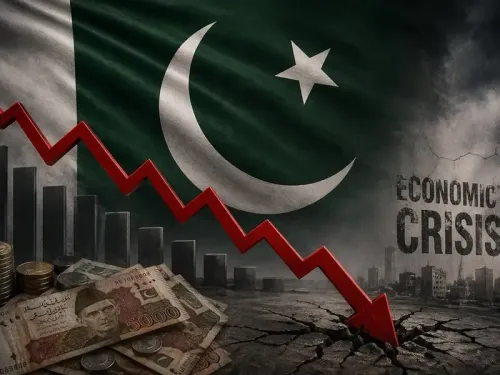
Pakistan's defence industry has increasingly looked beyond traditional markets in the Middle East and Asia, the report noted. Faced with a recurring economic crisis, repeated IMF programmes, foreign exchange shortages, and limited industrial exports, Islamabad has sought to expand defence sales as a source of hard currency revenue. The Sudan agreement was specifically aimed at securing access to the broader African market for Pakistan's military-industrial complex.
Saudi Arabia's Shifting Regional Calculus
The report emphasised that Riyadh's decision to pull back financing reflects a wider shift in its regional approach. Saudi Arabia now reportedly favours 'de-escalation and strategic restraint' rather than deeper involvement in external conflicts — a posture that directly undercuts Pakistan's Africa strategy, which had relied on Gulf financing to underwrite large-scale defence exports.
Libya Deal Also at Risk
The consequences for Islamabad extend beyond Sudan. According to the report, a separate proposed defence agreement in Libya, worth $4 billion, may also be in jeopardy as Saudi Arabia reassesses its African engagements. Pakistan reportedly already delivered at least five cargo planes full of weapons to forces aligned with Libya's eastern authorities, led by military ruler Khalifa Haftar, in April 2026. If the Libya deal also collapses, it would, according to the report, 'completely derail Islamabad's ambition to establish itself as a security actor on the African continent.'
The Structural Weakness Exposed
The report concluded that the setback highlights a fundamental weakness in Pakistan's geopolitical strategy: ambitious foreign initiatives that hinge on financial support from Gulf or other partners risk faltering whenever those partners' priorities shift. 'Without any external support, Islamabad lacks the economic resources necessary to sustain large-scale strategic ventures abroad,' the report stated. This dependence, it argued, limits Pakistan's ability to shape outcomes in regions where it seeks independent influence. The episode underscores that while Pakistan's continental ambitions are growing, their realisation remains constrained by economic fragility and the evolving calculus of key allies.
Point of View
Pakistan risks having extended its military footprint into African conflicts without the patron backing to sustain it. The deeper problem is that defence exports, positioned as a hard-currency lifeline amid IMF dependency, cannot serve as a geopolitical instrument when the financing itself is borrowed credibility.
NationPress
22 Sept 2026
Frequently Asked Questions
Why did Saudi Arabia withdraw from Pakistan's Sudan arms deal?
According to a report in The Diplomat, Saudi Arabia withdrew financing for the $1.5 billion deal and pressed Pakistan to cancel it entirely, reflecting Riyadh's broader shift toward 'de-escalation and strategic restraint' rather than involvement in external conflicts. The decision left Pakistan without the external funding needed to execute the agreement.
What was included in Pakistan's proposed arms deal with Sudan?
The proposed package reportedly included K-8 Karakorum light attack aircraft, hundreds of drones, armoured vehicles, and advanced Chinese-origin air defence systems routed through Pakistan. It was envisioned as one of the largest arms export agreements in Pakistan's history.
Is Pakistan's Libya arms deal also at risk?
Yes, according to the report, a separate proposed defence agreement with Libya worth $4 billion may also be in jeopardy as Saudi Arabia reassesses its African engagements. Pakistan had already delivered at least five cargo planes of weapons to forces aligned with Libyan military ruler Khalifa Haftar in April 2026.
Why has Pakistan been pursuing arms deals in Africa?
Pakistan has sought to expand defence exports as a source of hard currency revenue, facing recurring economic crises, repeated IMF programmes, and foreign exchange shortages. African security markets were seen as a gateway beyond its traditional Middle East and Asia customer base.
What does this mean for Pakistan's broader Africa strategy?
The collapse of the Sudan deal, and the potential failure of the Libya agreement, would, according to the report, 'completely derail Islamabad's ambition to establish itself as a security actor on the African continent.' The episode highlights Pakistan's structural dependence on Gulf financing to sustain its foreign policy ambitions.