Section 144 imposed in KP's Dera Ismail Khan amid Pakistan's Governor's Rule
Synopsis
Pakistan's federal government has not just imposed Governor's Rule over Khyber Pakhtunkhwa — it has now extended its security grip to district level, with Section 144 locking down Dera Ismail Khan until 11 November. With PTI calling it a 'coup disguised as emergency' and mass protests imminent, Pakistan's sharpest political crisis in years is fast escalating.
Key Takeaways
Section 144 has been imposed in Dera Ismail Khan , Khyber Pakhtunkhwa, banning public gatherings, rallies, processions, and pillion riding until 11 November .
Pakistan President Asif Ali Zardari approved Governor's Rule in KP on 11 October , suspending the PTI -led provincial government.
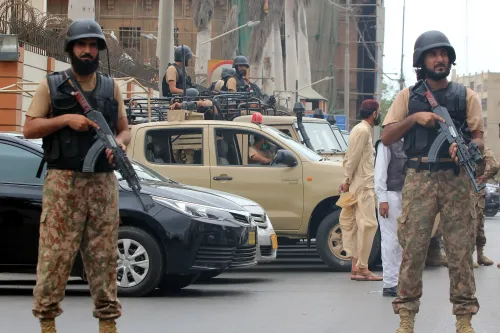
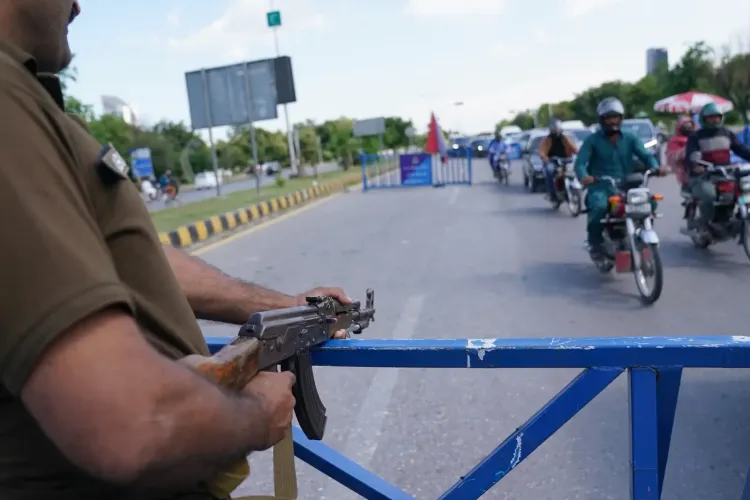
Federal forces have been deployed across Khyber Pakhtunkhwa following the emergency measures.
PTI spokesperson Zulfikar Bukhari called the move a 'coup disguised as emergency' and condemned the arrest of Chief Minister Sohail Afridi and leader Junaid Akbar .
PTI chairman Gohar Ali Khan described the emergency as a 'grave political mistake and undemocratic measure' and vowed rejection.
The crackdown came as PTI was reportedly preparing major protests demanding the release of party founder Imran Khan .
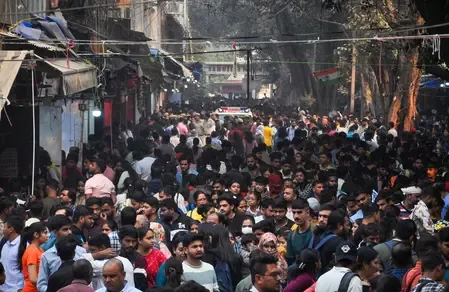
The district administration of Dera Ismail Khan in Pakistan's Khyber Pakhtunkhwa (KP) has imposed Section 144 of the Code of Criminal Procedure (CrPC), banning public gatherings, rallies, processions, and pillion riding on motorcycles until 11 November, according to local media reports on Wednesday, 14 October. The order, effective immediately, comes days after the federal government placed the province under Governor's Rule.
What the Order Restricts
Under the order, the authorities have banned displaying, carrying, and possessing weapons in public spaces. The erection or use of tents, temporary structures, and other obstructions on public roads, highways, and public places has also been prohibited, as such activities could impede traffic movement.
Pillion riding on motorcycles — a measure commonly deployed to prevent targeted attacks and coordinated movement — has been barred across Dera Ismail Khan. Any activity likely to suspend essential services, endanger public safety, or disturb public peace falls within the scope of the ban.
Why the Order Was Issued
The restrictions followed a formal request by Dera Ismail Khan's District Police Officer (DPO), who cited the prevailing law and order situation. Authorities flagged that public gatherings, processions, and marches could hinder people's movement, disrupt essential services, and destabilise public peace and tranquillity, local daily The Express Tribune reported.
The order sits within a broader crackdown: on 11 October, Pakistan President Asif Ali Zardari approved emergency measures on the recommendation of Prime Minister Shehbaz Sharif's cabinet. The move suspended the provincial government led by the Pakistan Tehreek-e-Insaf (PTI) — the party founded by former Prime Minister Imran Khan — and placed KP under Governor's Rule, with federal forces deployed across the province. The decision came as PTI was reportedly preparing large-scale protests demanding Imran Khan's release from custody, according to Pakistani daily Dawn.
PTI's Sharp Condemnation
PTI spokesperson Zulfikar Bukhari condemned the Governor's Rule as a 'coup disguised as emergency,' denouncing what he described as the arrest of 'the only mandated Chief Minister Sohail Afridi' and party leader Junaid Akbar. 'This coup disguised as emergency or Governor rule has squashed the only little bit of democracy left in Pakistan. Further instability and collateral damage to follow. The regime must be feeling very proud,' Bukhari wrote on X.
PTI chairman Gohar Ali Khan also condemned the federal government's action, calling it a 'political mistake and undemocratic.' Khan acknowledged there was no disagreement on combating terrorism but argued the fight against terrorism cannot be used 'as justification to suppress the voice of the people, achieve political objectives and restrict the constitutional authority of the province.' In a post on X, he stated: 'We strongly condemn the imposition of emergency in the province in the strongest terms and completely reject this action. This is an extremely alarming and grave political mistake and an undemocratic measure — the people will never accept such actions against their rights.'
Broader Context and What Comes Next
Khyber Pakhtunkhwa has long been Pakistan's most volatile province, bordering Afghanistan and historically afflicted by militant activity. The imposition of Governor's Rule and the accompanying local restrictions represent an extraordinary assertion of central authority over a province governed by the opposition. Notably, this is the first time in recent years that the federal government has simultaneously suspended a provincial government and deployed forces while a major political party was mobilising for street protests.
With the Section 144 order in Dera Ismail Khan valid through 11 November and PTI vowing to resist, the political standoff between the PTI-led opposition and Pakistan's federal establishment is likely to intensify in the weeks ahead.
Point of View
And PTI's characterisation of it as a 'coup' will resonate far beyond its core base. What is missing from official communication is a credible threat matrix: if the law-and-order case were strong, one would expect a detailed security justification. Its absence feeds the narrative that this is political suppression dressed as security management.
NationPress
14 Oct 2026
Frequently Asked Questions
What is Section 144 and why has it been imposed in Dera Ismail Khan?
Section 144 of the Code of Criminal Procedure (CrPC) is a legal provision that empowers a district administration to prohibit public assemblies, processions, and certain activities to maintain public order. It was imposed in Dera Ismail Khan on 14 October following a request by the District Police Officer, who cited deteriorating law and order and the risk that planned gatherings could disrupt essential services and traffic.
What does the Section 144 order in Dera Ismail Khan ban?
The order bans public gatherings, assemblies, rallies, processions, and marches. It also prohibits displaying, carrying or possessing weapons; erecting tents or temporary structures on public roads; and pillion riding on motorcycles. The ban remains in force until 11 November.
Why did Pakistan impose Governor's Rule in Khyber Pakhtunkhwa?
Governor's Rule was approved by President Asif Ali Zardari on 11 October on the recommendation of Prime Minister Shehbaz Sharif's cabinet, with the federal government citing law and order concerns. The move suspended the PTI-led provincial government and enabled deployment of federal forces in KP. It came as PTI was reportedly mobilising major protests demanding the release of its founder Imran Khan.
How has PTI responded to the Governor's Rule and the restrictions?
PTI has strongly condemned both measures. Spokesperson Zulfikar Bukhari called it a 'coup disguised as emergency' and denounced the arrest of Chief Minister Sohail Afridi and Junaid Akbar. PTI chairman Gohar Ali Khan posted on X that the action was a 'grave political mistake and undemocratic measure' that the people would never accept.
How long will the Section 144 restrictions in Dera Ismail Khan remain in effect?
The order took effect immediately on 14 October and will remain in force until 11 November, unless extended or revoked by the district administration earlier.