Owaisi Moves Supreme Court to Review Bihar SIR Verdict
Synopsis
AIMIM president Asaduddin Owaisi has moved the Supreme Court seeking a review of its earlier verdict on Bihar's Special Intensive Revision of voter rolls, citing new material that allegedly questions the Election Commission's decision-making process, including objections from two Election Commissioners.
Key Takeaways
Asaduddin Owaisi filed a Supreme Court review petition on 14 October 2026 against the Bihar SIR verdict.
The petition alleges that new material raises questions about the Election Commission of India's decision-making in deleting voters.
The petition reportedly references objections raised by two Election Commissioners during the SIR exercise.
The Bihar Special Intensive Revision was a large-scale electoral roll clean-up under the Representation of the People Act, 1950 .
Opposition parties have consistently challenged voter-list deletions in election-bound states, alleging disproportionate impact on marginalised voters.
The Supreme Court's ruling on admissibility will test judicial appetite for revisiting ECI's roll-revision methodology.
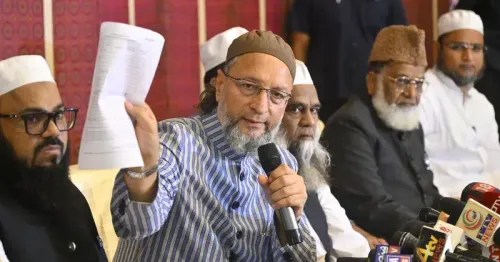
A constitutional challenge is back before India's apex court — and this time, AIMIM president Asaduddin Owaisi is asking the Supreme Court of India to take a second look. On Wednesday, 14 October 2026, Owaisi filed a review petition against the court's earlier verdict upholding the Election Commission of India's (ECI) Special Intensive Revision of Bihar's electoral rolls, arguing that fresh material raises serious questions about the ECI's decision-making process in deleting voter entries.
What the Bihar SIR Was — and Why It Sparked a Legal Battle
The Bihar Special Intensive Revision (SIR) was a large-scale electoral roll clean-up exercise conducted by the Election Commission of India under the Representation of the People Act, 1950, ahead of the Bihar assembly elections. The exercise was designed to remove ineligible entries and update voter lists — a routine but politically charged exercise that opposition parties alleged was riddled with procedural irregularities, leading to the deletion of legitimate voters, particularly from marginalised communities.
Owaisi, who has a consistent record of litigation on minority rights and electoral fairness, was among those who challenged the SIR before the Supreme Court. When the court upheld the ECI's process, it appeared to settle the matter. The new review petition signals it has not.
The 'New Material' Argument and Two Election Commissioners' Objections
At the heart of Owaisi's review petition is a claim that new material has emerged — material that, he contends, casts doubt on how the ECI arrived at its decisions during the SIR. Notably, the petition reportedly references objections raised by two Election Commissioners themselves, lending the challenge unusual weight: if members of the constitutional body overseeing the exercise had internal reservations, the question of institutional due process becomes harder to dismiss.
A review petition is a narrow legal instrument. The Supreme Court grants review only when there is an error apparent on the face of the record, or when new and relevant material was not available during the original hearing. Owaisi's legal team is betting that the cited material clears that bar.
A Pattern Bigger Than Bihar
This challenge fits into a well-established pattern. Opposition leaders and parties have repeatedly approached courts questioning voter-list revision drives in election-bound states, alleging that large-scale deletions disproportionately affect poorer, migrant, and minority voters who may lack updated documentation. The Bihar SIR became a flashpoint precisely because the scale of deletions was significant and Bihar is a politically consequential state.
For the Election Commission of India, the case is a test of its procedural credibility. For Bihar voters whose names may have been struck off, the outcome of this review petition is not an abstraction — it is a question of whether they can vote at all.
The Supreme Court's decision to admit, or decline, this review petition will signal how much judicial appetite remains for revisiting ECI's roll-revision methodology — and whether internal dissent within a constitutional body can, by itself, reopen a settled verdict.
Point of View
But an attempt to use reported internal dissent within the ECI to pry open a verdict that appeared settled. The invocation of objections by Election Commissioners is strategically significant: it shifts the narrative from opposition grievance to institutional self-doubt. Broader opposition politics around voter-list revisions has consistently framed such exercises as disenfranchisement drives targeting non-BJP constituencies, and this petition adds a formal judicial layer to that argument. If the Supreme Court admits the review, it could set a precedent that internal ECI disagreements are material evidence in electoral roll challenges — a consequential expansion of judicial oversight over the poll body.
NationPress
14 Oct 2026
Frequently Asked Questions
What is the Bihar SIR and why is it controversial?
The Bihar Special Intensive Revision (SIR) was an Election Commission of India exercise to update and clean up Bihar's electoral rolls ahead of assembly elections. It became controversial because opposition parties alleged that the large-scale deletion of voter names disproportionately affected marginalised, migrant, and minority communities.
Why has Owaisi filed a review petition against the Supreme Court's Bihar SIR verdict?
Owaisi argues that new material has emerged since the original verdict that raises questions about the ECI's decision-making process, including reported objections from two Election Commissioners. A review petition asks the court to reconsider its earlier ruling in light of such material.
What does it take for the Supreme Court to accept a review petition?
The Supreme Court grants review only in limited circumstances — primarily when there is an error apparent on the face of the record or when new and relevant material was not available at the time of the original hearing. Owaisi's petition contends that the cited new material meets this standard.
Who is Asaduddin Owaisi and what is AIMIM?
Asaduddin Owaisi is the president of the All India Majlis-e-Ittehadul Muslimeen (AIMIM) and a Lok Sabha MP from Hyderabad. He is a lawyer-politician known for frequently litigating on issues of minority rights, civil liberties, and electoral fairness.
What is the significance of Election Commissioners objecting to the Bihar SIR?
If Election Commissioners themselves raised objections during the SIR process, it suggests internal disagreement within the constitutional body about how the exercise was conducted. Owaisi's petition uses this as evidence that the ECI's decision-making was not above scrutiny, which is central to the review argument.