US senator urges crackdown on Chinese transshipment, cites $112bn tariff gap
Synopsis
A record USD 112 billion gap between China's reported exports and US Customs arrivals — suggesting one-quarter of Chinese shipments may have dodged tariffs — has prompted Senator Bernie Moreno to demand a full Homeland Security crackdown. With Ohio's auto sector and billions in federal revenue at stake, the letter puts enforcement, not just policy, at the centre of the US-China trade fight.
Key Takeaways
Senator Bernie Moreno (Republican, Ohio) wrote to Homeland Security Secretary Markwayne Mullin urging action against Chinese transshipment schemes.
Trade data cited in the letter shows a record USD 112 billion gap between Chinese export reports and US Customs arrival records for last year.
Moreno estimates up to one-quarter of Chinese goods shipped to the US may have evaded tariff enforcement.
A January 2024 federal search targeted the Moraine, Ohio plant of Harco Manufacturing Group , linked to Chinese firm Qingdao Sunsong , over alleged Section 301 tariff circumvention via Thailand .
Ohio's automobile sector employs more than 329,400 people and contributes USD 41.43 billion to the state's economy.
Moreno urged the department to evaluate whether it needs additional legal powers to pursue tariff evaders beyond existing AI-assisted tools and Enforce and Protect Act investigations.
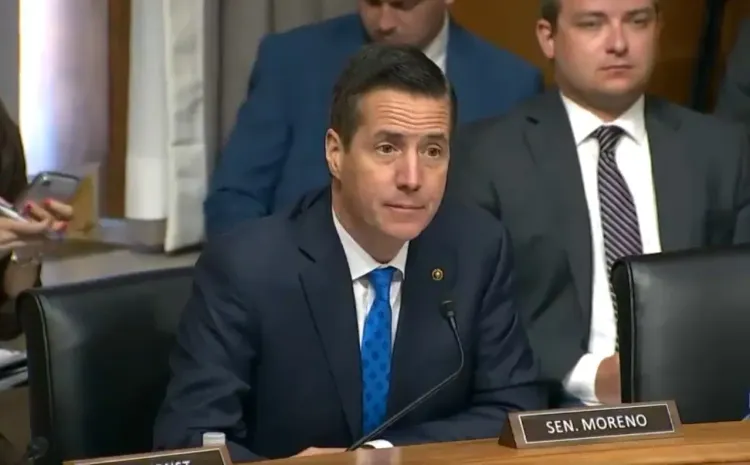
Republican Senator Bernie Moreno of Ohio has called on the US Department of Homeland Security to dismantle illegal transshipment schemes that, he argues, allow Chinese manufacturers to disguise the origin of their goods and systematically evade American tariffs. In a formal letter addressed to Homeland Security Secretary Markwayne Mullin, Moreno warned that the practice is draining billions of dollars in tariff revenue and imperilling domestic manufacturing employment.
The Scale of the Problem
Moreno cited trade data revealing a record USD 112 billion gap between goods China reported exporting to the United States last year and those formally logged by US Customs and Border Protection upon arrival. He argued the discrepancy suggests that as much as one-quarter of all Chinese shipments to the US last year may have escaped tariff enforcement entirely.
'Illegal transshipment is a deliberate scheme by foreign manufacturers, overwhelmingly based in the People's Republic of China, to falsify where their goods are made, launder them through a third country, slap on a new label, and dump them into the American market, eluding tariffs and other duties imposed on the true country of origin,' Moreno wrote in the letter.
Ohio's Automobile Sector in the Crosshairs
The senator underscored the direct threat to his home state, noting that the automobile industry supports more than 329,400 jobs in Ohio and contributes USD 41.43 billion to its gross state product. He pointed specifically to a January 2024 federal search at the Moraine, Ohio plant of Harco Manufacturing Group, the US subsidiary of Chinese auto parts maker Qingdao Sunsong.
Homeland Security Investigations executed the search warrant. Prior congressional investigations had identified Qingdao Sunsong over allegations that it circumvented Section 301 tariffs by routing products through Thailand, where they reportedly underwent only limited transformation before being shipped onward to the United States.
'This is what illegal transshipment looks like: Chinese companies setting up shadow operations in other countries to cheat US trade laws while American businesses play by the rules,' Moreno wrote.
What the Senator Is Asking For
Moreno expressed support for the Trump administration's broader tariff policy but cautioned that duties are only as effective as their enforcement. He acknowledged the department's existing tools — including the use of artificial intelligence to improve supply-chain visibility, Enforce and Protect Act investigations, and the work of Homeland Security Investigations' Global Trade and Investigations division — while urging officials to assess whether additional statutory powers are needed to pursue tariff evaders.
Legal Framework and Background
Section 301 of the Trade Act of 1974 authorises the United States to respond to foreign trade practices deemed unfair or discriminatory. The Trump administration imposed several rounds of Section 301 tariffs on Chinese goods during its first term, and enforcement of those measures has remained a contested front in the broader US-China trade dispute. Moreno's letter signals growing congressional pressure to treat tariff evasion with the same urgency as the original tariff policy itself.
With the trade gap widening and domestic manufacturers voicing alarm, the Homeland Security Department's response to the letter is expected to draw close scrutiny from both industry groups and trade-policy watchers in the months ahead.
Point of View
Shifting accountability from trade negotiators to Homeland Security. The USD 112 billion discrepancy figure is striking, but it conflates measurement differences with deliberate fraud — a distinction that matters for any credible enforcement response. The Qingdao Sunsong case, raided in January 2024, has yet to yield a public prosecution, which raises questions about whether existing tools are under-resourced or legally constrained. Without visible enforcement outcomes, letters like this risk becoming rhetorical cover rather than genuine accountability.
NationPress
27 Sept 2026
Frequently Asked Questions
What is illegal transshipment and why is the US concerned about it?
Illegal transshipment refers to the practice of routing goods through a third country to disguise their true origin and avoid import tariffs. Senator Bernie Moreno's letter describes Chinese manufacturers using this method to relabel products and enter the US market without paying applicable duties, costing the federal government billions in lost tariff revenue.
What is the USD 112 billion trade gap Senator Moreno cited?
The figure represents the difference between goods China reported exporting to the United States last year and those recorded by US Customs and Border Protection as actually arriving. Moreno argued the gap could mean up to one-quarter of Chinese shipments escaped tariff enforcement, though the discrepancy may also reflect differing national accounting methods.
What happened at the Harco Manufacturing Group plant in Ohio?
Homeland Security Investigations executed a search warrant at the Moraine, Ohio facility of Harco Manufacturing Group in January 2024. The plant is the US subsidiary of Chinese auto parts maker Qingdao Sunsong, which had been identified in congressional investigations over allegations it circumvented Section 301 tariffs by routing products through Thailand before shipping them to the United States.
What is Section 301 and how does it relate to China tariffs?
Section 301 of the Trade Act of 1974 allows the United States to impose tariffs in response to foreign trade practices it considers unfair. The Trump administration used this provision to levy multiple rounds of tariffs on Chinese goods during its first term, and enforcement of those measures remains a key flashpoint in the broader US-China trade dispute.
What specific actions is Senator Moreno requesting from Homeland Security?
Moreno asked the department to intensify enforcement against transshipment schemes and to assess whether it requires additional statutory powers beyond its current toolkit, which includes AI-assisted supply-chain monitoring, Enforce and Protect Act investigations, and the work of the Global Trade and Investigations division of Homeland Security Investigations.