Are Continued Attacks on the Shiite Community Pakistan's Most Pressing Security and Social Challenge?
Synopsis
The Shiite community in Pakistan faces unprecedented violence as recent attacks highlight a deeply rooted crisis. An alarming report sheds light on decades of targeted violence by extremist groups, raising concerns over national security and the safety of religious minorities.
Key Takeaways
The Shiite community in Pakistan is facing an alarming increase in targeted violence.
Recent attacks have raised serious concerns over national security.
Extremist groups are systematically targeting Shiite religious gatherings and areas.
The historical context shows decades of sectarian violence.
There is an urgent need for protective measures for religious minorities.
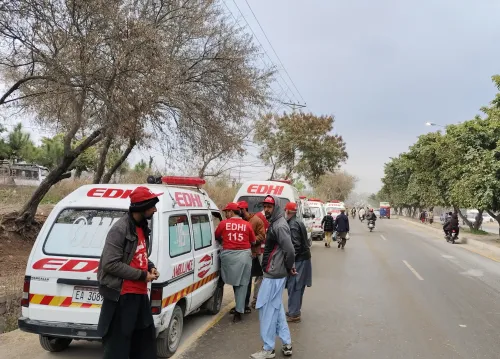
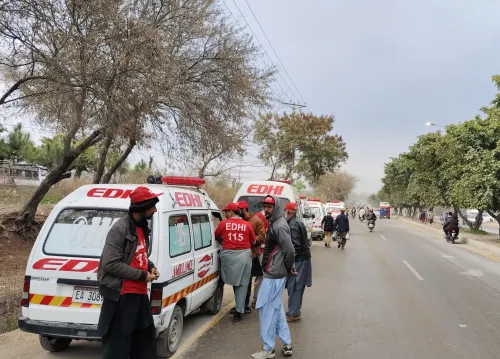
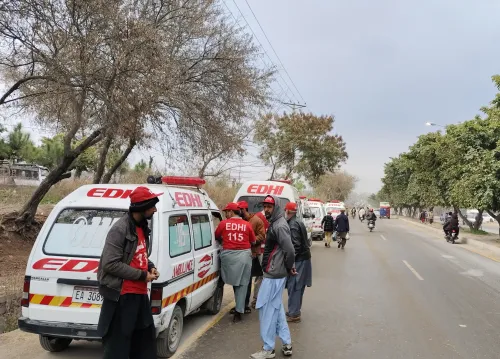
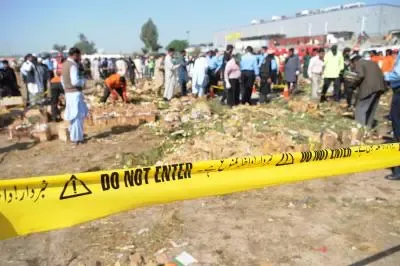
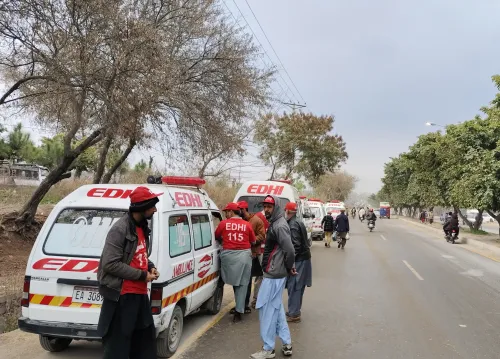
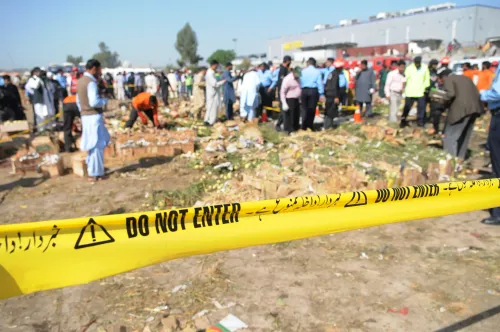
Islamabad, Feb 10 (NationPress) The recent suicide bombing at a Shiite mosque in Islamabad, which resulted in the deaths of 36 individuals and left many injured, highlights the ongoing targeting of the Shiite community in Pakistan by extremist factions and the persistent instability of their security, according to a recent report.
The explosion occurred at the Khadija al-Kubra Mosque in the Tarlai district of Islamabad on February 6 during Friday prayers. An affiliate of the ISIS terrorist organization has taken responsibility for the attack, while Pakistan's Interior Ministry reported the arrest of four suspects connected to the bombing.
"This incident emphasizes the ongoing targeting of Pakistan’s Shiite community by extremist groups and the persistent fragility of their security. The pattern reveals a calculated strategy by militants to concentrate on Shiites, aiming to incite sectarian discord and broader instability across the country. This attack is merely a recent instance in a long-standing campaign of deadly violence against Pakistani Shiites. Authorities have documented numerous similar attacks over the years, resulting in thousands of fatalities," stated a report in 'Islam Times.'
The report also recalled that in 1988, a terrorist attack in Pakistan-occupied Gilgit Baltistan led to the deaths of at least 150 people and injuries to 100 others, targeting Shiites. Violence against Shiite Muslims persisted throughout the 1990s, intensifying with the rise of the Lashkar-e-Jhangvi (LeJ) terrorist group in 1996.
This group proclaimed its intention to "cleanse" Shiites from Pakistan, leading to numerous targeted killings and heinous attacks. A series of massacres occurred in Karachi and other regions from 1998 to 1999, specifically targeting Shiite professionals, intellectuals, and ordinary citizens.
"With the arrival of the third millennium, sectarian assassinations and bombings targeting Pakistan’s Shiite population surged. Between 2001 and 2004, hundreds of Shiite worshippers, gatherings, and religious sites fell victim to extremist groups like Sipah-e-Sahaba and Lashkar-e-Jhangvi," the 'Islam Times' report indicated.
"One of the most devastating attacks during this period occurred on July 4, 2003, when a Shiite Hazara mosque in Quetta, the capital of Balochistan province, was attacked. A suicide bombing, followed by gunfire, claimed more than 53 lives and injured dozens. The attack was carried out by Lashkar-e-Jhangvi, notorious for its explicit campaign against the Hazara Shiite community," it added.
Numerous bombings and attacks targeting Shiite gatherings were recorded in Islamabad, Karachi, and Lahore in 2006 and 2007. Violence escalated during the 2010s, with extremist groups such as Tehrik-e-Taliban Pakistan, Lashkar-e-Jhangvi, Sipah-e-Sahaba, Jundallah, and ISIS-affiliated factions playing a significant role in this wave of sectarian violence.
On April 16, 2010, Lashkar-e-Jhangvi executed a bombing at a hospital in Quetta, followed by a shooting attack, resulting in the deaths of 12 Hazara Shiites and injuries to 47 others. In May 2011, gunmen opened fire on a Shiite gathering in Quetta, killing eight and injuring 15.
In September 2011, armed militants attacked a bus transporting Hazara Shiites in Quetta, killing at least 26 passengers and injuring six more. Reports indicated a rise in targeted killings of Shiite activists, intellectuals, and civilians in 2012, with over 450 Shiites killed that year.
One of the most brutal incidents transpired on February 28, 2012, in Khyber Pakhtunkhwa, where militants from the group Jundallah halted several buses, segregated Shiite passengers, and executed 18 individuals on the roadside. Additionally, Shiite passengers were forcibly removed from buses and murdered in a shooting incident in Pakistan-occupied Gilgit Baltistan in 2012.
In a series of coordinated bombings in Quetta in 2013, 130 Shiites and 270 others lost their lives. Jundallah militants opened fire on a bus carrying Ismaili Shiite passengers in Karachi in May 2015, killing 45 and injuring many more. A bombing during an Ashura procession in Jacobabad, Sindh province, in October 2015 claimed 23 lives and injured several others.
A bomb detonated in a market in Parachinar in 2017, resulting in 24 deaths and 70 injuries. In 2019, 16 individuals died in an explosion at Hazara market in Quetta. In March 2022, ISIS’s Khorasan Province executed a suicide bombing at a mosque in Peshawar, killing 63 and injuring 196. A large convoy carrying Shiites was ambushed in Khyber Pakhtunkhwa in 2024, resulting in at least 54 fatalities and over 86 injuries.
"Over the past three decades, attacks against Pakistan’s Shiite population have escalated alarmingly, evolving into one of the country’s most profound security and social crises. Organized extremist groups, particularly takfiri networks, have systematically targeted mosques, religious ceremonies, convoys, and Shiite-dominated areas to instill fear and instability nationwide. An analysis of these attacks indicates that they have not only increased in number but also in lethality, geographic reach, and operational sophistication year after year," the report emphasized.
Point of View
It is imperative to acknowledge the severity of the crisis facing Pakistan's Shiite community. The ongoing assaults not only threaten the security of this group but also highlight deeper issues of sectarian divide and instability within the nation. As a responsible media outlet, we must advocate for greater awareness and action to protect all citizens, regardless of their faith.
NationPress
30 Sept 2026
Frequently Asked Questions
What was the recent incident involving the Shiite community in Pakistan?
A suicide bombing at a Shiite mosque in Islamabad on February 6, 2024, resulted in the deaths of 36 people and injuries to several others.
Who claimed responsibility for the bombing?
An affiliate of the ISIS terrorist group claimed responsibility for the attack.
What has the Interior Ministry done in response to the attack?
The Interior Ministry of Pakistan reported the arrest of four suspects linked to the bombing.
How has violence against the Shiite community evolved over the years?
Violence against the Shiite community has escalated alarmingly over the past three decades, with organized extremist groups systematically targeting them through attacks on mosques, gatherings, and other religious ceremonies.
What are the implications of ongoing violence against the Shiite community in Pakistan?
The ongoing violence poses a significant threat to national security and highlights the urgent need for protective measures for religious minorities in Pakistan.