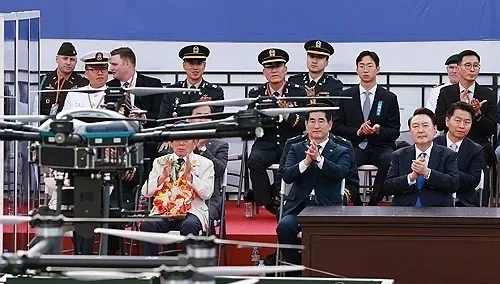
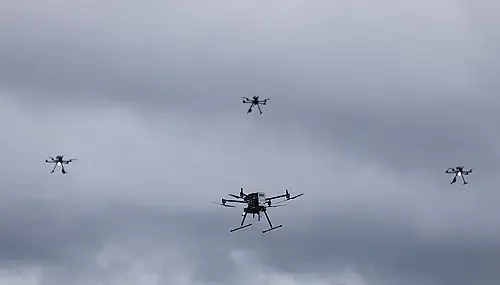
South Korea launches drone headquarters in Pocheon to counter North Korea threats
Synopsis
South Korea has replaced its Drone Operations Command with a full-spectrum Defence Drone Headquarters in Pocheon, just 40 km from the North Korean border. The move — anchored by plans to acquire over 20,000 combat drones and accelerate K-LUCAS loitering munitions — comes days after North Korea simulated mass drone strikes on South Korean and US military targets, making this one of the most direct drone-warfare escalations on the Korean peninsula yet.
Key Takeaways
South Korea's Defence Ministry launched the Defence Drone Headquarters in Pocheon on 2 November 2026 , replacing the existing Drone Operations Command.
The new body functions as a 'drone control tower,' setting strategy for both offensive drones and counter-drone systems across all armed services.
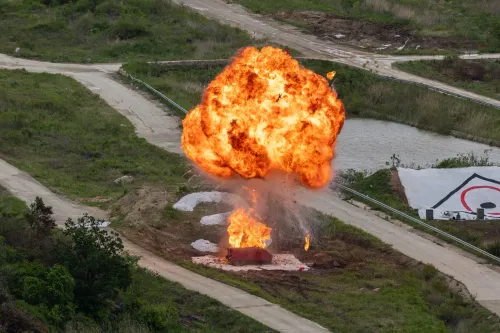
North Korea conducted weapons tests last week simulating mass drone strikes on mock South Korean military posts and US tanks.
South Korea plans to rapidly acquire more than 20,000 low-cost expendable combat drones under a fast-track procurement system modelled on the US Blue UAS framework.
The K-LUCAS programme — domestically developing long-range loitering munitions including suicide drones — will be accelerated under the new headquarters.
Seoul is localising drone components to cut reliance on China and securing supply chains with the United States and other allies.
South Korea's Defence Ministry on Monday, 2 November 2026, formally launched a new Defence Drone Headquarters in Pocheon, approximately 40 kilometres north of Seoul, as the country moves aggressively to strengthen unmanned aerial systems and counter-drone capabilities in the face of North Korea's rapidly advancing drone programme. The launch signals a structural overhaul of how South Korea commands, develops, and deploys drone technology across all its armed services.
What the New Headquarters Replaces and Why
The new body supersedes the existing Drone Operations Command, which had been narrowly focused on executing drone missions. By contrast, the Defence Drone Headquarters is designed to function as a comprehensive 'drone control tower' — setting strategy for both offensive drone deployment and counter-drone defence, overseeing research and development, and coordinating acquisition across army, navy, and air force branches.
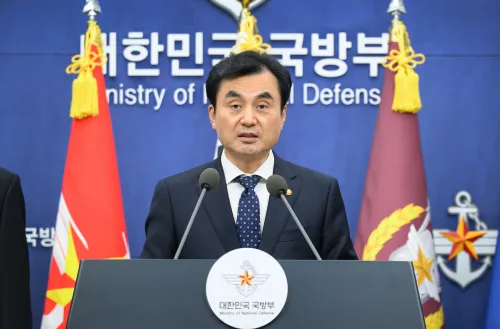
The launch was attended by Vice Defence Minister Lee Doo-hee and senior military officials, underscoring the priority Seoul is placing on the initiative. Individual service branches will take on specific drone combat and strike roles, while the Joint Chiefs of Staff (JCS) will manage overall operational coordination.
North Korea's Drone Threat: The Driving Pressure
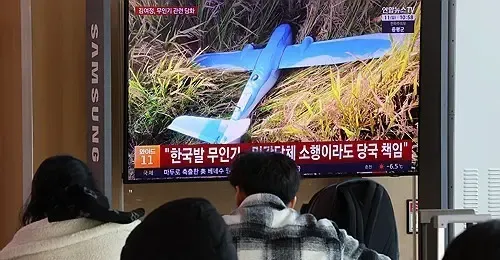
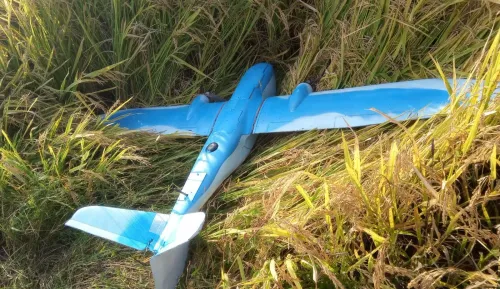
North Korea has been accelerating its drone development programme, drawing lessons from its troop deployment alongside Russia in the war against Ukraine. Just last week, the North conducted weapons tests that simulated mass drone strikes targeting mock South Korean military guard posts and US tanks — a direct provocation that sharpened urgency in Seoul.
'We take North Korea's advancing drone capabilities and related threats very seriously, although evaluating drone power requires looking beyond mere performance to fully consider detection, identification, tracking and countermeasure systems,' the ministry said in an official statement.
This comes amid a broader global recognition of drones as a 'game changer' on the modern battlefield — a shift that the Korean peninsula is now experiencing at close range.
Fast-Track Procurement and the Push to Reduce China Dependence
South Korea is introducing a fast-track certification system modelled on the US Blue Unmanned Aircraft Systems (UAS) framework, which pre-approves commercial drones and related equipment, enabling military purchases without traditional procurement delays. The military plans to rapidly acquire more than 20,000 low-cost, expendable combat drones as part of this accelerated push.
Separately, Seoul is prioritising the localisation of drone components — including batteries and motors — to reduce strategic dependence on China. 'We are working to secure supply chains with allies and partners, including the United States,' a ministry official said in a background briefing on Friday.
K-LUCAS and the Long-Range Strike Programme
The new headquarters will also accelerate the deployment of the Korean Low-Cost Uncrewed Combat Attack System (K-LUCAS), a domestic programme to develop long-range loitering munitions — including suicide drones. K-LUCAS represents South Korea's bid to build a homegrown precision-strike capability that does not rely on foreign supply chains.
The establishment of the drone headquarters is a follow-up measure to a comprehensive unmanned systems development policy announced in June 2026, designed to embed drones as a permanent pillar of South Korea's defence posture.
What Comes Next
With the headquarters now operational, attention turns to the pace of K-LUCAS deployment timelines, the speed of fast-track drone certifications, and whether Seoul's supply-chain diversification efforts will yield measurable reductions in Chinese component dependency. The geopolitical backdrop — with North Korea actively field-testing mass-drone-strike simulations — leaves little room for delay.
Point of View
More tactically sophisticated drone adversary than Seoul anticipated even two years ago. The rush to acquire 20,000 expendable drones and accelerate K-LUCAS mirrors lessons the Russia-Ukraine war has imposed on every serious military — but South Korea must move faster than most, given the proximity and frequency of provocations. The China-dependency problem in drone components is the less-discussed but structurally more dangerous vulnerability: supply-chain localisation rhetoric has outpaced delivery in most allied defence ecosystems, and Seoul will need to demonstrate real progress, not just announcements.
NationPress
2 Nov 2026
Frequently Asked Questions
What is South Korea's new Defence Drone Headquarters?
The Defence Drone Headquarters, launched on 2 November 2026 in Pocheon, is a new command body that replaces the existing Drone Operations Command. Unlike its predecessor, which focused on executing drone missions, the new headquarters sets overall drone and counter-drone strategy, oversees R&D, and coordinates acquisitions across all South Korean armed services.
Why did South Korea establish a new drone headquarters now?
The move follows North Korea's intensifying drone programme, which has been refined through lessons drawn from its troop deployment in Russia's war against Ukraine. North Korea conducted simulated mass drone strike tests last week targeting mock South Korean military posts and US tanks, directly heightening the urgency in Seoul.
What is the K-LUCAS programme?
K-LUCAS, the Korean Low-Cost Uncrewed Combat Attack System, is a South Korean military initiative to domestically develop long-range loitering munitions, including suicide drones. The new headquarters is tasked with accelerating its deployment as a homegrown precision-strike capability.
How does South Korea plan to speed up drone procurement?
Seoul is introducing a fast-track certification system modelled on the US Blue Unmanned Aircraft Systems (UAS) framework, which pre-approves commercial drones and equipment so the military can purchase ready-made systems without traditional procurement delays. The military aims to acquire over 20,000 low-cost combat drones under this system.
How is South Korea reducing reliance on Chinese drone components?
South Korea is prioritising the localisation of key drone components such as batteries and motors, while working to secure alternative supply chains with the United States and other allies. A ministry official confirmed this direction in a background briefing on Friday, 31 October 2026.