South Korea's Lee vows dialogue to resolve North Korea abductee issue
Synopsis
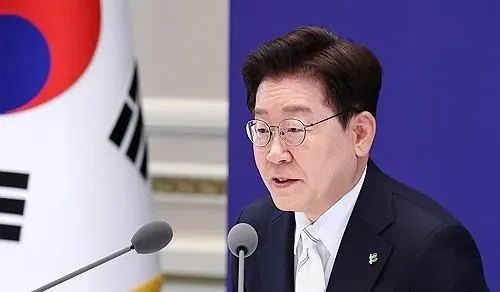
South Korean President Lee Jae Myung has vowed not to let the Korean War abductee issue 'be buried in history,' pledging dialogue with Pyongyang — while his Unification Minister simultaneously called for abandoning denuclearisation as a precondition for peace talks. Together, the two statements mark a significant pivot in Seoul's North Korea strategy.
Key Takeaways
President Lee Jae Myung pledged on 28 June to pursue a practical resolution to the North Korea abductee issue through dialogue and cooperation.
The pledge was made at Korean War Abductees Remembrance Day in Paju , attended by around 300 personnel .
The remembrance day was legally designated in late 2024 ; Sunday's event was only the second such observance.
Unification Minister Chung Dong-young called for a three-stage nuclear approach — 'freeze, reduction and denuclearisation' — moving away from denuclearisation as a sole precondition.
Chung urged immediate resumption of US–North Korea talks as agreed at the 2018 Singapore summit , calling it a catalyst for four-party dialogue.
China has reportedly expressed support for the phased denuclearisation framework proposed by Seoul.
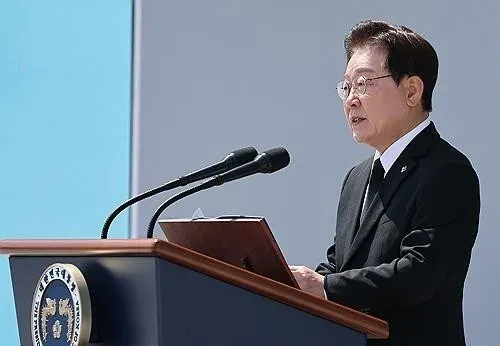
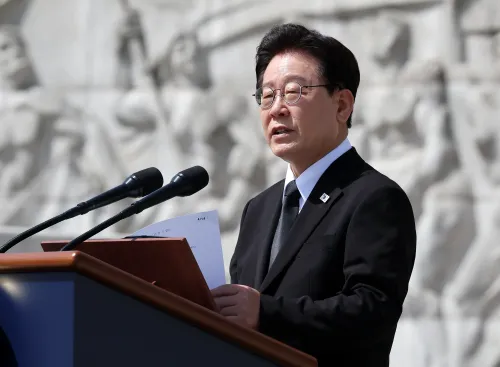
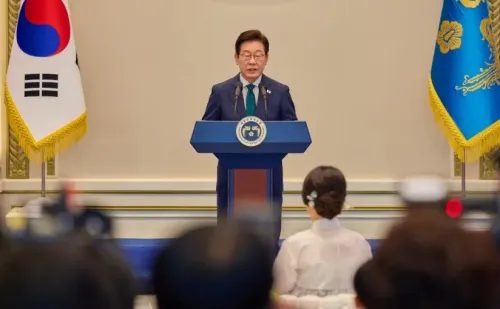
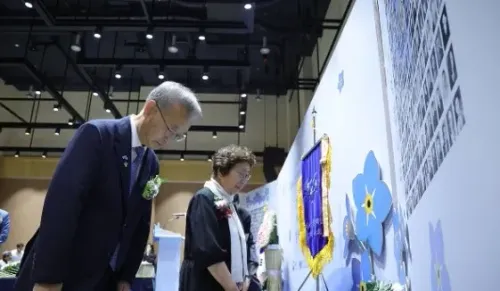
South Korean President Lee Jae Myung on Sunday, 28 June pledged that his government would pursue a resolution to the long-standing issue of South Korean citizens abducted by North Korea during the 1950–53 Korean War through 'dialogue and cooperation.' The commitment was delivered at an event marking Korean War Abductees Remembrance Day in Paju, north of Seoul, where Lee's message was read on his behalf by Vice Unification Minister Kim Nam-jung.
Lee's Pledge on Abductees
'The government will not allow the issue of abductees to be buried in history,' Lee said in his message. 'Through dialogue and cooperation, (the government) will seek to make sustained efforts to achieve a practical resolution,' he added. Lee also expressed regret that families have been separated from abductees held in North Korea for over 70 years, and vowed to shift the relationship between the two Koreas from 'hostility and confrontation' toward 'peaceful coexistence.'
Sunday's event was the second of its kind since the remembrance day was formally designated by law in late 2024 to be observed annually on 28 June. Approximately 300 personnel attended, including the vice unification minister, family members of abductees, and officials from related agencies.
Unification Minister Calls for Denuclearisation Rethink
In a separate but related development on Friday, South Korea's Unification Minister Chung Dong-young called for moving away from an approach that treats denuclearisation as the sole precondition for engagement with Pyongyang. Speaking at the Korean Peninsula Symposium, co-hosted by a South Korean news outlet, Chung argued that insisting on denuclearisation as a prerequisite has been a primary driver of stalled diplomacy.
'As the past 30 years have shown, whenever peace talks were halted by the denuclearisation hurdle, North Korea used that time to further advance its nuclear capabilities,' Chung said. He called for a 'paradigm shift' toward a phased and pragmatic approach — a three-stage process of 'freeze, reduction and denuclearisation.'
A Phased Approach to Peace
Chung outlined a step-by-step framework: first halting, then scaling down, and ultimately eliminating North Korea's nuclear programme. He noted that China has expressed support for this pragmatic approach. Crucially, he stressed that the process must begin with direct dialogue between the United States and North Korea.
'As agreed in the 2018 Singapore summit between North Korea and the US, both sides should immediately resume talks to end mutual hostility and establish a new relationship,' Chung said. He further argued that resuming US–North Korea dialogue would catalyse broader four-party talks involving the US, China, and both Koreas.
Context and Significance
The twin statements from Lee and Chung signal a notable shift in Seoul's diplomatic posture — from a hardline denuclearisation-first stance toward conditional, phased engagement. This comes amid a broader international debate over how to re-engage Pyongyang after years of failed multilateral efforts. Notably, North Korea has used each period of diplomatic stalemate since the early 1990s to significantly advance its weapons programme, a pattern Chung explicitly referenced. The abductee issue, meanwhile, remains one of the most emotionally charged bilateral disputes, with hundreds of families still awaiting any news of relatives taken more than seven decades ago. Whether Pyongyang will respond to Seoul's overtures remains to be seen.
Point of View
But it carries a political risk: critics at home may read it as capitulation, while Pyongyang has given no signal it is interested in dialogue on any terms. Chung's invocation of the 2018 Singapore summit is a deliberate nod to the Trump-era diplomatic playbook, suggesting Seoul is positioning itself to align with any renewed US outreach to Kim Jong-un. Whether the abductee pledge translates into actual negotiating leverage — or remains a domestic political gesture for grieving families — depends entirely on whether Pyongyang picks up the phone.
NationPress
28 Jun 2026
Frequently Asked Questions
What did South Korean President Lee Jae Myung say about North Korean abductees?
President Lee pledged on 28 June that his government would not allow the abductee issue to 'be buried in history' and would pursue a practical resolution through dialogue and cooperation with North Korea. His message was delivered at the Korean War Abductees Remembrance Day event in Paju.
What is the Korean War Abductees Remembrance Day?
It is an annual observance, legally designated in late 2024, held on 28 June each year to commemorate South Korean citizens abducted by North Korea during the 1950–53 Korean War. Sunday's event in Paju was only the second such observance since the day was established.
What is Unification Minister Chung Dong-young's proposed approach to North Korea's nuclear programme?
Chung has called for a phased, three-stage approach — freeze, reduction, and denuclearisation — arguing that insisting on full denuclearisation as a precondition has stalled diplomacy for 30 years and allowed North Korea to advance its weapons capabilities. He said China has expressed support for this pragmatic framework.
Why is Seoul calling for a resumption of US–North Korea talks?
Unification Minister Chung argued that direct US–North Korea dialogue, as envisioned in the 2018 Singapore summit, is the essential first step toward broader four-party talks involving the US, China, and both Koreas. He contended that renewed engagement is the only path to lasting peace on the Korean Peninsula.
How many people were abducted by North Korea during the Korean War?
The source does not specify a total figure, but notes that family members have been separated from abductees for over 70 years since the 1950–53 Korean War. The abductee issue remains one of the most unresolved and emotionally charged disputes between the two Koreas.