Sri Lanka Faces Increasing Risk from Transnational Terrorism
Synopsis
A recent report warns that Sri Lanka cannot ignore the looming threat of transnational terrorism, as groups in South Asia remain ideologically united. The 2019 Easter Sunday attacks reveal that this issue is a global challenge, necessitating urgent government action.
Key Takeaways
Sri Lanka is facing a rising threat from transnational terrorism.
The 2019 Easter Sunday attacks underscore the global nature of terrorism.
The existing PTA faces criticism for being overly harsh and vague.
International pressure exists for Sri Lanka to reform its anti-terrorism laws.
A balance must be struck between national security and civil rights.
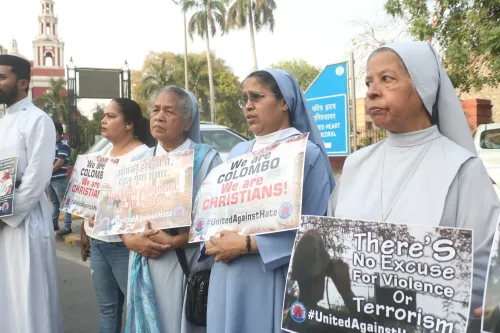
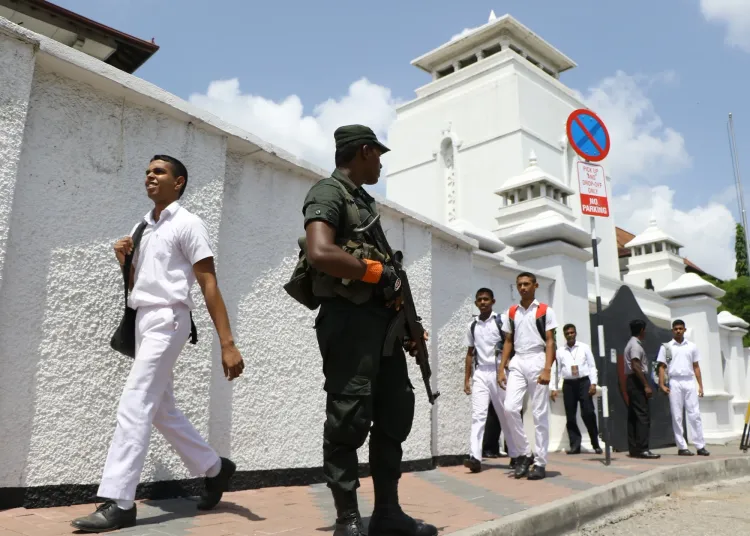
Colombo, March 19 (NationPress) Sri Lanka must not ignore the escalating threat of transnational terrorism, as terrorist groups in South Asia retain ideological ties, sharing common targets and adversaries, according to a recent report. The 2019 Easter Sunday attacks serve as a stark reminder that terrorism transcends local boundaries, with networks being exploited by organizations such as Lashkar-e-Taiba (LeT) and Hamas.
"Terrorist organizations across South Asia are united in ideology, often targeting the same enemies. Sri Lanka has unfortunately caught their attention, notably during the ISIS-supported Easter Sunday bombings in 2019. This raises an urgent question: how will Sri Lanka tackle the challenges posed by transnational jihadist terrorism? The government's initiative to introduce a draft Protection of State from Terrorism Act (PSTA) has sparked intense discussion," stated A. Jathindra, head of the Trinco Centre for Strategic Studies (TSST), in an article for Eurasia Review.
The current Prevention of Terrorism Act (PTA) has been in operation in Sri Lanka for 45 years. Despite its long-standing presence, it has faced significant criticism for being excessively harsh both nationally and internationally. Initially introduced as a temporary measure during the civil war in 1979 by then-President J. R. Jayewardene, it was later made permanent. While the PTA was deemed necessary during the conflict with the LTTE, its relevance has been questioned since the group's defeat in 2009, especially by Tamil political parties and civil society organizations.
The international community, particularly the European Union, has urged Sri Lanka to reform its anti-terrorism legislation to align with international human rights norms, warning that failure to do so could jeopardize access to the European market under GSP+ trade preferences. In 2021, the European Parliament passed a resolution expressing serious concern over the deterioration of human rights in Sri Lanka and criticized the ongoing reliance on the stringent PTA.
Since the civil war concluded, successive governments have struggled to fulfill commitments made to the EU. The Sirisena administration pledged to repeal the PTA in 2015 and even drafted a replacement bill, but the effort faltered after being challenged in the Supreme Court. The ruling National People's Power (NPP) government has now indicated a desire to abolish all oppressive laws, including the PTA, and to protect civil rights throughout the nation.
"The facts are evident: Sri Lanka cannot afford to underestimate the increasing threat of transnational terrorism. Simultaneously, the PTA faces long-standing criticism for limiting civil society's space and is sometimes viewed as a political tool. Tamil parties and civil society groups in the north continue to demand its complete repeal, contending that current laws suffice to combat terrorism. Yet, given the rising transnational threats across South Asia and complex geopolitical factors, the necessity for a specialized legal framework cannot be overlooked. The challenge lies in developing legislation that both protects national security and adheres to the principles of justice and equality," Jathindra noted.
The PTA has been criticized for its vague definition of terrorism, which has made it susceptible to misuse and has eroded its credibility on both domestic and international fronts. Through the proposed legislation, the Sri Lankan government aims to bridge this gap by adopting established international standards. By aligning with these frameworks, Sri Lanka's proposed changes signal progress. It is crucial that definitions are applied equitably, free from discrimination or political manipulation, thereby strengthening national security while maintaining democratic values.
"Sri Lanka must not be complacent in the face of transnational terrorist threats. The Easter Sunday attacks illustrated that terrorism in this region is not merely a domestic issue — it is a global phenomenon, with local networks being leveraged by groups from Lashkar-e-Taiba to Hamas. This reality emphasizes the geopolitical dimensions of terrorism, where extremist factions exploit regional vulnerabilities, porous borders, and imported ideologies," Jathindra concluded.
Point of View
It is essential to understand that the threat of transnational terrorism is a pressing issue for Sri Lanka. The government must balance national security with the protection of civil rights, ensuring that any legislation developed does not compromise democratic values. It is crucial to approach this challenge thoughtfully and collaboratively.
NationPress
23 Sept 2026
Frequently Asked Questions
What is the main concern regarding transnational terrorism in Sri Lanka?
The main concern is that terrorist organizations in South Asia remain ideologically aligned, which poses a significant threat to Sri Lanka, particularly following the 2019 Easter Sunday attacks.
What is the Prevention of Terrorism Act (PTA)?
The PTA is a law that has been in effect in Sri Lanka for 45 years, initially introduced as a temporary measure during the civil war. It has faced criticism for being harsh and potentially misused.
What has the international community advised Sri Lanka regarding its anti-terrorism laws?
The international community, especially the European Union, has urged Sri Lanka to reform its anti-terrorism laws to align with international human rights standards, warning that failure to do so could impact trade relations.
What is the government's position on reforming the PTA?
The current government has expressed intentions to abolish oppressive laws, including the PTA, while aiming to protect civil rights across the nation.
How does transnational terrorism affect Sri Lanka's national security?
Transnational terrorism affects Sri Lanka's national security by highlighting vulnerabilities that extremist groups may exploit, emphasizing the need for a specialized legal framework to address these challenges.