J&K logs 7.85 crore tourists as PoJK stays sealed, report finds

Synopsis
While J&K drew 7.85 crore tourists over three years and hosted G20 delegates in Srinagar, PoJK reportedly endured a communications blackout, civilian deaths, and 'sham' elections — a contrast now being noticed by foreign governments, including the US, which is reconsidering its travel advisory to the Union Territory.
Key Takeaways
Jammu and Kashmir recorded 2.36 crore tourist visits in 2024 and 7.85 crore between 2023 and 2025 , up from 4.76 crore between 2016 and 2018 .
US Ambassador Sergio Gor visited J&K on 19 August , signalling a possible revision of US travel advisories and calling it 'an important part of India' .
Terrorist incidents in J&K fell from 228 in 2018 to 12 in 2025 , though the April 2025 Pahalgam attack killed 26 people .
PoJK was reportedly under a communications blockade since 5 June , with scores of civilians reportedly killed by Pakistani security forces, according to the Directus report.
918 industrial units have filed proposals worth ₹12,665 crore under J&K's New Central Sector Scheme, with ₹500 crore in foreign investment proposals.
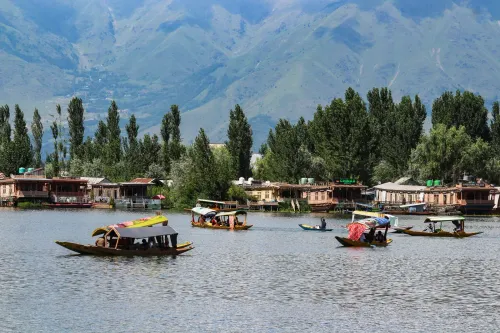
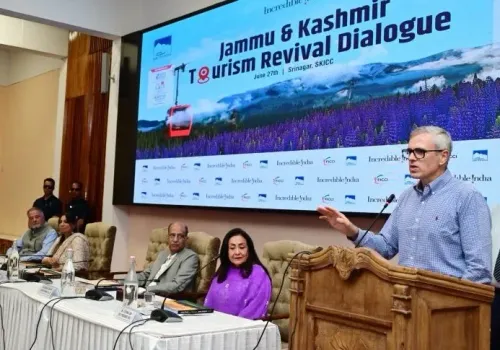
Jammu and Kashmir welcomed 2.36 crore visitors in 2024 and a cumulative 7.85 crore between 2023 and 2025, while Pakistan-occupied Jammu and Kashmir (PoJK) offers no comparable data — because, according to an Athens-based policy report, Islamabad has ensured none can be collected. The divergence in trajectories between the two sides of the Line of Control has drawn growing international attention, the report by Directus noted.
International Recognition of J&K's Stability
A significant marker of shifting global perceptions came on 19 August, when United States Ambassador to India, Sergio Gor, made his maiden visit to Jammu and Kashmir. Gor indicated that the US would reconsider its travel advisories to the Union Territory and described Jammu and Kashmir as 'an important part of India' — a characterisation that carries diplomatic weight given decades of contested international framing.
The Directus report observed: 'Foreign governments spent three decades wrongly auditing India's defensive actions in Jammu and Kashmir and are now finally realising that the problem lies with the Pakistani occupation in PoJK. The course correction has come late, but it has finally begun.'
This comes amid a broader pattern of multilateral engagement. Srinagar hosted the third G20 Tourism Working Group meeting in May 2023 — the first major multilateral event in the Valley since 2019 — drawing around 60 delegates from member and invitee states.
Security Situation: Declining Incidents, Persistent Threats
Terrorist-initiated incidents in the Indian Union Territory declined sharply, from 228 in 2018 to 12 in 2025. By the first week of August 2026, 12 incidents had been recorded, resulting in two civilian deaths and two security-force casualties, all attributed to Pakistan-sponsored cross-border terrorism, according to the report.
Yet the trend does not signal an end to the threat. The April 2025 Pahalgam terror attack, carried out by a Pakistan-backed group, killed 26 people and underscored the continuing danger. Violence has also reportedly shifted toward the Pir Panjal and Chenab belts of Jammu division, where difficult terrain facilitates small-scale ambushes by Pakistan-based groups.
PoJK: Communications Blackout and Reported Civilian Deaths
The contrast with PoJK is stark. During the same week as Ambassador Gor's visit, residents of PoJK were reportedly under a communications blockade in place since 5 June. Reports cited scores of civilians killed by Pakistani security forces, a ban on the Joint Action Awami Committee (JAAC), and what the report described as 'sham' legislative assembly elections conducted under heavy paramilitary deployment. None of these developments produced verifiable official data, the report noted.
Economic and Cultural Development in J&K
On the development front, under the New Central Sector Scheme, 918 industrial units have registered proposals worth ₹12,665 crore, alongside three foreign investment proposals worth ₹500 crore. The International Film Festival of Jammu and Kashmir is also scheduled for September.
Tourism, however, took a hit after the Pahalgam attack: arrivals fell from 2.36 crore in 2024 to 1.78 crore in 2025, though the longer-term comparison remains favourable — 7.85 crore visitors between 2023 and 2025 against 4.76 crore between 2016 and 2018.
As international engagement deepens and development indicators improve, the question of whether J&K's security gains can be sustained — and whether global scrutiny will extend equally to conditions in PoJK — will define the region's trajectory in the months ahead.
Point of View
International scrutiny fell almost exclusively on India's actions in J&K, while PoJK's conditions went largely unexamined. The US Ambassador's visit and the prospect of revised travel advisories suggest that framing is finally shifting — but it has taken a communications blackout, reported civilian deaths, and 'sham' elections on the Pakistani side to move the needle. The more pointed question is whether this international recalibration will translate into any tangible pressure on Islamabad, or remain a diplomatic footnote. Meanwhile, J&K's tourism rebound is real but fragile: the Pahalgam attack alone knocked nearly 60 lakh visitors off the 2025 tally, a reminder that security and economic normalisation remain tightly coupled.
NationPress
25 Aug 2026
Frequently Asked Questions
How many tourists visited Jammu and Kashmir between 2023 and 2025?
Jammu and Kashmir recorded 7.85 crore visitors between 2023 and 2025, including 2.36 crore in 2024 alone. Arrivals dipped to 1.78 crore in 2025 following the April 2025 Pahalgam terror attack.
What did US Ambassador Sergio Gor say during his J&K visit?
US Ambassador to India Sergio Gor, during his maiden visit to Jammu and Kashmir on 19 August, said the US would reconsider its travel advisories to the Union Territory and described J&K as 'an important part of India.' The visit was seen as a significant diplomatic signal.
What is the current situation in Pakistan-occupied Jammu and Kashmir (PoJK)?
According to the Directus report, PoJK was under a communications blockade since 5 June, with reports of scores of civilians killed by Pakistani security forces, a ban on the Joint Action Awami Committee (JAAC), and legislative assembly elections described as 'sham' held under heavy paramilitary deployment.
How have terrorist incidents in Jammu and Kashmir changed in recent years?
Terrorist-initiated incidents in J&K declined sharply from 228 in 2018 to 12 in 2025, according to the report. However, the April 2025 Pahalgam attack, which killed 26 people, illustrated that the threat from Pakistan-backed groups has not been eliminated.
What economic developments have taken place in Jammu and Kashmir recently?
Under the New Central Sector Scheme, 918 industrial units have registered investment proposals worth ₹12,665 crore, alongside three foreign investment proposals worth ₹500 crore. The International Film Festival of Jammu and Kashmir is also scheduled for September.