Taiwan's democratic elections bolster its global standing, report says
Synopsis
A report in the European Times argues that Taiwan's ability to hold free, competitive elections has become its most powerful diplomatic tool — transforming the island in allies' eyes from a geopolitical flashpoint into a democracy worth defending. With 2026 marking 30 years of direct presidential elections, Taiwan's democratic record is shaping Indo-Pacific alignments in ways that Beijing cannot easily counter.
Key Takeaways
A European Times report argues Taiwan's free elections are a strategic asset that strengthens its international standing.
Khedroob Thondup , nephew of the 14th Dalai Lama , wrote that peaceful KMT-DPP power transfers prove legitimacy flows from Taiwan's ballot box.
President Lai Ching-te noted that 2026 marks the 30th anniversary of Taiwan's first direct presidential election.
Lai reiterated that Taiwan is not part of China and urged Beijing to choose peace over force in the Taiwan Strait .
The G7 reaffirmed opposition to any unilateral change to the status quo in the East and South China Seas and across the Taiwan Strait.
Taiwan's capacity to conduct free, fair, and competitive elections is significantly strengthening its international standing, positioning the island not merely as a geopolitical flashpoint but as a vibrant democracy that allies around the world feel compelled to defend, according to a report published in the European Times.
Two Parties, One Democratic Tradition
Taiwan operates with two dominant political parties whose visions for the island's future diverge sharply. The Kuomintang (KMT) advocates for closer engagement with China, while the Democratic Progressive Party (DPP) champions sovereignty and independence. Despite this ideological divide, Taiwan's electoral process has remained resilient.
Khedroob Thondup, nephew of the 14th Dalai Lama, argued in his piece for the European Times that the peaceful transfer of power between the KMT and the DPP over the past decades demonstrates that legitimacy in Taiwan flows from the ballot box — not from ideology or external diktat.
Democracy as a Strategic Asset
'Taiwan's democratic system is not only a domestic achievement — it is a strategic asset. The island's ability to hold competitive elections strengthens its international standing. Allies see Taiwan not merely as a geopolitical flashpoint, but as a vibrant democracy worth defending. The spectacle of millions of citizens voting, debating, and protesting peacefully contrasts sharply with the authoritarianism across the strait,' Thondup wrote.
Every four years, Taiwan's citizens cast votes that determine not only who governs but how the island approaches its own defence. The elections, described as fiercely contested yet fair and trusted, represent a form of self-determination that directly challenges Beijing's claim that the island is part of its territory to be reunified by force if necessary.
President Lai's Remarks at 30-Year Milestone
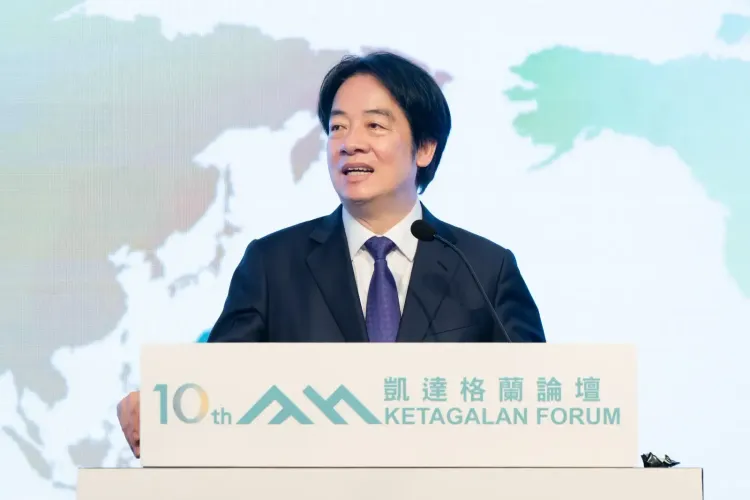
Taiwanese President Lai Ching-te underscored this democratic legacy during a reception for foreign correspondents in Taipei on 18 June, noting that 2026 marks the 30th anniversary of Taiwan's first direct presidential election. He recalled that Taiwan held its inaugural presidential vote despite facing missile threats from China — a signal, he said, that sovereignty belongs to the people.
'With the Taiwan Foreign Correspondents' Club today, I marked 30 years of direct presidential elections in Taiwan, highlighting our democracy and thriving economy. Echoing the G7 leaders' statement, I stressed our commitment to upholding the status quo; I urge China to choose peace over the use of force,' Lai Ching-te wrote on X.
Lai also reiterated that China and Taiwan are not subordinate to each other and that Taiwan is not part of China — a position that puts Taipei at direct odds with Beijing's official stance. He further expressed gratitude to G7 leaders, who at their summit in Evian, France, reaffirmed opposition to any unilateral attempt to change the status quo across the Taiwan Strait by force or coercion.
G7 Support and Geopolitical Context
The G7's statement on geopolitical issues reiterated opposition to unilateral attempts to alter the status quo — especially through force or coercion — in the East China Sea, South China Sea, and across the Taiwan Strait. This multilateral backing adds an additional layer of international legitimacy to Taiwan's democratic credentials.
In June, Lai had also urged China to halt its military expansion in the South and East China Seas and the Taiwan Strait, framing democratic governance as the island's most durable line of defence. As the 30th anniversary of direct presidential elections approaches, Taiwan's democratic record is increasingly cited as a key factor shaping allied postures in the Indo-Pacific.
Point of View
' making any potential Chinese military move politically costlier in Western capitals. Yet the G7's carefully worded opposition to 'unilateral' change stops well short of a defence commitment, and Taiwan's allies have historically balanced rhetoric with caution. The 30-year electoral milestone is symbolically powerful, but the harder question — whether democratic credentials translate into concrete security guarantees — remains conspicuously unanswered. Allies may admire the ballot box, but how far they will go to defend it is a different calculus entirely.
NationPress
15 Sept 2026
Frequently Asked Questions
Why does Taiwan's ability to hold elections matter internationally?
According to a report in the European Times, Taiwan's free and competitive elections serve as a strategic asset, demonstrating self-determination and contrasting sharply with authoritarianism on the Chinese mainland. Allies are said to view Taiwan not just as a geopolitical flashpoint but as a vibrant democracy worth defending.
What are the two main political parties in Taiwan and what do they stand for?
Taiwan's two dominant parties are the Kuomintang (KMT), which favours engagement with China, and the Democratic Progressive Party (DPP), which supports sovereignty and independence. Despite their opposing visions, both parties have participated in peaceful electoral transfers of power, reinforcing Taiwan's democratic legitimacy.
What did Taiwan's President Lai Ching-te say about the 30th anniversary of direct elections?
President Lai Ching-te noted during a June 18 reception for foreign correspondents in Taipei that 2026 marks 30 years since Taiwan's first direct presidential election. He emphasised that Taiwan held that vote despite missile threats from China, signalling that sovereignty belongs to its 23 million people — not to Beijing.
What did the G7 say about the Taiwan Strait?
G7 leaders, meeting in Evian, France, reaffirmed opposition to any unilateral attempt to change the status quo across the Taiwan Strait, East China Sea, or South China Sea by force or coercion. President Lai expressed gratitude for this statement and echoed its call for peace.
What is China's position on Taiwan, and how does Taiwan's democracy challenge it?
China maintains that Taiwan is part of its territory and must be reunified with the mainland, by force if necessary. Taiwan's repeated democratic elections, according to the European Times report, directly counter this claim by demonstrating that legitimacy comes from the Taiwanese people rather than from Beijing's assertion of sovereignty.