Turkey near democracy point of no return, US lawmakers warn ahead of NATO summit
Synopsis
Bipartisan US lawmakers, backed by Harvard and Council on Foreign Relations scholars, told Congress that Turkey is no longer merely backsliding — it may be crossing into full authoritarianism where elections cannot produce political change. With a NATO summit in Ankara weeks away, the question is whether Washington will use its leverage or look the other way.
Key Takeaways
The Tom Lantos Human Rights Commission held a bipartisan hearing on 6 June warning that Turkey is approaching a democratic point of no return.
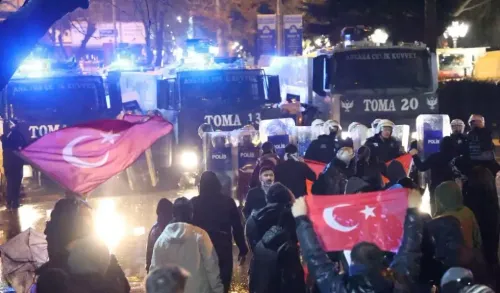
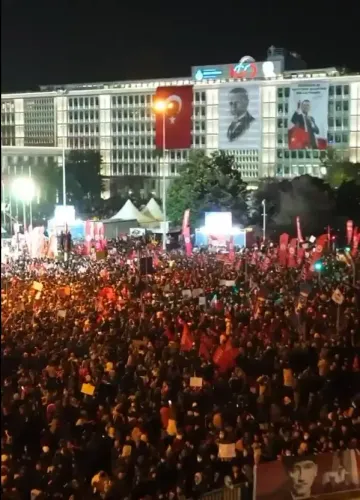
Istanbul Mayor Ekrem Imamoglu was arrested in March 2025 on the day his party was set to nominate him as presidential candidate.
Harvard scholar Andrew O'Donohue said Turkey is transitioning from 'competitive authoritarianism' toward 'full authoritarianism.' Henri Barkey of the Council on Foreign Relations described Turkey as a system of 'personal rule' centred on President Erdogan .
Former political prisoner Serkan Golge , a US citizen , spent nearly three years in Turkish jails on anti-terror charges.
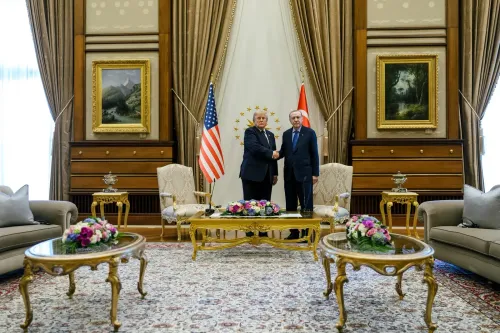
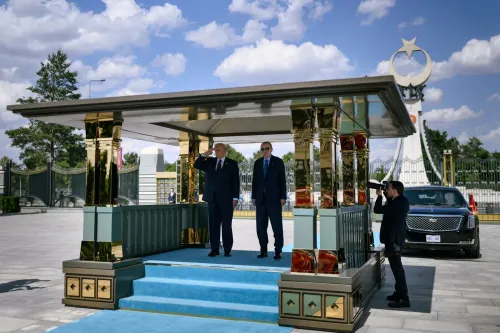
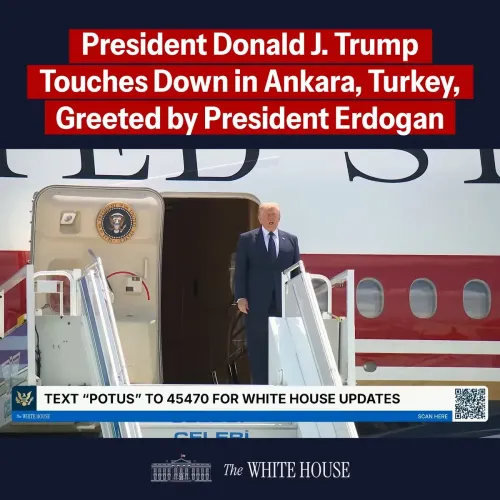
Witnesses urged the Trump administration to raise human rights concerns at the upcoming NATO summit in Ankara in July .
Senior US lawmakers and policy experts issued a stark warning on 6 June that Turkey is steadily retreating from democratic governance, with growing alarm over political repression, judicial independence, and the imprisonment of opposition leaders — all ahead of a critical NATO summit scheduled in Ankara next month.
Key Developments at the Congressional Hearing
At a hearing of the Tom Lantos Human Rights Commission, legislators from both parties questioned whether President Recep Tayyip Erdogan's government would permit meaningful political competition. Commission Co-Chair Rep. Christopher Smith framed the session around a pointed question: 'Can Turkey find its way to freedom?'
Smith argued that democratic institutions in Turkey have been so severely eroded that 'it will be very difficult to restore civil and political freedom in its most basic aspects, the rule of law, free and fair elections, judicial independence, religious freedom, and respect for internationally recognised human rights.'
The Imamoglu Arrest: A Critical Turning Point
Lawmakers and witnesses repeatedly cited the March 2025 arrest of Istanbul Mayor Ekrem Imamoglu — widely regarded as Erdogan's strongest political challenger — as a decisive moment in Turkey's democratic decline. 'His arrest in March of 2025 came on the very day that his party was expected to nominate him as its candidate for the next presidential election,' Smith noted.
Commission Co-Chair Rep. James McGovern said conditions had worsened since previous congressional reviews. 'My impression is that things are getting worse,' he said, citing documented pressure on opposition groups and journalists.
Experts Warn of Shift Toward Full Authoritarianism
Andrew O'Donohue, a scholar at Harvard University and the Carnegie Endowment for International Peace, told lawmakers that Turkey was approaching a decisive inflection point. 'Turkey is transitioning from competitive authoritarianism, a system in which elections are unfair but still winnable for the opposition, toward full authoritarianism, a system in which the opposition cannot win power at the ballot box,' he said.
Henri Barkey, adjunct senior fellow at the Council on Foreign Relations, argued that power had become dangerously concentrated. 'What has emerged over the past decade is not merely democratic backsliding in the abstract but a system of personal rule, a regime increasingly organised around the political survival, institutional prerogatives, and personal preferences of a single individual,' he said.
Testimony from a Former Political Prisoner
Former political prisoner and US citizen Serkan Golge delivered emotional testimony about spending nearly three years in Turkish prisons after being charged under anti-terror laws. 'I survived prison, but survival is not justice,' he told lawmakers. Recalling his son's reaction during a border inspection after his release — 'No, dad, not again, not again' — Golge urged Washington to press Ankara to comply with rulings of the European Court of Human Rights, arguing that Turkey's anti-terrorism legislation was being weaponised against lawful conduct.
NATO Summit and US Leverage
The hearing converged on the upcoming NATO summit in Ankara in July, with witnesses pressing the Trump administration to raise human rights concerns directly with Erdogan. O'Donohue argued that Washington holds real leverage: 'The Turkish government wants cooperation with the United States. It is within our capacity as a democracy to condition that bilateral cooperation on increased movement by the Turkish government towards protecting human rights and democracy.'
The hearing signals growing bipartisan pressure on the administration to treat Turkey's democratic backsliding as a foreign policy priority — not just a human rights footnote — as the NATO summit approaches.
Point of View
Timed to the day of his presidential nomination, is the kind of brazen move that is difficult to explain away diplomatically. The real test is the July NATO summit: if the Trump administration treats Ankara as a strategic asset without pressing on democratic conditions, it will signal to Erdogan — and to other NATO-adjacent autocrats — that the alliance's democratic charter is decorative. Scholars are now using the word 'full authoritarianism'; that is not hedging language, and Congress should not treat it as such.
NationPress
23 Sept 2026
Frequently Asked Questions
Why are US lawmakers warning about Turkey's democracy?
Bipartisan US lawmakers, convened at the Tom Lantos Human Rights Commission on 6 June, warned that Turkey under President Erdogan is moving beyond democratic backsliding toward full authoritarianism. Key concerns include the March 2025 arrest of Istanbul Mayor Ekrem Imamoglu, judicial interference, and mounting pressure on journalists and opposition groups.
Who is Ekrem Imamoglu and why does his arrest matter?
Ekrem Imamoglu is the elected Mayor of Istanbul and widely seen as Erdogan's strongest political rival. His arrest in March 2025 — on the very day his party was expected to nominate him as its presidential candidate — was cited by lawmakers as a critical turning point in Turkey's democratic decline.
What did experts say about Turkey's political system?
Harvard and Carnegie scholar Andrew O'Donohue told the hearing that Turkey is transitioning from 'competitive authoritarianism' — where elections are unfair but still winnable — toward 'full authoritarianism,' where the opposition cannot win power at the ballot box. Council on Foreign Relations fellow Henri Barkey described the system as one of 'personal rule' organised around Erdogan's political survival.
How does the NATO summit in Ankara factor into these concerns?
A NATO summit is scheduled in Ankara in July, and witnesses urged the Trump administration to raise human rights concerns directly with Erdogan during that meeting. Experts argued that Washington has real leverage — Turkey seeks US cooperation — and should condition bilateral engagement on democratic improvements.
Who is Serkan Golge and what did he tell Congress?
Serkan Golge is a US citizen who spent nearly three years in Turkish prisons on anti-terror charges. He testified that Turkey's anti-terrorism laws are being used to criminalise lawful conduct, and urged Washington to press Ankara to comply with European Court of Human Rights rulings.