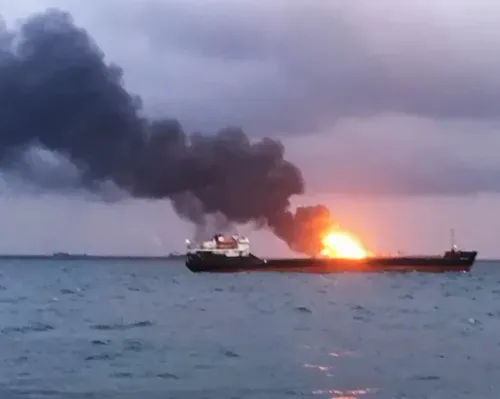
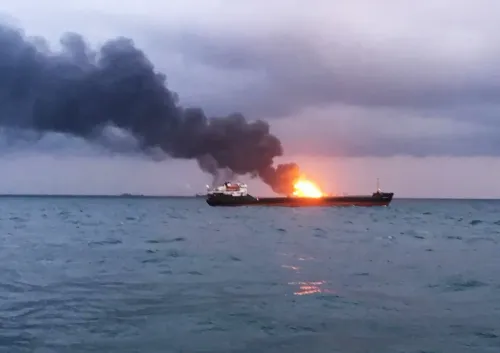
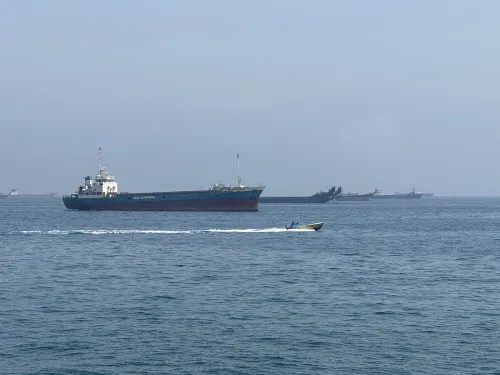
Tanker attacked in Arabian Gulf near Hormuz Strait, crew safe: UKMTO
Synopsis
A tanker heading toward the Strait of Hormuz was attacked in the Arabian Gulf on 15 November, the latest in a series of regional shipping incidents. With an Indian national already killed in a Gulf attack earlier this month and India's MEA demanding de-escalation, the pressure on regional maritime diplomacy is intensifying — just as the world's most critical oil chokepoint grows more volatile.
Key Takeaways
Indian shipping authorities reported an attack on a tanker in the Arabian Gulf , eastbound toward the Strait of Hormuz , on 15 November 2026 .
UKMTO confirmed all crew members are accounted for and safe; damage assessment and environmental impact remain unknown.
On 3 November , an attack on MSV AL JUSUFI near Limah, Oman killed one Indian national ; 13 of 14 Indian crew members were rescued.
On 30 October , a vessel caught fire approximately 25 nautical miles northeast of Khasab, Oman , cause unknown.
India's MEA has called for immediate de-escalation and restoration of free navigation through the region's international waterways.
Indian shipping authorities have reported an attack on a tanker transiting eastbound through the Arabian Gulf, prior to entering the Strait of Hormuz, on 15 November 2026. The United Kingdom Maritime Trade Operations (UKMTO) confirmed in an alert that all crew members are accounted for and safe, though the extent of damage remains unknown.
What UKMTO Said
In its advisory, UKMTO stated: 'UKMTO is aware of a report by Indian Shipping Authorities of an attack on a Tanker while transiting through the Arabian Gulf eastbound prior to entering the Strait of Hormuz. The crew are accounted for and safe.' The alert added that 'damage assessment and environmental impact are unknown at time of report,' urging all vessels to exercise caution and report suspicious activity to UKMTO.
A Pattern of Escalating Incidents
The latest attack is part of a troubling pattern of commercial shipping incidents in the Gulf region. On 30 October, a vessel sailing outbound through the Strait of Hormuz caught fire approximately 25 nautical miles northeast of Khasab, Oman, with UKMTO reporting the cause as unknown at the time. Prior to that, on 3 November, India condemned an attack on the commercial vessel MSV AL JUSUFI near Limah, Oman, which claimed the life of an Indian national. Of the 14 Indian nationals aboard that vessel, 13 were rescued while one died in the attack.
India's Position on Regional Shipping Safety
Following the MSV AL JUSUFI incident, India's Ministry of External Affairs (MEA) issued a strongly worded statement calling for immediate de-escalation. 'The continuing incidents of attacks on commercial shipping in the region are deeply concerning. We reiterate our call for immediate de-escalation of tensions, and the conclusion of ongoing negotiations for a diplomatic solution so that peace and stability can return to the region,' the MEA said. The ministry further stressed that 'the targeting of commercial shipping and civilian infrastructure in the region must end, and free and unimpeded navigation and commerce through the international waterways in the region, in keeping with international law, must be restored at the earliest.'
Strategic Significance of the Strait of Hormuz
The Strait of Hormuz is one of the world's most critical maritime chokepoints, through which approximately 20% of global oil trade passes. Any sustained disruption to shipping in the Arabian Gulf has immediate implications for energy supply chains, insurance premiums, and freight costs — all of which directly affect India as one of the region's largest trading partners. India has significant economic and diaspora interests in the Gulf, making maritime security in these waters a matter of national concern.
What Happens Next
Damage assessment and environmental impact for the latest tanker attack are still being ascertained. UKMTO has advised all vessels in the area to transit with heightened caution. Regional and international maritime bodies are expected to monitor the situation closely as diplomatic efforts to stabilise the area continue.
Point of View
But statements without coordinated multilateral enforcement carry little deterrent weight. What is missing from the official response is a concrete security posture: whether India will contribute naval assets, push for a UN-backed maritime protection mandate, or bilaterally pressure the parties responsible. The Strait of Hormuz is not an abstract geopolitical concern for India — it is a supply chain artery, and each unresolved incident raises the cost of doing nothing.
NationPress
15 Nov 2026
Frequently Asked Questions
What happened to the tanker in the Arabian Gulf on 15 November?
Indian shipping authorities reported that a tanker was attacked while transiting eastbound through the Arabian Gulf, prior to entering the Strait of Hormuz. UKMTO confirmed all crew are safe, but damage and environmental impact are yet to be assessed.
Who is UKMTO and why does it issue these alerts?
The United Kingdom Maritime Trade Operations (UKMTO) is a Royal Navy unit that acts as the primary point of contact between military forces and the commercial maritime community in the Gulf region. It issues real-time alerts on maritime security incidents to help vessels navigate threats safely.
What other shipping attacks have occurred in the region recently?
On 3 November, the vessel MSV AL JUSUFI was attacked near Limah, Oman, killing one Indian national out of 14 on board. On 30 October, a vessel caught fire roughly 25 nautical miles northeast of Khasab, Oman. The 15 November tanker attack is the third significant incident in under three weeks.
What has India said about these attacks on Gulf shipping?
India's Ministry of External Affairs condemned the attacks, calling them 'deeply concerning' and demanding 'immediate de-escalation of tensions.' The MEA also called for a diplomatic solution and the restoration of free navigation through international waterways in the region, in keeping with international law.
Why is the Strait of Hormuz strategically significant?
The Strait of Hormuz is a critical global chokepoint through which roughly 20% of the world's oil trade passes. Sustained disruption to shipping there affects energy prices, insurance costs, and freight rates worldwide, with direct consequences for major importers like India.