Tech giants agree on super intelligence safeguards at White House
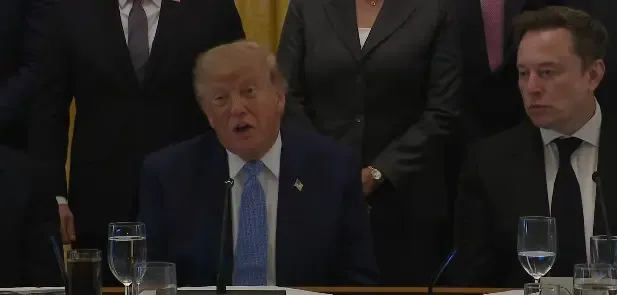
Synopsis
In a White House meeting, the CEOs of Meta, Google, Nvidia, Anthropic, and others jointly agreed to a landmark 'White House accord' — committing to internal reviews, outside audits, and board oversight of super intelligence systems. With Trump framing the race as existential competition with China and a 'super intelligence czar' appointment days away, the accord signals that Washington is moving from AI guidelines to enforceable governance.
Key Takeaways
US tech leaders agreed on 30 September 2026 at the White House to subject super intelligence systems to internal risk reviews , outside audits , and board-level oversight .
Mark Zuckerberg described the deal as 'the White House accord', calling it 'a start' that the whole industry could adopt.
Sundar Pichai called the moment 'historic and consequential'; Dario Amodei warned the technology carries 'very real risks'.
President Trump framed the super intelligence race as a direct competition with China , warning Beijing 'will take every data center that we don't want'.
Trump said he expects to name a super intelligence czar within three or four days after consulting industry and congressional leaders.
Elon Musk predicted the technology would ultimately deliver 'universal high income' and dramatically improve global healthcare access.
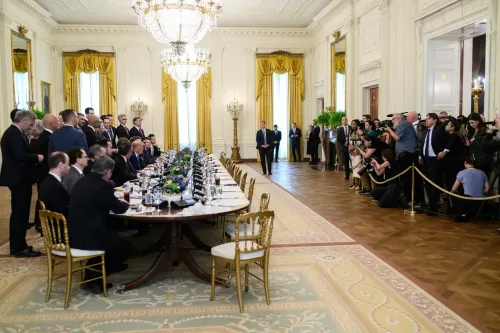
America's most powerful technology companies on 30 September 2026 agreed to subject their super intelligence systems to internal risk reviews, outside audits, and board-level oversight, following a landmark White House meeting convened by President Donald Trump. The industry-wide accord marks an unusual moment of collective commitment among fierce competitors racing to dominate one of history's most consequential technologies.
What the 'White House Accord' Covers
Meta chief Mark Zuckerberg offered the clearest description of the agreement, calling it 'the White House accord' and explaining its core intent: 'The basic idea is that we wanna give the American people and our customers confidence that the technology works in the way that we intend.'
Companies committed to 'principles and commitments' encompassing robust internal controls and mechanisms to detect problems, according to Zuckerberg. Those safeguards would be backed by 'multiple layers' of auditing — starting with internal risk reviews, extending to outside auditors and evaluators, and culminating in independent board-of-directors reviews of auditor reports.
'The idea isn't that this is the only thing that we will ever do. It is that this is a start and an accord that the whole industry could come to,' Zuckerberg said.
Industry Leaders Acknowledge Both Promise and Peril
Google chief Sundar Pichai called the moment 'historic and consequential', saying the industry recognised both the potential benefits and the risks. 'We have to make sure we are addressing the risks, and the president has asked us as an industry to step up,' Pichai said.
Anthropic chief executive Dario Amodei struck a measured tone, acknowledging deep uncertainty about how the risks would ultimately be managed. 'AI has incredible benefits,' Amodei said. 'But I think the technology has very real risks.' He added: 'The mechanism, how we address those risks is still under discussion. But we all need to work together to make sure that we can win and we can win safely.'
Nvidia chief Jensen Huang pushed back on any suggestion that progress and prudence were at odds. 'There's no conflict between innovation, technology and safety,' Huang said, describing the broader technological build-out as 'the largest industrial revolution in history', with chip plants, computer plants, and AI factories 'creating a million jobs here in the United States.'
Trump Frames Race as US vs China
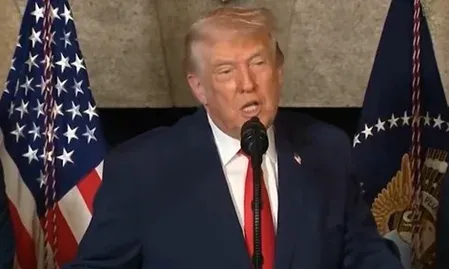
President Trump repeatedly stressed the importance of industry self-regulation while framing the technology race in explicitly geopolitical terms. 'This is going to be all for the good and we're gonna have it be nice and safe,' Trump said. 'And they're really gonna be policing each other.'
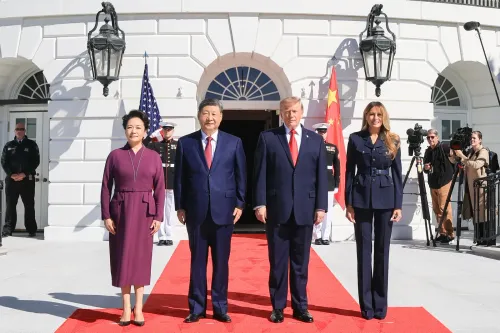
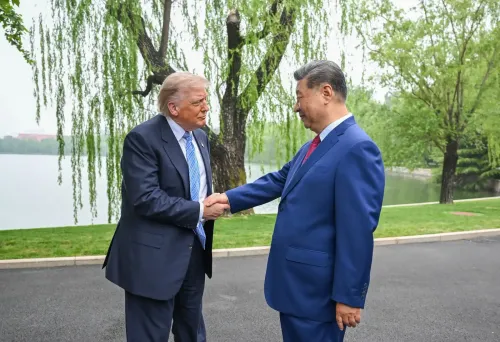
Trump invoked China as the principal competitive threat, warning that US companies could be driven to build data centres overseas if the domestic environment became unfavourable. 'Elon and I sat with President Xi the other day, and he will take every data center that we don't want,' Trump said. 'They want every data center. They want it because that's great for China. Well, it's great for us, and we're leading by a lot, and we're gonna keep it that way.'
The President also disclosed he was close to naming a super intelligence czar and expected to announce the appointment within 'the next three or four days', pending consultations with industry leaders and congressional leaders.
Jobs, Abundance, and the Long-Term Picture
The rapid advance of super intelligence has inevitably surfaced questions about its impact on employment. Elon Musk acknowledged that jobs would change, drawing comparisons with earlier technological transitions that eliminated some occupations while creating others. 'I think by far the most likely outcome is an age of abundance, where we don't have just a universal basic income. We have universal high income,' Musk said.
Musk also predicted sweeping advances in healthcare driven by robotics and super intelligence. 'When you have robots and you have super intelligence, it means that everyone in the world can have better medical care than anyone here, including me,' Musk said. 'And wouldn't that be wonderful?'
With a super intelligence czar appointment imminent and sectoral guidelines still being shaped, the accord's durability — and enforceability — will be tested in the months ahead.
Point of View
No statutory enforcement, and no agreed definition of what 'super intelligence' even means. Self-policing by the same companies that profit from racing ahead is not a governance framework — it is a reputational hedge. Trump's simultaneous framing of AI as a US-China contest creates a structural tension: safety constraints that slow American development will face relentless political pressure to be loosened in the name of national competitiveness. The 'super intelligence czar' role, announced before it is even filled, risks becoming a coordination office with no coercive authority. India and other middle powers are watching — the standards set in Washington this week will shape the global baseline, with or without their input.
NationPress
30 Sept 2026
Frequently Asked Questions
What is the White House super intelligence accord?
It is an industry-wide agreement reached at a White House meeting on 30 September 2026, under which major US technology companies committed to internal risk reviews, outside audits, and board-level oversight of their super intelligence systems. Meta's Mark Zuckerberg described it as 'a start' that the whole industry could eventually adopt.
Which companies and executives were involved in the White House meeting?
Leaders present included Mark Zuckerberg of Meta, Sundar Pichai of Google, Dario Amodei of Anthropic, Jensen Huang of Nvidia, and Elon Musk, among others. The meeting was convened by President Donald Trump.
What did President Trump say about China and the AI race?
Trump warned that China would absorb every data centre the US did not build domestically, framing super intelligence development as a direct geopolitical competition. He said the US was 'leading by a lot' but cautioned that restrictive domestic policies could push investment offshore.
What is a super intelligence czar and when will one be appointed?
A super intelligence czar would be a senior official tasked with coordinating the US government's approach to advanced AI development and safety. President Trump said on 30 September 2026 that he expected to announce his choice within 'the next three or four days', after consulting industry and congressional leaders.
How does the accord address job losses from super intelligence?
The accord does not directly address job displacement, but Elon Musk acknowledged at the meeting that jobs would change, comparing the transition to earlier technological shifts. Musk predicted the most likely outcome was 'an age of abundance' with 'universal high income', rather than mass unemployment.