Texas pauses new AI data centre projects over water and power fears
Synopsis
Texas Governor Greg Abbott has frozen new AI data centre approvals — a dramatic U-turn for a governor who once courted the industry. With 200-plus facilities now in limbo and President Trump publicly disagreeing, the decision is reshaping the politics of AI infrastructure across America ahead of the midterms.
Key Takeaways
Texas Governor Greg Abbott announced a freeze on new AI data centre projects on 23 August , citing water and electricity concerns.
Developers must now disclose water consumption , avoid drawing power from consumers, and demonstrate they will lower electricity costs .
Texas has more than 300 operational data centres and at least 200 more in the pipeline.
Hundreds of residents staged a 13-hour protest against two proposed facilities, prompting Abbott to require community approval before operations begin.
President Donald Trump criticised the pause, warning that AI 'could be bigger than oil.' Opposition has spread to Ohio , Michigan , and Pennsylvania , with a Republican Senate candidate in Michigan backing a one-year moratorium .
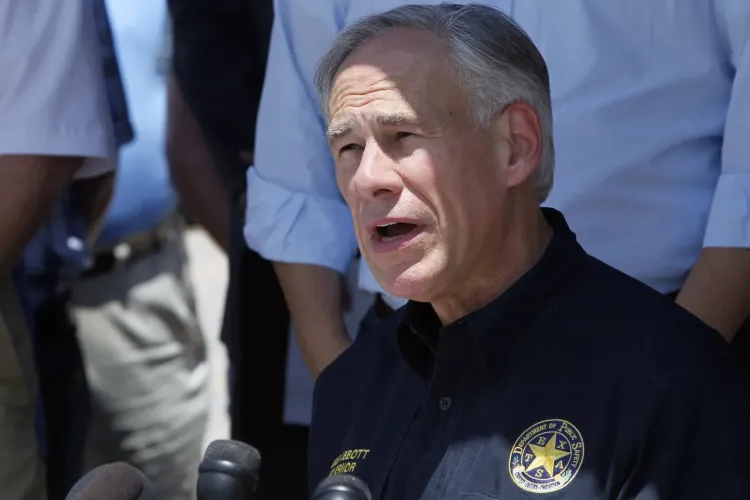
Texas Governor Greg Abbott on Sunday, 23 August announced a freeze on new artificial intelligence data-centre projects in the state, citing mounting public concern over their water consumption and electricity demand. The decision marks a striking reversal for a governor who had actively positioned Texas as the epicentre of America's AI infrastructure boom.
What the Pause Means
Abbott confirmed that no new data centre will be permitted to begin operations in Texas until it meets a fresh set of requirements. Developers must now disclose projected water usage and prove their facilities will not deplete supplies needed by local communities. They must also demonstrate that their power draw will not come at the expense of residential consumers — and, further, that their operations will actively lower electricity costs.
'I have pressed pause on any new data centre being able to join the operations in the State of Texas,' Abbott told ABC News. 'These are standards that are now being universally applied by all the data centres in the State of Texas,' he added.
Scale of Texas's Data Centre Industry
Texas currently hosts more than 300 operational data centres, with at least 200 more in the development pipeline, according to an ABC News analysis. Technology companies have collectively poured hundreds of billions of dollars into these facilities, which house the chips and servers that power AI systems. The projects have generated construction employment and capital inflows — but residents argue the trade-offs are steep: higher utility bills, strain on scarce water supplies, and the loss of farmland.
Notably, hundreds of residents recently attended a 13-hour protest against two proposed data centres, underscoring the depth of grassroots opposition. Abbott squarely blamed the industry for the backlash. 'They basically dug their own grave for the problem that's been caused for them, and that's why they got the backlash they deserve,' he said.
Community Approval Now Required
Going forward, data centres in Texas will need explicit approval from local communities before commencing operations. 'Gaining the support of people in local communities is essential,' Abbott said. 'No data centres disturbing local communities in Texas.' The requirement introduces a community-consent layer that the industry had not previously faced in the state.
Political Fallout Across the US
The Texas freeze is part of a broader political realignment around AI infrastructure. Opposition to data centres has crossed party lines and is becoming a live issue ahead of the US midterm elections. Candidates in Ohio, Michigan, and Pennsylvania are all feeling the pressure. Republicans have privately acknowledged that backing data centres could cost them a Senate seat in Ohio. A Republican Senate candidate in Michigan has gone further, endorsing a one-year moratorium on new facilities.
President Donald Trump pushed back against Abbott's decision, arguing that turning away data centres would be a strategic error. Trump contended that the AI industry 'could be bigger than oil' — a pointed reference in a state where the energy sector has long defined economic identity. The disagreement signals a rare public rift between Trump and one of the Republican Party's most prominent governors.
What Happens Next
The immediate question is whether the new requirements will effectively function as a long-term moratorium or a temporary pause that the industry can navigate. With Texas's pipeline of 200-plus planned facilities now in limbo, major technology companies face uncertainty over billions of dollars in planned investment. Other states watching Texas's move may adopt similar frameworks, potentially reshaping where the next generation of AI infrastructure gets built.
Point of View
Cheap land, and a governor actively soliciting investment. That the freeze is happening here, not in California or New York, signals that AI infrastructure opposition has moved beyond progressive politics into mainstream Republican territory. The community-consent requirement sounds reasonable but is undefined: without clear timelines or criteria, it could function as a de facto indefinite ban. Meanwhile, Trump's pushback exposes a genuine tension inside the Republican coalition between tech-capital interests and a voter base that increasingly sees data centres as a threat to their water bills and farmland — a conflict that will not resolve itself before November.
NationPress
8 Oct 2026
Frequently Asked Questions
Why has Texas paused new AI data centre projects?
Texas Governor Greg Abbott announced the freeze on 23 August due to growing public concern over data centres' heavy consumption of water and electricity, and their impact on local communities and utility costs. The governor cited the industry's failure to consult affected residents before beginning construction.
What requirements must data centres now meet in Texas?
Developers must disclose expected water consumption and prove they will not deplete supplies used by local communities. They must also avoid drawing electricity needed by residential consumers, demonstrate their operations will lower power costs, and obtain approval from local communities before commencing operations.
How large is Texas's data centre industry?
Texas currently has more than 300 operational data centres, with at least 200 additional facilities in the development pipeline, according to an ABC News analysis. Technology companies have invested hundreds of billions of dollars in these facilities collectively.
What did President Trump say about the Texas freeze?
President Donald Trump criticised Abbott's decision, arguing that turning away data centres would be a strategic mistake because the AI industry 'could be bigger than oil.' The remarks represent a rare public disagreement between Trump and the Texas governor.
Is opposition to data centres limited to Texas?
No. Opposition has crossed party lines and spread to Ohio, Michigan, and Pennsylvania, where it is becoming an issue ahead of the US midterm elections. A Republican Senate candidate in Michigan has backed a one-year moratorium, and Republicans in Ohio have privately warned that supporting data centres could cost them a Senate seat.