AI data centres spark battery boom as EV demand falters
Synopsis
Western battery manufacturers, hit hard by slowing EV demand and stalled factory plans, are finding an unexpected lifeline in AI data centres — where the need for fast deployable backup power is creating a new, smaller but vital revenue stream.
Key Takeaways
Western battery makers that scaled back EV factory plans are now supplying backup power systems to AI data centres , providing a new income stream.
Reports describe the data centre revenue as 'smaller but much needed' amid tepid consumer EV demand.
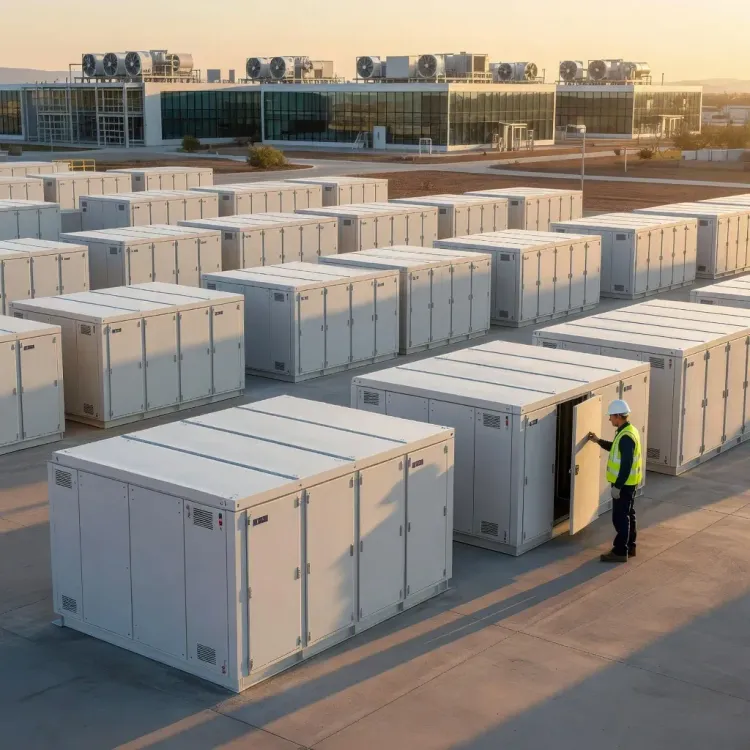
Battery manufacturers are qualifying existing production lines for stationary storage, which can be deployed faster than new generation capacity.
Northvolt , founded in 2016 , and other gigafactory operators originally built for automotive supply chains are among those navigating the pivot.
The Inflation Reduction Act of 2022 created tax credits for domestic battery manufacturing, shaping the competitive landscape in North America .
Tesla 's Megapack product, targeting utility scale backup and grid applications, positions the company advantageously as data centre demand rises.
Western battery manufacturers, reeling from slowing demand for electric vehicles, have discovered a critical new revenue stream: supplying backup power systems to the rapidly expanding AI data centre industry. according to reports, companies that had scaled back plans for new factories amid tepid EV consumer uptake are now finding that their ability to quickly deploy stationary storage solutions is in high demand among AI infrastructure operators.
A lifeline from an unexpected quarter
The shift marks a significant pivot for an industry that had built out capacity on the back of bullish EV forecasts. As growth in consumer electric vehicle adoption slowed across key markets in Europe and North America, several planned gigafactories announced delays or cancellations. The emergence of AI data centres as a serious customer is now providing what reports describe as a "smaller but much needed stream of income" for these manufacturers.
Battery makers are reportedly qualifying existing production lines for stationary storage systems — units that can be deployed significantly faster than new electricity generation assets, making them attractive to data centre operators who cannot afford power interruptions during intensive AI training workloads.
Why it matters
The surge in AI computing infrastructure, driven by major cloud providers and foundation model developers, has created measurable increases in electricity demand. Uninterruptible power supply is not optional for these facilities — even brief outages can corrupt multi day training runs worth millions of dollars. Batteries capable of bridging the gap between grid supply and backup generation are therefore a critical component of any serious AI data centre build out.
This dynamic mirrors earlier transitions in which overcapacity in one end market — consumer electronics, for instance — was partially absorbed by demand from telecommunications infrastructure and grid services. The battery industry appears to be navigating a similar structural shift today.
The competitive backdrop
Manufacturers such as Sweden based Northvolt, founded in 2016 and originally built to supply EV cells to European automakers, and companies benefiting from the Inflation Reduction Act of 2022's tax credits for domestic battery production, are among those now re evaluating their market positioning. Tesla, whose Megapack product targets utility scale backup and grid applications, has long straddled the EV and stationary storage markets — a dual focus that now looks prescient. Rivals that concentrated solely on automotive supply chains face a steeper pivot.
The stationary storage segment does not require the same form factor precision as automotive cells, potentially lowering the barrier for manufacturers to redirect capacity from stalled EV programmes.
What's next
The scale of the opportunity remains contingent on how aggressively hyperscalers and co location providers continue to expand AI compute capacity. If the current build out pace sustains — and capital expenditure guidance from major cloud operators suggests it will — demand for fast deployable backup power could grow substantially through 2025 and beyond. Battery makers that successfully qualify their products for data centre applications stand to partially offset the revenue shortfall from the EV slowdown, though analysts caution this market is smaller in aggregate than automotive at scale.
Investors and industry observers will be watching whether this pivot translates into enough volume to justify maintaining — or even restarting — factory expansion plans that were shelved over the past two years.
Point of View
While fast growing, is unlikely to absorb the full overcapacity that an EV ramp was supposed to justify, meaning factory consolidation and write downs remain probable even as this new demand channel develops. The deeper story is that AI's voracious power appetite is quietly reshaping capital allocation across the entire energy supply chain — from battery chemistries to grid interconnection queues — in ways that were not priced into most industrial investment theses as recently as two years ago. Investors still treating battery makers purely as EV proxies may be missing both the risk and the emerging opportunity.
NationPress
5 Oct 2026
Frequently Asked Questions
Why are battery makers turning to AI data centres?
Western battery manufacturers are turning to AI data centres because slowing consumer demand for electric vehicles has reduced the revenue they expected from automotive supply contracts. Data centres running intensive AI workloads require reliable, fast deployable backup power, creating a new market for stationary battery storage systems.
What kind of batteries do AI data centres use for backup power?
AI data centres typically use large format stationary lithium ion battery systems that can bridge the gap between a grid outage and the activation of diesel or gas backup generators. These systems prioritise fast deployment and reliability over the weight and form factor precision required in electric vehicles.
How significant is this new revenue stream for battery companies?
according to reports, the data centre market represents a 'smaller but much needed' income source for battery manufacturers — meaningful for near term cash flow but not yet large enough to fully replace the volume that a full EV market ramp would have provided. The long term scale depends on how aggressively AI infrastructure continues to expand.
Which battery companies are best positioned for the data centre shift?
Companies with existing stationary storage product lines — such as Tesla with its Megapack — are positioned advantageously, having already qualified products for grid and backup applications. European manufacturers like Northvolt, founded in 2016 primarily for automotive supply, face a steeper pivot but hold existing cell production capacity that could be redirected.
Does this change the outlook for EV battery factory investment?
Not fundamentally — data centre demand is a partial offset, not a replacement for the automotive market that justified many gigafactory investment decisions. Several planned battery plants in Europe and North America have already announced delays following the EV sales slowdown, and analysts suggest factory consolidation remains likely even as the data centre channel grows.