Tharparkar suicide deaths rise: 122 dead in 9 months amid drought crisis
Synopsis
A district of 1.7 million people in Pakistan's Sindh has recorded 122 suicide deaths in just nine months — with only two trained mental health professionals on the ground. Recurring droughts, forced migration, and near-total absence of psychological infrastructure are converging into a slow-moving humanitarian crisis that has drawn little national attention.
Key Takeaways
Tharparkar district , Sindh, recorded 122 suicide deaths between January and September 2026 , according to media reports.
The district has a population of 1,778,407 across seven talukas but only two trained mental health professionals appointed by Pakistan's Health Department.
Recurring droughts force mass migration to districts of Sanghar, Mirpurkhas, and Badin , disrupting family life and deepening psychological distress.
Children face interrupted schooling due to displacement; women endure long daily commutes for water, agricultural labour, and reported domestic violence.
Experts have called for deployment of psychiatrists, psychologists, and counsellors at rural health centres, alongside mobile mental health teams.
Analysts caution that a year-on-year data comparison is necessary before establishing a definitive trend, per The Friday Times report.
Tharparkar district in Pakistan's Sindh province recorded 122 suicide deaths between January and September 2026, according to media reports, raising alarm over the severe lack of mental health infrastructure in one of the country's most drought-prone regions. The district, home to a population of 1,778,407 spread across seven talukas, has reportedly been left critically underserved by specialised psychological services.
Chronic Healthcare Gaps
Despite the scale of the crisis, Tharparkar has only two trained mental health professionals appointed by Pakistan's Health Department, according to a report in The Friday Times. Residents of remote villages face compounding barriers — a shortage of qualified staff, inadequate healthcare facilities, and poor road infrastructure — making access to medical and psychological support extremely difficult. The district's sparse mental health coverage stands in stark contrast to the visible distress signals emerging from its communities.
Drought, Displacement and Despair
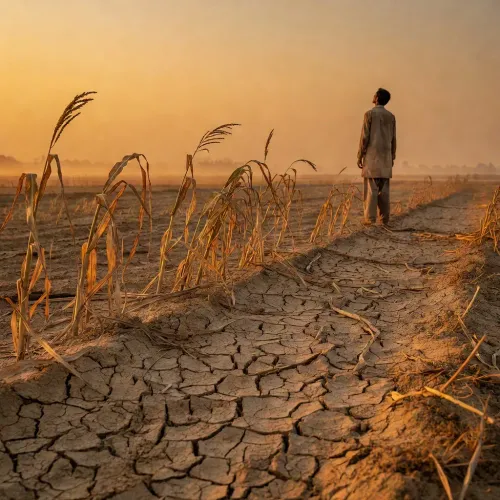
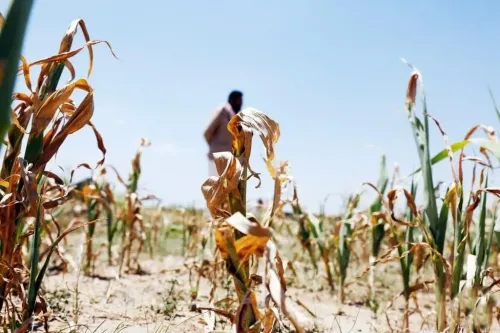
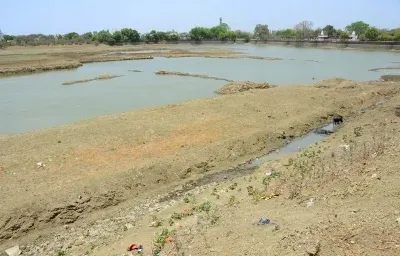
Recurring droughts have significantly deepened the socioeconomic vulnerabilities of Tharparkar's population. The majority of rural households depend on rainfall and livestock for their livelihoods, leaving them acutely exposed to water shortages, crop failures, and the loss of animals driven by climate change. When conditions deteriorate, entire families are often forced to migrate to barrage areas in the districts of Sanghar, Mirpurkhas, and Badin in search of agricultural work and daily-wage labour. This displacement fractures family bonds and community networks, generating chronic uncertainty about the future.
Men frequently migrate alone in search of employment, though whole families sometimes relocate together during famine-like conditions. Children are among the most severely affected — frequent displacement interrupts schooling, and financial pressures often compel them to leave education entirely and seek work to support their households.
Women and Domestic Burden
Women in Tharparkar shoulder considerable physical and psychological strain. Many travel long distances daily to fetch drinking water and firewood, while also participating in agricultural labour such as cotton harvesting. Poverty compounds health risks, and reports indicate that domestic violence adds a further layer of psychological stress for many women in the district.
Experts Urge Research Before Conclusions
Ali Nawaz Rahimoo, cited in The Friday Times report, cautioned against attributing the rise in suicides to a single cause. 'Although suicide is an issue and cannot be attributed to a single cause, persistent poverty, unemployment, family conflicts, social pressures, displacement and inadequate mental health support may contribute to psychological distress in Tharparkar. However, the specific factors behind the reported increase in suicide in Tharparkar require research rather than assumptions. A comparison with data from previous years in Tharparkar is also necessary to establish the actual trend,' Rahimoo said.
What Authorities Must Do Next
The Sindh government has been urged to urgently strengthen health services by deploying psychiatrists, psychologists, and counsellors at hospitals and rural health centres across the district. Experts are calling for the introduction of mobile mental health teams and referral services to reach populations where transport and healthcare access remain severely constrained. Community awareness sessions to promote health literacy, reduce stigma, and enable early recognition of mental distress have also been recommended. Without structural intervention, analysts warn, the humanitarian toll in Tharparkar will continue to mount.
Point of View
Yet Tharparkar's crisis sits at the intersection of three policy failures — chronic underinvestment in rural healthcare, no credible climate adaptation framework for drought-prone communities, and a near-total absence of mental health infrastructure outside urban Pakistan. The two-professional figure is not a resource constraint; it is institutional abandonment. What is missing from the coverage is accountability: the Sindh government has known about Tharparkar's structural vulnerabilities for years, and the drought-suicide link has been documented in prior cycles. The call for 'research before assumptions' is valid, but it must not become a bureaucratic shield against immediate action.
NationPress
18 Oct 2026
Frequently Asked Questions
How many suicide deaths were reported in Tharparkar in 2026?
According to media reports citing The Friday Times, 122 people died by suicide in Tharparkar district of Pakistan's Sindh province between January and September 2026 . The district has a population of over 1.7 million but only two trained mental health professionals.
Why is the suicide rate rising in Tharparkar?
Experts caution against attributing the rise to a single cause, but cite persistent poverty, unemployment, family conflict, forced displacement due to recurring droughts, and severely inadequate mental health services as contributing factors. A definitive trend requires comparison with data from previous years, according to analyst Ali Nawaz Rahimoo.
How many mental health professionals serve Tharparkar?
Only two trained mental health professionals have been appointed in Tharparkar by Pakistan's Health Department, according to The Friday Times report. This is widely considered grossly insufficient for a population of over 1.7 million spread across seven talukas.
How do droughts contribute to the mental health crisis in Tharparkar?
Recurring droughts destroy livelihoods dependent on rainfall and livestock, forcing families to migrate to other districts for agricultural work. This displacement disrupts education, family bonds, and community networks, generating sustained psychological stress and economic insecurity among residents.
What measures have been recommended to address the crisis?
Reports recommend that the Sindh government deploy psychiatrists, psychologists, and counsellors at hospitals and rural health centres, introduce mobile mental health teams and referral services, and run community awareness sessions to reduce stigma and promote early identification of mental distress.