Trump Touts $8.4B South Korea Oil Deal for US Energy Dominance
Synopsis
President Trump has announced an $8.4 billion enhanced oil recovery project as part of an expanding Republic of Korea Deal, framing it as a decisive step toward American Energy Dominance and global energy security.
Key Takeaways
Trump announced the expansion of the Republic of Korea Deal on October 2, 2026 .
The deal now includes an $8.4 billion enhanced oil recovery (EOR) project.
Trump framed the agreement as advancing 'American Energy Dominance and Energy Security in the World.' Enhanced oil recovery techniques extract crude from reservoirs that conventional drilling cannot reach, boosting overall output.
South Korea is one of the world's largest energy importers, making it a strategically critical partner for US hydrocarbon exports in the Indo-Pacific.
The deal extends Washington's pattern of using large bilateral energy agreements to project geopolitical influence across Asia .
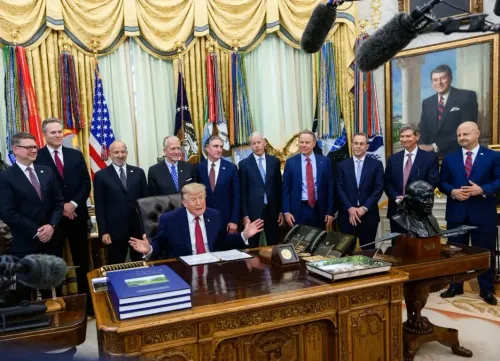
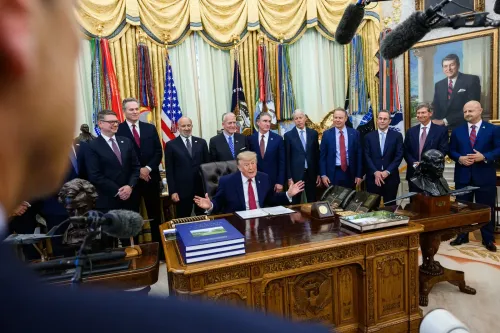
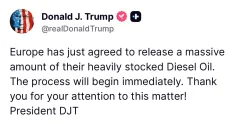
A multibillion-dollar energy agreement with one of Asia's most industrialised economies just got a major upgrade. President Donald J. Trump announced on Friday, October 2, 2026, that the Republic of Korea Deal has expanded to include an $8.4 billion enhanced oil recovery project — framing it as a cornerstone of what he calls American Energy Dominance.
The $8.4 Billion Enhanced Oil Recovery Prize
Enhanced oil recovery (EOR) refers to techniques used to extract crude oil that cannot be produced through conventional methods — typically involving the injection of gas, chemicals, or heat into existing reservoirs to boost output. At $8.4 billion, this project represents a significant capital commitment tied to the broader US-South Korea economic framework. Trump declared the announcement with characteristic urgency: 'I am thrilled to announce the Republic of Korea Deal keeps getting BETTER!'
The scale of the investment signals that both governments are betting on fossil-fuel infrastructure well into the future — a posture that runs directly counter to global decarbonisation timelines but aligns squarely with the Trump administration's stated priority of maximising domestic and allied energy output.
Trump's Energy Dominance Doctrine and the South Korea Axis
'Producing more Oil and Gas means American Energy Dominance and Energy Security in the World for the Future,' Trump said in the announcement. The phrase 'energy dominance' has been a recurring pillar of Trump-era policy — positioning the United States not merely as energy-independent but as the world's pre-eminent supplier and price-setter in global hydrocarbon markets.
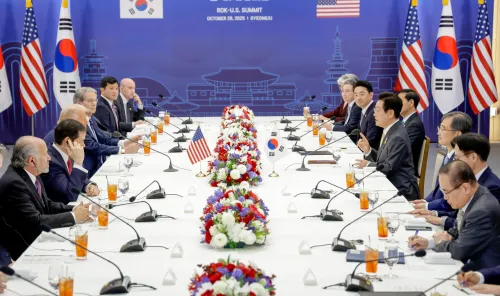
South Korea is among the world's largest importers of liquefied natural gas and crude oil, making it a strategic partner for any US administration looking to expand energy export markets in the Indo-Pacific. A deal of this magnitude deepens economic interdependence between Washington DC and Seoul at a time when geopolitical realignments across the region are reshaping trade and security architectures alike.
What the Deal Means for Global Energy Markets
Enhanced oil recovery projects typically unlock reserves that were previously uneconomical to exploit, extending the productive life of mature oil fields. An $8.4 billion commitment at this scale could meaningfully add to projected US output figures, reinforcing America's position as a top global crude producer. For India — itself a major importer of US energy — any sustained increase in American supply has direct implications for global oil pricing and energy security calculus in New Delhi.
The announcement also arrives as energy-supply chains remain a live geopolitical lever worldwide. Washington's push to lock in large bilateral energy deals with allied nations in Asia reflects a deliberate strategy: convert hydrocarbon abundance into strategic influence before the energy transition reshapes the playing field permanently.
Eight-point-four billion dollars is not a footnote — it is a statement of intent. And with the White House calling this deal 'BETTER' in capital letters, expect more announcements in the same vein before the year is out.
Point of View
Washington simultaneously deepens economic dependency and crowds out rival energy suppliers. For India, which watches US-Asia energy flows closely, the deal underscores how American supply expansions can reshape import pricing and regional leverage. The longer arc here is Washington racing to lock in fossil-fuel infrastructure deals before a credible energy transition makes such commitments politically and commercially harder to justify.
NationPress
2 Oct 2026
Frequently Asked Questions
What is the Republic of Korea Deal Trump announced?
It is a broad US-South Korea economic agreement that Trump has expanded to include an $8.4 billion enhanced oil recovery project, aimed at boosting American oil and gas production.
What is enhanced oil recovery (EOR)?
Enhanced oil recovery is a set of techniques — including gas injection, chemical flooding, or thermal methods — used to extract crude oil from reservoirs that cannot be produced efficiently through conventional drilling alone.
Why is South Korea important for US energy exports?
South Korea is one of the world's largest importers of liquefied natural gas and crude oil, making it a key market for American energy producers seeking to expand exports in the Indo-Pacific region.
What does 'American Energy Dominance' mean in Trump's policy?
'American Energy Dominance' is a Trump administration doctrine that goes beyond energy independence — it positions the United States as the world's top hydrocarbon supplier and uses energy exports as a tool of geopolitical influence.
How does this US-South Korea oil deal affect global oil prices?
A large-scale enhanced oil recovery investment of $8.4 billion could meaningfully raise US oil output over time, potentially increasing global supply and exerting downward pressure on crude prices — a development with direct implications for major importers like India.