Gujarat UCC gets President's assent; Khurshid calls it 'State Civil Code'
Synopsis
President Murmu's assent to Gujarat's UCC Bill has exposed a core contradiction in the BJP's strategy: with Uttarakhand and Gujarat framing different codes under the same label, Congress's Salman Khurshid is asking whether 'uniform' is the right word at all — and the Nainital High Court may soon have its own answer.
Key Takeaways
President Droupadi Murmu gave her assent to the Gujarat Uniform Civil Code (UCC) Bill on 2 October 2026 .
The Gujarat Bill covers marriage, divorce, succession, inheritance , and live-in relationships irrespective of religion.
Congress leader Salman Khurshid argued that differing state-level codes cannot be called 'uniform', terming them a 'State Civil Code' .
Multiple writ petitions and PILs against Uttarakhand's UCC are pending before the Nainital High Court .
RSS leader Indresh Kumar defended UCC as a law guaranteeing inter- and intra-religious harmony and equal protection across all faiths.
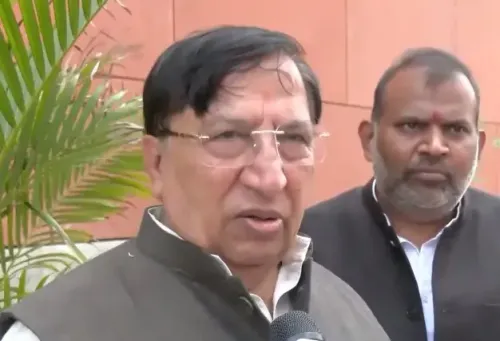
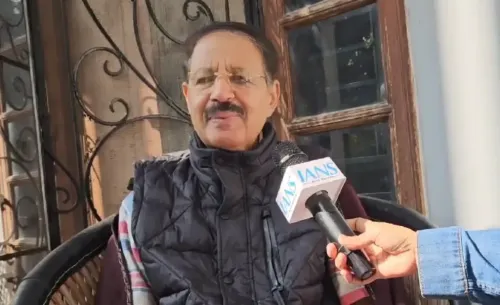
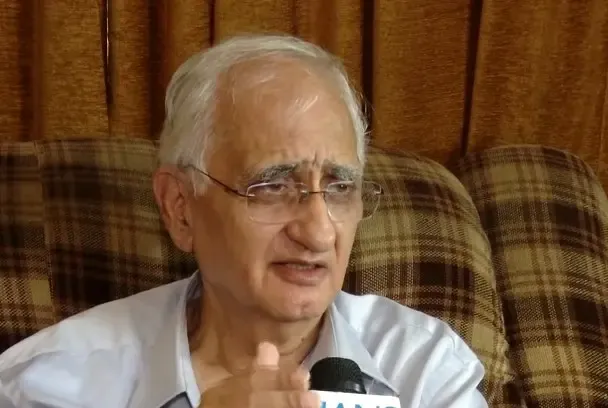
Congress leader Salman Khurshid on 2 October took a pointed jibe at the state-by-state implementation of the Uniform Civil Code (UCC), arguing that divergent codes adopted across BJP-ruled states cannot legitimately share the same name — remarks that came hours after President Droupadi Murmu gave her assent to the Gujarat UCC Bill. Speaking in Guwahati, Khurshid questioned the very premise of calling it 'uniform' when each state is framing its own version.
Khurshid's Core Argument
The Congress leader was unsparing in his critique. "Where is the Uniform Civil Code? Every state has a separate UCC, so why call it UCC? It should be called a 'State Civil Code'," he said.
Khurshid pressed further: "What is being implemented in Assam is not being implemented in another (BJP/NDA ruled) state; what is being implemented there is not being implemented in Gujarat. Everywhere, different codes are being framed, and they call it UCC. How can different codes be given the same name?" The argument zeroes in on a structural tension in the BJP's approach — advancing UCC through state legislatures rather than a single central law, a route that inevitably produces variation.
What the Gujarat Bill Covers
The Gujarat UCC Bill, passed by the Gujarat Assembly in March, seeks to establish a common legal framework for personal civil matters — including marriage, divorce, succession, inheritance, and live-in relationships — applicable irrespective of religion. With President Murmu's assent now in place, Gujarat joins Uttarakhand as the second state to have a UCC on the books, though the two laws are not identical in their provisions.
Uttarakhand UCC Under Legal Scrutiny
Khurshid also drew attention to the legal challenges mounted against the Uttarakhand UCC, noting that multiple writ petitions and public interest litigations (PILs) have been filed in the Nainital High Court. "It remains to be seen what the High Court's decision will be on this matter," he said, signalling that the opposition views the judiciary as a potential check on the legislation's rollout.
RSS Leader Defends UCC as Harmony Tool
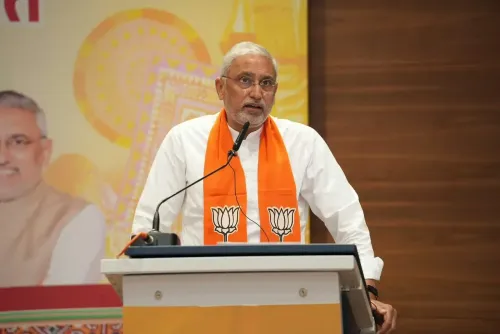
RSS leader Indresh Kumar offered a contrasting view, arguing that a Uniform Civil Code is fundamentally a law protecting inter- and intra-religious harmony. "Uniform Civil Code is a law that protects and respects every religion," he said. "Suppose there is some kind of tension between any two religions or their sub-sects, like between Shias and Sunnis (in Muslims). The law ensures that the sects don't commit atrocities against each other and rather live together in harmony."
Kumar extended the argument to encompass all faiths, stating that UCC guarantees identical protection within 'Sanatan dharma' and every other religion. Addressing critics directly, he said: "It guarantees security and respect to all religions, including their sub-sects, ensuring that no one can commit atrocities or injustice against another. Everyone should follow their own religion, should not interfere in another person's religious affairs, and at the same time, should respect all religions. This is what UCC stands for."
What Comes Next
With Gujarat's UCC now cleared at the highest constitutional level, attention turns to whether other BJP/NDA-governed states will accelerate their own versions — and whether the variations between them will sharpen or blunt the Congress's 'State Civil Code' critique. The Nainital High Court's forthcoming ruling on Uttarakhand's UCC could set a significant precedent for how courts view state-level implementation of what was envisioned as a national legal reform.
Point of View
And no central harmonisation mechanism exists. The BJP's decision to pursue UCC state-by-state, rather than through a central law, was a pragmatic workaround for coalition arithmetic, but it has created a patchwork that critics can credibly call non-uniform. The pending Nainital High Court verdict could complicate the rollout further: an adverse ruling in Uttarakhand would not automatically bind Gujarat, but it would embolden legal challenges elsewhere. The RSS framing of UCC as a harmony tool is a rebranding effort — positioning it as a safeguard for minorities within communities rather than an imposition from outside, which may be the political ground the BJP needs to hold before a potential central push.
NationPress
2 Oct 2026
Frequently Asked Questions
What is the Gujarat Uniform Civil Code Bill?
The Gujarat UCC Bill, passed by the Gujarat Assembly in March 2026 and now assented to by President Droupadi Murmu, establishes a common legal framework for personal civil matters — including marriage, divorce, succession, inheritance, and live-in relationships — applicable to all residents irrespective of religion. It makes Gujarat the second BJP-ruled state after Uttarakhand to enact such a law.
Why did Salman Khurshid call the UCC a 'State Civil Code'?
Congress leader Salman Khurshid argued that because different BJP-ruled states are framing their own versions of the UCC with differing provisions, the code cannot genuinely be called 'uniform'. He pointed out that what is being implemented in Assam differs from Uttarakhand and Gujarat, making the 'Uniform' label misleading.
What legal challenges is the Uttarakhand UCC facing?
Multiple writ petitions and public interest litigations (PILs) have been filed in the Nainital High Court against the implementation of Uttarakhand's UCC. Salman Khurshid noted that the court's decision on these petitions could have significant implications for how UCC is interpreted and enforced at the state level.
What is the RSS position on the Uniform Civil Code?
RSS leader Indresh Kumar has defended UCC as a law that protects inter- and intra-religious harmony, arguing it prevents atrocities between religious sects and sub-sects. He framed it not as an imposition on any religion but as a guarantee of equal security and respect for all faiths and their sub-groups.
Which states have implemented UCC so far?
Uttarakhand was the first state to enact a UCC, followed by Gujarat, which has now received Presidential assent. Other BJP/NDA-governed states are reportedly at various stages of drafting their own versions, though the specific provisions differ from state to state.