Trump Addresses Historic Trilateral Summit with Xi and Putin
Synopsis
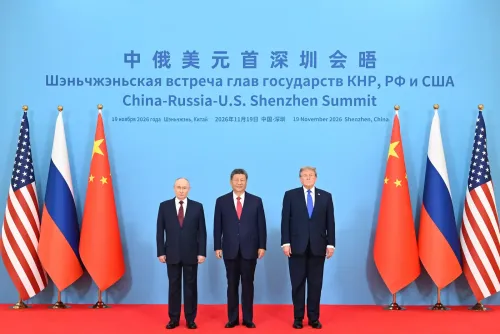
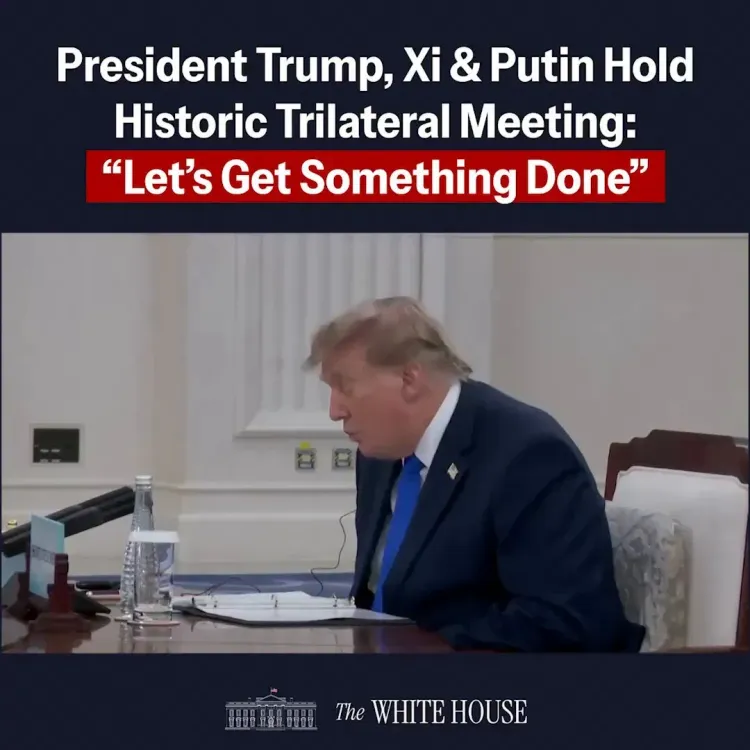
President Donald J. Trump addressed a rare trilateral summit with Chinese President Xi Jinping and Russian President Vladimir Putin on November 19, 2026, calling for open and productive dialogue on issues affecting the entire planet — a format virtually without precedent in post-Cold War great-power diplomacy.
Key Takeaways
President Trump addressed a historic trilateral meeting with Xi Jinping and Vladimir Putin on November 19, 2026 .
Trump called for 'open, respectful, and productive dialogue on issues impacting not just our people, but the entire planet.' Simultaneous trilateral engagement between the US, China, and Russia is virtually unprecedented in modern diplomacy.
Trump's direct-diplomacy track record includes bilateral summits with Xi at Mar-a-Lago (2017) and with Putin in Helsinki (July 2018) .
Follow-up bilateral engagements and statements at upcoming G20 and APEC forums will be closely watched for concrete outcomes.
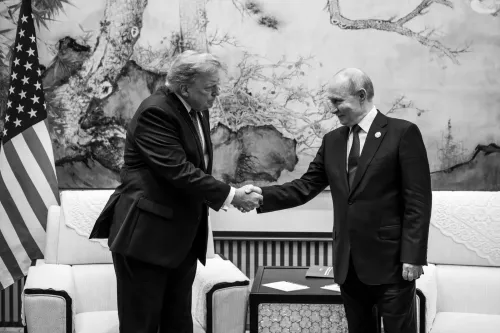
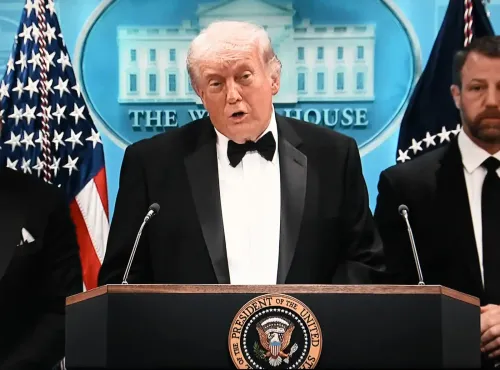
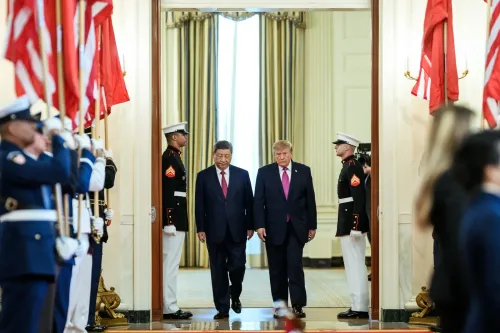
Three of the world's most consequential leaders sat across from one another — and the world watched. President Donald J. Trump addressed a historic trilateral meeting with Chinese President Xi Jinping and Russian President Vladimir Putin on Thursday, November 19, 2026, marking one of the rarest formats in modern great-power diplomacy: a simultaneous, direct engagement between Washington, Beijing, and Moscow.
The White House shared a quote from Trump underscoring the gravity of the moment: 'We have a special responsibility to maintain open, respectful, and productive dialogue on issues impacting not just our people, but the entire planet.' The framing was deliberate — not a declaration of alliance, but an acknowledgement of shared planetary stakes.
Why a Trilateral Format Is So Rare
US engagement with China and Russia has almost always been bilateral — back-channel, structured, or on the sidelines of larger multilateral forums like the G20 or APEC. Trilateral summits involving Washington, Beijing, and Moscow simultaneously are virtually without precedent in the post-Cold War era. The format alone sends a signal: that all three powers judged the moment significant enough to sit at the same table.
Trump's history with direct personal diplomacy gives that signal weight. His 2017 meetings with Xi at Mar-a-Lago focused on trade and North Korea. His July 2018 summit with Putin in Helsinki — controversial at home — nonetheless kept direct channels open on arms control. A three-way engagement collapses those separate tracks into one room.
The Stakes Behind the Handshake
The White House's choice of words — 'not just our people, but the entire planet' — gestures at an agenda far larger than any single bilateral file. Nuclear stability, trade architecture, regional conflicts, and climate-linked resource pressures all sit at the intersection of US, Chinese, and Russian interests. When those three powers align, they can move; when they fracture, the rest of the world absorbs the turbulence.
Xi Jinping has led China through an era of intensifying strategic rivalry with the United States, even as trade interdependence remained deep. Vladimir Putin, president since 2012, has navigated multiple rounds of Western sanctions and shifting security architectures. The presence of both men alongside Trump signals that each government calculated — at least at this moment — that dialogue served their interests more than abstention.
What Comes After the Room
The language of 'open, respectful, and productive dialogue' is a beginning, not an outcome. What follows — whether joint statements, bilateral follow-ons, or coordinated positions at upcoming multilateral forums — will determine whether November 19, 2026 marks a turning point or a photo opportunity. Observers will be watching the next G20 and APEC cycles for concrete deliverables.
Rare formats only matter if they produce rare results. The room has spoken. The world is waiting on the follow-through.
Point of View
China, and Russia is a structurally significant departure from the bilateral-first architecture that has governed great-power engagement since the Cold War. Trump's invocation of 'special responsibility' frames the meeting as a stewardship moment rather than a confrontation — a posture that suits all three leaders politically at home while keeping strategic options open. For India, which sits at the intersection of all three relationships through its own independent foreign policy, the emergence of a Washington-Beijing-Moscow dialogue channel raises immediate questions about how the global order's weightiest decisions will be made — and who else gets a seat. The real test arrives not in the room but in what each power does in its own neighbourhood in the weeks that follow.
NationPress
19 Nov 2026
Frequently Asked Questions
What is the Trump-Xi-Putin trilateral meeting in 2026?
On November 19, 2026 , President Donald J. Trump addressed a historic trilateral summit with Chinese President Xi Jinping and Russian President Vladimir Putin — a rare simultaneous engagement among the leaders of the world's three most powerful nuclear states.
What did Trump say at the trilateral summit with Xi and Putin?
Trump stated: 'We have a special responsibility to maintain open, respectful, and productive dialogue on issues impacting not just our people, but the entire planet,' framing the meeting as a shared duty to manage global challenges.
Has the US ever held a trilateral meeting with China and Russia before?
Trilateral summits involving the US, China, and Russia simultaneously are virtually without precedent in the post-Cold War era; most great-power engagement has occurred bilaterally or on the sidelines of multilateral forums like the G20.
What was Trump's past diplomacy history with Xi and Putin?
Trump met Xi at Mar-a-Lago in 2017 and at subsequent G20 and APEC summits on trade and North Korea, and held a bilateral summit with Putin in Helsinki in July 2018 focused on arms control and election interference allegations.
What should India watch for after the Trump-Xi-Putin summit?
India should monitor follow-up bilateral statements and coordinated positions at upcoming G20 and APEC meetings, which will reveal whether the summit produced concrete agreements or remained a diplomatic gesture.