Trump again calls Canada '51st US state,' says 'it's the only way it works'
Synopsis
At a rally in Bullhead City, Arizona, Trump once again floated the idea of Canada becoming the 51st US state — this time tying it directly to auto industry shifts and a claimed $80-100 billion trade deficit. With USMCA under strain and tariff tensions high, the remarks signal that Trump's economic pressure on Ottawa is not just rhetorical posturing but a live diplomatic flashpoint.
Key Takeaways
Donald Trump called Canada a candidate for the 51st US state at a rally in Bullhead City, Arizona on 15 October 2026 .
Trump cited a US trade deficit of $80–100 billion a year with Canada as justification for his tariff stance.
He claimed Canadian automakers are relocating to the US to avoid his tariffs.
Trump singled out Canadian dairy tariffs as evidence of unfair treatment of American exporters.
He also referenced renaming the Gulf of Mexico to Gulf of America and Lake Ontario to Lake America , and defended his interest in Greenland .
Canada-US trade is governed by the USMCA , a deal Trump championed in his first term that explicitly recognises Canadian sovereignty.
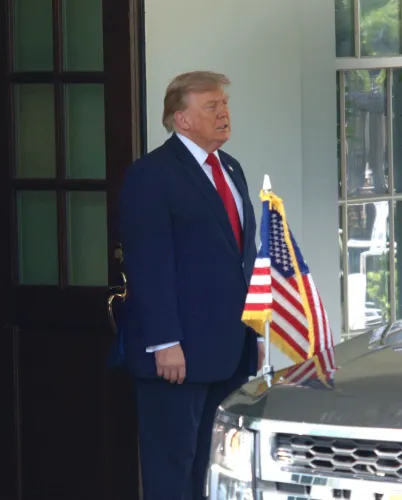
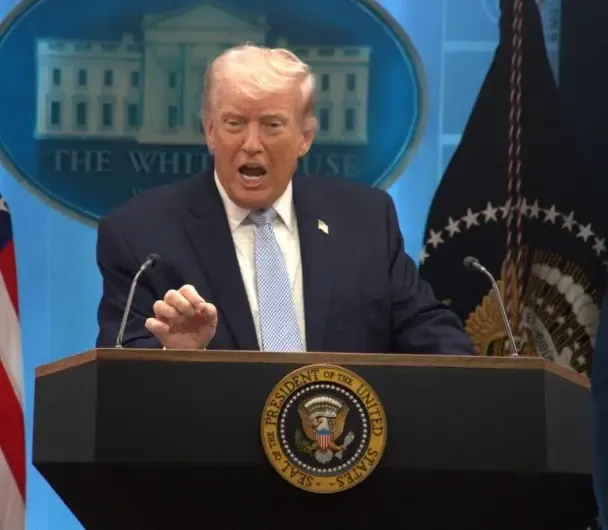
US President Donald Trump renewed his provocative suggestion on 15 October 2026 that Canada could become the 51st American state, accusing the neighbouring country of exploiting the United States through tariffs and claiming that Canadian automobile manufacturers were already relocating operations south of the border to avoid his sweeping trade measures. The remarks, delivered at a campaign rally in Bullhead City, Arizona, mark at least the second major instance of Trump publicly linking trade disputes with questions about Canada's political sovereignty.
What Trump Said at the Rally
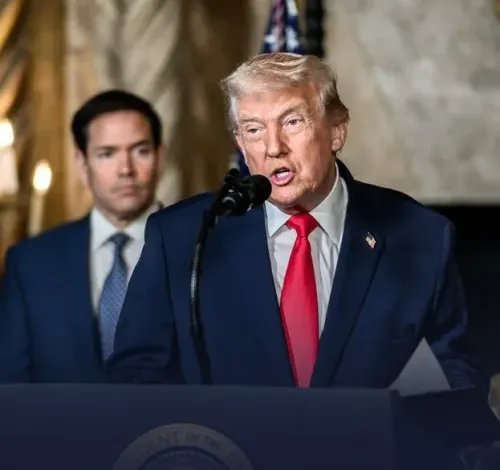
Speaking to supporters in Bullhead City, Trump framed the 51st-state suggestion as an economic inevitability rather than a territorial threat. 'Their -- their car companies are all moving into America. They're all coming in, otherwise they have to pay massive tariffs. And they'll end up being the 51st state because it's the only way it works,' he told the crowd.
He singled out Canadian dairy tariffs as a flashpoint, claiming Canada had imposed exceptionally high duties on American agricultural products beyond certain import thresholds. 'Canada treats us very badly; they always have, not anymore. It's a whole different ball game now. Trump is in town,' he said. He also declared, 'Canada ripped us off with tariffs.'
Trump's Trade Arithmetic
The President argued the United States carried a disproportionate economic burden in the bilateral relationship, citing a trade deficit he put at between $80 billion and $100 billion a year. 'You know, we don't need them, but they need us. And why should we be losing $80 billion, $90 billion, $100 billion a year to support a country that isn't one of us?' he said.
Trump portrayed his tariff regime as the corrective mechanism, arguing that foreign companies — including Canadian automakers — could escape American import duties only by setting up manufacturing facilities on US soil. He pointed to investments in semiconductor production, copper mining, and automobile manufacturing as proof his policies were generating industrial expansion.
Greenland, Gulf of America, and Renaming Claims
The Canada remarks were part of a broader set of geopolitical statements. Trump revisited his administration's decision to use the name Gulf of America in place of the Gulf of Mexico, and claimed to have renamed Lake Ontario as Lake America. He also defended his longstanding interest in Greenland, the strategically located Arctic territory, insisting he had not threatened military force to acquire it and had instead pressed the matter directly with NATO allies.
Context: Canada-US Trade Ties
Canada and the United States share one of the world's largest bilateral trading relationships, with deeply integrated supply chains spanning automobiles, energy, agriculture, and manufacturing. Trade between the two countries is governed by the United States-Mexico-Canada Agreement (USMCA), which replaced the North American Free Trade Agreement (NAFTA) in 2020. Notably, USMCA — a deal Trump himself championed in his first term — explicitly preserves Canada's status as a sovereign trading partner, making the 51st-state framing a pointed rhetorical escalation.
This is not the first time Trump has floated the annexation idea; similar remarks drew sharp rebuttals from Canadian officials and cross-party criticism in Ottawa earlier this year. Canadian leaders have consistently rejected the suggestion as incompatible with Canadian sovereignty.
What Comes Next
The remarks are likely to further strain Canada-US relations at a time when both governments are managing tensions over tariffs, energy pricing, and USMCA compliance reviews. Ottawa's formal response to this latest episode, and any retaliatory trade signalling from Canadian officials, will be closely watched in the days ahead.
Point of View
And tearing that up would unravel the very supply-chain integration he claims to be protecting. The $80–100 billion deficit figure also deserves scrutiny; Canada-US trade accounting is complicated by re-exports and energy flows that make simple surplus-or-deficit framing misleading. What is clear is that Trump is using the annexation idea as a pressure instrument — a way to keep Ottawa off-balance in tariff negotiations rather than a sincere territorial claim. The danger is that repeated use of the rhetoric, even if unserious in intent, forces Canadian politicians into hardened domestic positions that make any eventual trade reset politically costly on both sides.
NationPress
15 Oct 2026
Frequently Asked Questions
Why does Trump keep calling Canada the 51st US state?
Trump has repeatedly used the '51st state' framing as a rhetorical device to pressure Canada on trade, citing what he describes as unfair tariffs and a large US trade deficit. At the Bullhead City rally on 15 October 2026, he linked the suggestion directly to Canadian automakers shifting production to the US to avoid his tariffs.
What trade deficit figure did Trump cite for Canada?
Trump cited a range of $80 billion to $100 billion a year as the cost of the US-Canada trade relationship, arguing that the US 'doesn't need' Canada while Canada depends heavily on American market access.
What is the USMCA, and how does it relate to Trump's remarks?
The United States-Mexico-Canada Agreement (USMCA) is the trade deal that replaced NAFTA in 2020 and governs trade between the US, Canada, and Mexico. Trump negotiated it during his first term; it explicitly recognises Canada as a sovereign trading partner, making his 51st-state suggestion a pointed rhetorical tension with his own trade architecture.
Did Trump threaten military action against Canada or Greenland?
Trump did not claim to have threatened military force. On Greenland, he said he had raised his interest in the Arctic territory directly with NATO rather than threatening force. His Canada remarks were framed as economic logic, not military threat.
How has Canada responded to Trump's 51st-state suggestion?
Canadian officials and cross-party political leaders have consistently rejected the suggestion as incompatible with Canadian sovereignty. Ottawa's formal response to this latest episode is awaited, and any retaliatory trade signalling from Canadian officials will be closely tracked.