Pentagon plans millions of attack drones, new AutoWarCom command by 2027
Synopsis
The Pentagon isn't just buying more drones — it's reorganising its entire war-fighting architecture around them. With hundreds of thousands of one-way attack systems planned for this year alone and a $50 billion funding ask on top of an existing $53.6 billion Drone Dominance budget, the US is betting that autonomous, AI-enabled warfare at industrial scale is the defining military shift of this decade.
Key Takeaways
US Defense Secretary Pete Hegseth announced plans for hundreds of thousands of one-way attack drones in 2025 , scaling to millions in subsequent years.
The Autonomous Warfare Command (AutoWarCom) , to be led by a four-star officer , is targeted for establishment by 1 October 2027 .
The Pentagon is seeking an additional $50 billion for autonomous systems, on top of $53.6 billion already in the fiscal 2027 budget request for its Drone Dominance initiative.
All proposed funding remains subject to congressional approval and has not yet been spent or formally appropriated.
The Army had already planned to acquire approximately 340,000 small unmanned aircraft systems over two years under the existing Drone Dominance programme.
AutoWarCom will cover doctrine and training reforms across the Army , Navy , Air Force , Marine Corps , and Space Force .
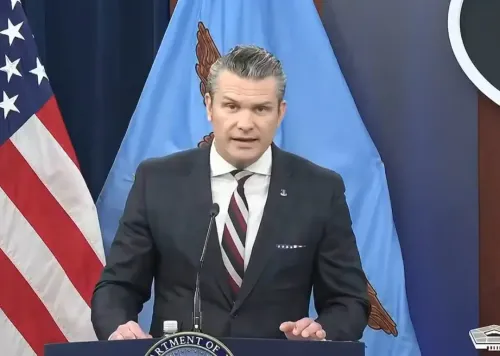
US Defense Secretary Pete Hegseth on Wednesday announced that the United States plans to deploy hundreds of thousands of one-way attack drones this year, scaling to millions in the years ahead, as the Pentagon moves to establish a dedicated four-star-led autonomous warfare command. Hegseth made the remarks at the Association of the United States Army's annual meeting in Washington, outlining the most sweeping publicly stated expansion of unmanned military systems in American history.
The AutoWarCom Plan
The planned command, formally designated the Autonomous Warfare Command (AutoWarCom), is intended to coordinate the development, acquisition, training, and operational use of autonomous weapons across all armed services — including the Army, Navy, Air Force, Marine Corps, and Space Force. The Pentagon announced the initiative on 30 September, with Project Agincourt serving as an interim organisational effort. The department aims to formally establish AutoWarCom by 1 October 2027, subject to congressional approval and necessary organisational arrangements.
Hegseth said the new command would be led by a four-star military officer with sufficient authority to cut across service-branch bureaucracies and accelerate decision-making. 'The services are not fighting us on this concept. They believe in it,' he told the gathering.
Scale and Funding
The Pentagon is seeking approximately $50 billion in additional funding to accelerate autonomous and robotic systems development — a proposal separate from the department's fiscal 2027 budget request, which already includes $53.6 billion for its broader Drone Dominance initiative. Hegseth was explicit about the ambition: 'Ultimately we will be dealing with hundreds of thousands of one-way attack systems this year and into the millions in years to come at a pace that this department's never ever seen before.'
It is important to note that the proposed expenditure remains subject to congressional action and does not represent funding already approved or disbursed. Under the existing Drone Dominance programme, the Army had already outlined plans to acquire approximately 340,000 small unmanned aircraft systems over two years.
Why Drones, Why Now
The push reflects battlefield lessons from recent conflicts, where relatively inexpensive unmanned aircraft have demonstrated outsized effectiveness in reconnaissance, targeting, and precision strikes against conventional military forces. Hegseth argued that traditional procurement timelines — often stretching years — are incompatible with the pace at which drone technology is evolving and being adopted by adversaries.
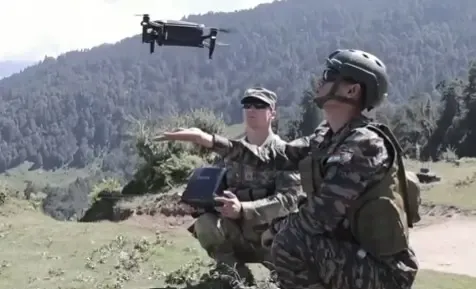
The initiative combines advances in artificial intelligence, robotics, and commercial manufacturing, aiming to bring engineers, manufacturers, and military operators into tighter cooperation. Military personnel, he said, must be able to experiment with new technologies and adapt equipment without waiting for lengthy procurement cycles.
Broader Scope: Beyond Weapons Procurement
Acting Army Secretary Adam Telle said the service was working to expand access to military testing facilities for technology developers and strengthen training in robotics and autonomous systems. Other military leaders at the meeting discussed efforts to develop autonomous aircraft, unmanned maritime systems, and technologies capable of operating in contested environments.
Notably, AutoWarCom is designed to oversee changes in military doctrine and training as well — not to function solely as a weapons procurement body. This signals a structural shift in how the US military conceptualises autonomous warfare: not as a capability add-on, but as a foundational organising principle.
What Comes Next
The command's operational capabilities, funding, and deployment targets will depend on subsequent decisions by Congress and the Pentagon. With the 2027 establishment deadline in view, the coming months will test whether the institutional momentum behind AutoWarCom can survive budget negotiations and inter-service coordination challenges.
Point of View
Stacked on top of the $53.6 billion Drone Dominance line, signals that the drone-industrial complex is the new military-industrial complex. But scaling to 'millions' of one-way attack systems raises unresolved questions about accountability, target discrimination under AI, and the risk of lowering the threshold for lethal force when the cost per strike collapses. Congress has yet to weigh in, and without robust oversight frameworks, the pace Hegseth is describing could outrun both law and ethics.
NationPress
15 Oct 2026
Frequently Asked Questions
What is the US Autonomous Warfare Command (AutoWarCom)?
AutoWarCom is a planned four-star-led US military command announced by the Pentagon on 30 September, designed to coordinate the development, acquisition, training, and operational deployment of autonomous weapons across all armed services. It is intended to be formally established by 1 October 2027, subject to congressional and organisational approvals.
How many drones is the US planning to deploy?
Defense Secretary Pete Hegseth said the US plans to field hundreds of thousands of one-way attack drones in the current year, with numbers expected to grow into the millions in the years ahead. Under the existing Drone Dominance programme, the Army had already planned to acquire approximately 340,000 small unmanned aircraft systems over two years.
How much is the Pentagon seeking to fund autonomous weapons?
The Pentagon is seeking approximately $50 billion in additional funding for autonomous and robotic systems, separate from the $53.6 billion already included in the fiscal 2027 budget request for the broader Drone Dominance initiative. Both proposals remain subject to congressional approval and represent requested — not yet appropriated — funds.
What is Project Agincourt?
Project Agincourt is an interim Pentagon initiative designed to prepare the organisational groundwork for the Autonomous Warfare Command while the formal command structure is being established. It serves as a bridge until AutoWarCom is fully stood up, targeted for October 2027.
Why is the US military accelerating drone development?
Pentagon officials cite lessons from recent conflicts where inexpensive unmanned aircraft proved highly effective in reconnaissance, targeting, and precision strikes. Hegseth argued that traditional procurement timelines — often spanning years — are too slow for the pace at which drone technology is evolving and being adopted by rival militaries.