Trump Honors Three American Soldiers with Congressional Medal of Honor
Synopsis
President Donald Trump awarded the Congressional Medal of Honor to three American soldiers, recognizing their extraordinary bravery in World War II, Vietnam, and Afghanistan. This event celebrates their sacrifice and highlights the enduring ties between the U.S. and Poland.
Key Takeaways
The Congressional Medal of Honor was awarded to three soldiers for their bravery.
Master Sergeant Roderick Edmonds saved Jewish American prisoners during his time as a POW.
Command Sergeant Major Terry Richardson demonstrated exceptional leadership in Vietnam.
Staff Sergeant Michael Ollis sacrificed his life to save others in Afghanistan.
The ceremony emphasizes U.S.-Poland defense collaboration.
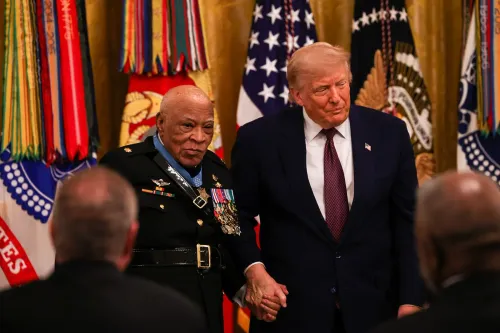
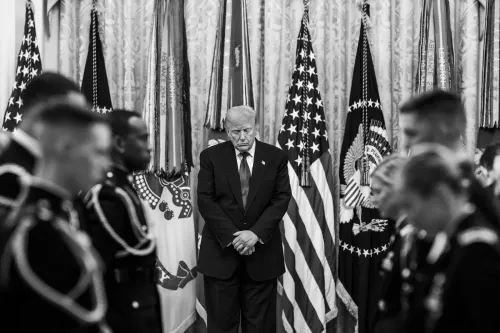
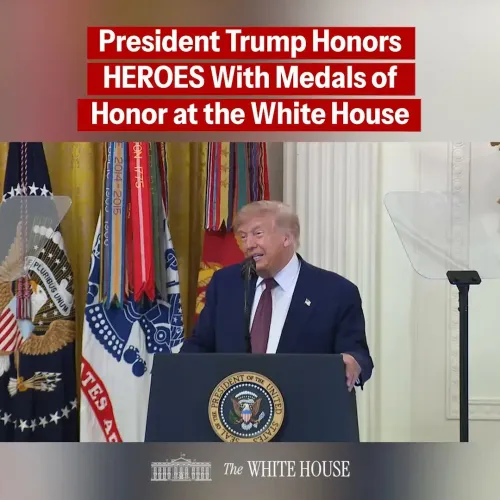
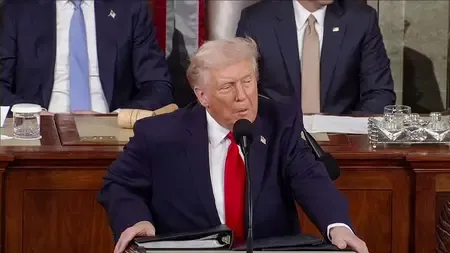
Washington, March 2 (NationPress) On Monday, President Donald Trump honored three American soldiers with the prestigious Congressional Medal of Honor—one living and two posthumously—celebrating their extraordinary bravery during World War II, Vietnam, and Afghanistan.
“We pay tribute to the valiant efforts of Master Sergeant Roderick Edmonds, Staff Sergeant Michael Ollis, and Command Sergeant Major Terry Richardson, as they received our nation's highest military accolade,” Trump remarked at the White House event.
Master Sergeant Roderick Edmonds was recognized for his courageous deeds as a prisoner of war in Germany back in 1945. During the ceremony, it was noted that when German forces demanded Jewish American prisoners step forward for a roll call under the threat of execution, Edmonds instructed all 1,200 American prisoners to stand together.
When confronted by a Nazi commandant who pressed a gun against his forehead, demanding he identify Jewish soldiers, Edmonds stood firm. The citation revealed that he “fearlessly held his ground,” which led the officer to lower his weapon. His actions were pivotal in saving over 200 Jewish American prisoners from segregation.
Command Sergeant Major Terry P. Richardson was honored for his heroic conduct on September 14, 1968, in the Republic of Vietnam. As his company found itself surrounded near the Cambodian border, Richardson advanced through heavy enemy fire to aid wounded comrades and later ascended Hill 222 to oversee tactical airstrikes.
Despite sustaining a sniper injury, he continued to guide air support for seven hours. His actions directly contributed to the survival of 85 individuals that day, as stated in the citation. He opted not to evacuate medically, choosing instead to stay with his unit.
Staff Sergeant Michael H. Ollis was posthumously recognized for his bravery during a Taliban assault in Afghanistan on August 28, 2013. After ensuring his soldiers' safety at a compromised forward operating base, Ollis moved toward the assault area armed only with his rifle.
While engaging with insurgents, he discovered a wounded Polish officer. As a suicide bomber approached, Ollis intervened, firing at the insurgent. The citation indicates that the suicide vest detonated, fatally wounding him. His “exceptional courage and complete disregard for personal safety” exemplified the highest standards of military service.
A Polish officer who survived the incident was present at the ceremony, expressing gratitude by stating: “A soldier is not merely a title you hold at times. It defines who you are for eternity.” He concluded with, “Michael, thank you for your service, and I look forward to reuniting in our heavenly homeland.”
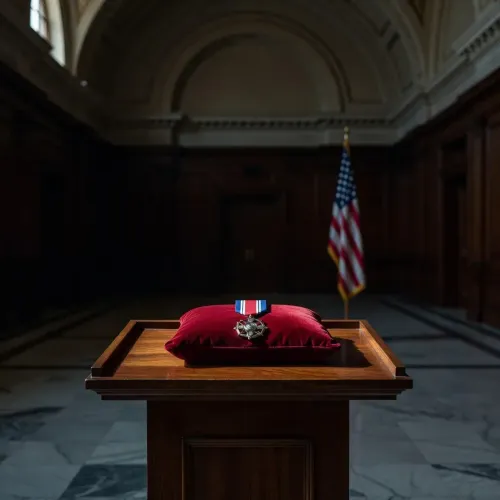
The Medal of Honor, created by an Act of Congress in 1863, represents the highest military distinction in the United States, awarded for acts of gallantry “above and beyond the call of duty.” It has been conferred over 3,500 times since the Civil War.
This event also underscored the enduring defense relationship between the United States and Poland, highlighting cooperative efforts in Afghanistan. For numerous Americans, this award remains the most solemn acknowledgment of sacrifice in wartime, often bestowed decades after the heroic act.
Point of View
The awarding of the Congressional Medal of Honor to these three soldiers underscores the importance of recognizing heroic sacrifices made in service to the country. It reflects a commitment to honor those who have faced unimaginable challenges and saved lives, reinforcing the values of bravery and resilience.
NationPress
26 Sept 2026
Frequently Asked Questions
What is the Congressional Medal of Honor?
The Congressional Medal of Honor is the highest military honor awarded by the United States, given for acts of extraordinary heroism above and beyond the call of duty.
Why was Master Sergeant Roderick Edmonds honored?
Master Sergeant Roderick Edmonds was honored for his courageous actions as a prisoner of war in Germany during World War II, where he prevented the segregation of Jewish American prisoners.
What did Command Sergeant Major Terry Richardson do?
Command Sergeant Major Terry Richardson was recognized for his heroism in Vietnam, where he risked his life to save wounded soldiers while directing air support despite being injured.
What actions led to Staff Sergeant Michael Ollis receiving the Medal of Honor posthumously?
Staff Sergeant Michael H. Ollis was posthumously honored for his bravery during a Taliban attack in Afghanistan, where he saved a wounded officer and confronted a suicide bomber.
What is the significance of this ceremony?
The ceremony highlights the sacrifices made by soldiers and reinforces the strong defense ties between the U.S. and its allies, particularly Poland.