Trump awards Medal of Honor to three Vietnam, Afghanistan war heroes
Synopsis
One recipient waited 57 years. Another acted for five straight hours under fire to blow up a bridge and stop an enemy offensive. A third was the last soldier off an Afghan battlefield after shielding a wounded comrade with his own body. Trump's Medal of Honor ceremony on 19 June put three extraordinary stories of wartime courage — long delayed or long overlooked — back at the centre of American public life.
Key Takeaways
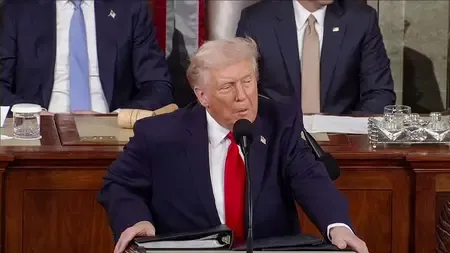
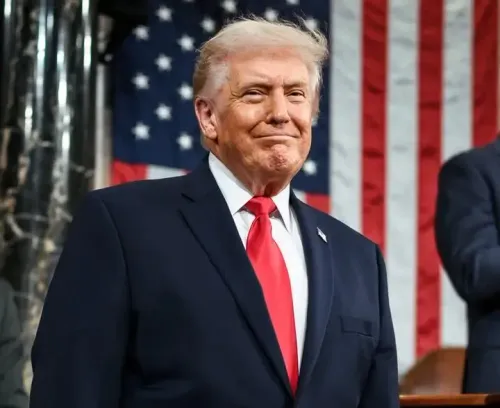
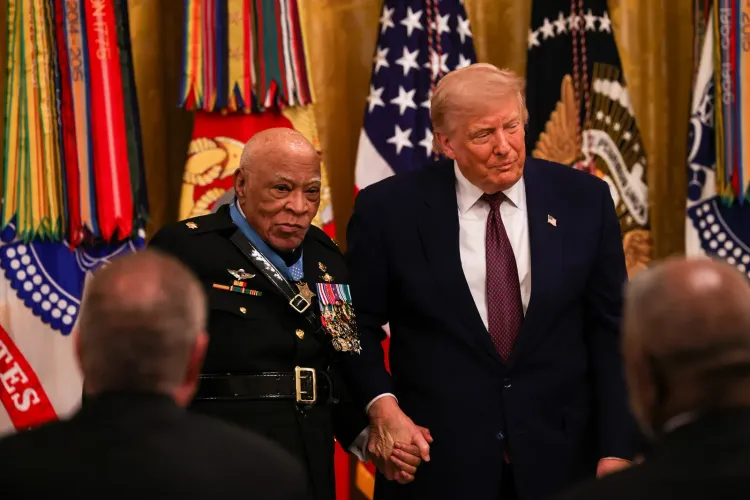
President Donald Trump presented the Medal of Honor at a White House ceremony on 19 June to three recipients.
Retired Marine Major James Capers Jr. was honoured for a 1967 Vietnam reconnaissance mission — his paperwork had stalled for over five decades after his commanding officer was killed.
Retired Army Major Nicholas Dockery received the award for shielding wounded soldiers and leading counter-attacks during an October 2012 Taliban ambush in Kapisa Province, Afghanistan .
Marine Colonel John W.
Ripley was honoured posthumously for placing more than 500 pounds of explosives beneath a bridge under fire on 2 April 1972 , halting a North Vietnamese armoured advance.
Trump linked the ceremony to the upcoming 250th anniversary of the US founding in 2026 .
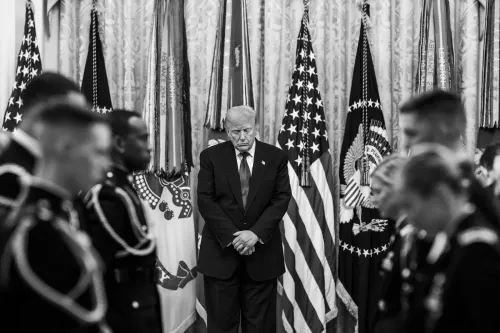
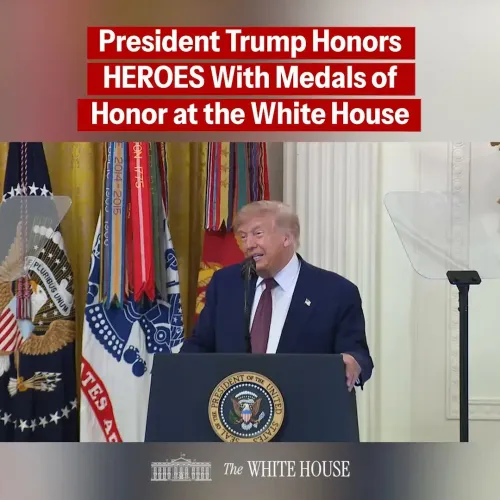
US President Donald Trump on 19 June presented the Medal of Honor — the highest military decoration in the United States — to retired Marine Major James Capers Jr., retired Army Major Nicholas Dockery, and posthumously to Marine Colonel John W. Ripley, recognising acts of extraordinary valour during the Vietnam War and the war in Afghanistan. The White House ceremony drew attention to decades-old acts of battlefield courage, with one recipient waiting more than half a century for the recognition.
James Capers Jr.: A 57-Year Wait for the Nation's Highest Honour
Capers was recognised for his actions during a four-day reconnaissance mission in Vietnam in 1967. Then-Second Lieutenant Capers led his team against a larger enemy force while attempting to locate a North Vietnamese regimental base camp. Despite suffering multiple severe wounds during an ambush, he continued to lead his men — coordinating supporting fire and directing their extraction.
Trump recounted the moment at the ceremony: 'Every one of his fellow Marines went down wounded, but Jim rose, pushing forward on a leg that shouldn't have been able to carry any of his weight. Barely clinging to consciousness, he called in close air support for an entire hour.'
The President acknowledged a bureaucratic failure that had delayed the honour. Capers had originally been recommended for the Medal of Honor in 1967, but the process stalled after his commanding officer was killed before the paperwork was completed. 'Jim, the nation kept you waiting far too long,' Trump said. 'So I say to you, congratulations, you made it.'
John W. Ripley: The Bridge That Stopped an Offensive
The award to Colonel John W. Ripley was presented posthumously for his actions on 2 April 1972, during a major North Vietnamese offensive. Serving as a senior Marine adviser, then-Captain Ripley repeatedly climbed beneath a bridge under intense enemy fire to place more than 500 pounds of explosives, ultimately destroying the structure and halting the advancing enemy force.
'For five straight hours, he hauled explosives, placed charges and ran a primer cord to each one of them,' Trump said at the ceremony. 'When John detonated the explosives, the bridge collapsed into the river, crushing the advance.'
Ripley's action is widely regarded as one of the most consequential individual acts of the Vietnam War, having delayed a tank-led offensive at a critical moment. His posthumous recognition closes a long chapter for his family and fellow Marines.
Nicholas Dockery: Last Man Off the Battlefield in Afghanistan
Dockery was honoured for his conduct during an October 2012 Taliban ambush in Afghanistan's Kapisa Province. According to the White House, he repeatedly exposed himself to enemy fire while rescuing wounded soldiers, leading counter-attacks and directing air support throughout the engagement.
Trump described the moment Dockery shielded a fallen comrade: 'As mortar fire thundered down all around them, Nick covered his incapacitated teammate with his own body. Major Dockery, you were the last man to depart the battlefield that day, and you left it a legend and a hero.'
What Trump Said at the Ceremony
Opening the ceremony, Trump framed the occasion within the broader arc of American military history. 'I have no higher privilege than serving as the Commander in Chief of the US Armed Forces,' he said. 'A 250-year tradition of the bravest and greatest heroes ever to walk the earth. But only a few have received our highest military distinction, the Congressional Medal of Honor.'
Closing his remarks, Trump connected the awards to the country's approaching milestone: 'As we approach the 250th anniversary of our founding, we remember that we owe everything to heroes like those we celebrate today. We thank you, and we will never, ever forget you.'
About the Medal of Honor
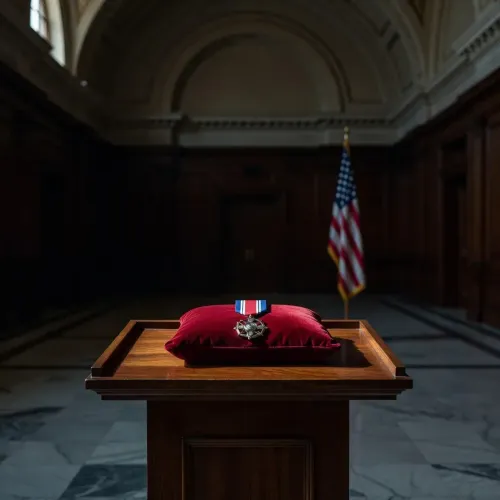
The Medal of Honor is awarded to members of the US armed forces who distinguish themselves through gallantry and intrepidity at the risk of their own lives, above and beyond the call of duty. It is the highest military decoration bestowed by the United States government. The awards come as the US prepares to mark the 250th anniversary of its founding in 2026, a year in which the nation's military heritage has taken on renewed symbolic weight.
Point of View
While overdue, also raises the question of how many similar cases remain unresolved in Pentagon archives. The Afghanistan recipient, Dockery, represents a more recent pattern: the long lag between combat action and formal recognition, which critics argue diminishes the award's immediacy and institutional signal. The Medal of Honor carries unimpeachable moral weight; the processes that govern it deserve equal scrutiny.
NationPress
25 Sept 2026
Frequently Asked Questions
Who received the Medal of Honor at Trump's White House ceremony on 19 June?
Three servicemen were honoured: retired Marine Major James Capers Jr. for Vietnam War actions in 1967, retired Army Major Nicholas Dockery for an Afghanistan ambush in October 2012, and Marine Colonel John W. Ripley posthumously for his actions on 2 April 1972 during a North Vietnamese offensive.
What did James Capers Jr. do to earn the Medal of Honor?
During a four-day reconnaissance mission in Vietnam in 1967, then-Second Lieutenant Capers led his team against a larger enemy force, continued fighting despite multiple severe wounds, and called in close air support for an hour while barely conscious. His award was delayed for decades after his commanding officer was killed before completing the paperwork.
Why was John W. Ripley's Medal of Honor awarded posthumously?
Colonel Ripley passed away before the award was conferred. He earned the honour on 2 April 1972 by spending five hours placing over 500 pounds of explosives beneath a bridge under heavy enemy fire, destroying it and halting a major North Vietnamese armoured advance.
What did Nicholas Dockery do during the 2012 Afghanistan ambush?
During a Taliban ambush in Afghanistan's Kapisa Province in October 2012, Major Dockery repeatedly exposed himself to enemy fire to rescue wounded soldiers, led counter-attacks, directed air support, and shielded an incapacitated teammate with his own body. He was the last soldier to leave the battlefield.
What is the Medal of Honor and how rare is it?
The Medal of Honor is the highest military decoration awarded by the United States government, given to service members who display gallantry and intrepidity at the risk of their own lives, above and beyond the call of duty. It is exceptionally rare; President Trump noted at the ceremony that only a few among a 250-year tradition of US military service have received it.