Trump urges Jensen Huang to apologise and return to lead Nvidia
Synopsis
Donald Trump broke from diplomatic convention to publicly back Jensen Huang's return to Nvidia — over Tim Cook — while discussing US-China chip exports after his Asia trip. With Blackwell off-limits for China and a threatened tax on data centres built abroad, the remarks reveal a White House increasingly willing to shape Big Tech leadership and AI infrastructure from the top.
Key Takeaways
President Trump on 21 November 2026 urged Jensen Huang to apologise and return to lead Nvidia .
Trump said he preferred Huang over Apple chief Tim Cook for the Nvidia role, citing Huang's unmatched technical contribution.
Trump told reporters he had discussed Huang with Chinese President Xi Jinping in Shenzhen ; Xi reportedly spoke highly of him.
Trump wants Blackwell chips kept out of China but is open to sales of older-generation chips; he announced no changes to existing export rules.
Trump threatened a 'substantial tax' on US companies building AI data centres outside the country, citing a project in Finland .
Trump put the US lead over China in chipmaking at 10 years and predicted Blackwell would be obsolete in two years .
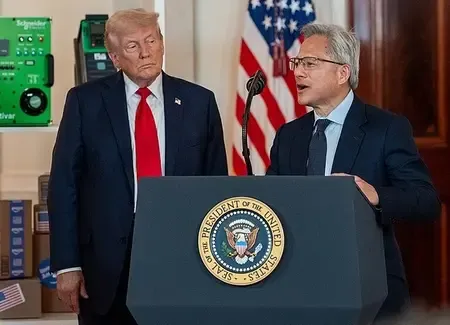
US President Donald Trump on 21 November 2026 publicly called on Jensen Huang — co-founder and former chief executive of Nvidia — to issue an apology and reclaim his role at the chipmaker, signalling a clear preference for Huang over Apple chief Tim Cook, whom Trump had earlier floated as a potential candidate for the position.
What Trump Said
'I'd like to see Jensen make a big apology and go back,' Trump told reporters at the White House after returning from Asia. He acknowledged that Huang had made what he described as bad decisions but stopped short of specifying what the apology should address. Trump also said, 'I think that I would love to see Jensen be given a second chance.'
While standing by his assessment of Cook as a capable executive, Trump made clear that when it came to leading Nvidia specifically, Huang was his preferred choice. He praised Huang's technical judgement and questioned whether others currently shaping the company's direction could match his contribution.
Huang's Role and Nvidia's Rise
Jensen Huang co-founded Nvidia in 1993. The California-based company built its early business on graphics processing units for video games, before the parallel-processing architecture of those chips proved transformative for training artificial intelligence models. That pivot turned Nvidia into one of the world's most valuable technology companies and a critical supplier to AI infrastructure builders globally.
Trump credited Huang personally with developing the Blackwell chip generation — Nvidia's latest line designed for large-scale AI workloads — and said few people at the company could replicate what Huang had accomplished.
China, Chips and the Blackwell Question
Trump raised Huang's name in the context of a broader discussion on US chip export policy toward China. He drew a clear distinction between Blackwell and older chip generations, saying he wanted to keep Blackwell out of China while remaining open to sales of legacy technology. He added he would not object if no American chips reached Chinese buyers at all.
Notably, Trump said he had discussed Huang directly with Chinese President Xi Jinping during his visit to Shenzhen, and that Xi spoke highly of the Nvidia co-founder. Trump assessed the US lead over China in chipmaking at 10 years and argued that Blackwell was too complex to copy. He also predicted, however, that the chip would be commercially obsolete within two years, at which point he said he would be less concerned about restricting its sale. No changes to existing export rules were announced.
AI Cooperation and Data Centre Policy
Chips formed part of a wider AI-focused conversation between Trump and Xi. Trump said the two leaders had agreed to collaborate on safety guardrails for the most advanced AI systems, ranking the US first and China second in the field, with little prospect of a third country closing that gap.
On the domestic front, Trump said he wanted American companies to build AI data centres inside the United States and threatened a 'substantial tax' on firms that chose overseas locations, singling out a proposed project in Finland without naming the company or specifying a tax rate. He also argued that the US had allowed too much of its chip manufacturing base to migrate abroad.
Since 2022, Washington has used export controls to limit China's access to advanced computing chips, making a chip's performance specifications a central criterion for determining whether an American company may legally sell to a Chinese customer. Trump's remarks signal continued, though nuanced, support for that framework — with Blackwell firmly off the table for Chinese buyers for now.
Point of View
Trump plainly sees Huang as a strategic asset, not merely a corporate choice. The contradiction is striking: Trump simultaneously calls Blackwell too sensitive to sell to China and predicts it will be obsolete in two years, which either weakens the case for the export ban or exposes the two-year window as the real target. The data-centre tax threat, meanwhile, is an escalation of industrial policy pressure that Big Tech has quietly absorbed before — but naming Finland suggests a specific deal is in Washington's crosshairs. Mainstream coverage is treating this as a personnel story; the bigger story is a White House that now considers chip-company leadership a matter of national security.
NationPress
21 Nov 2026
Frequently Asked Questions
Why is Trump urging Jensen Huang to return to Nvidia?
Trump said Huang personally developed Nvidia's Blackwell chips and that few people at the company could match his technical contribution. He called for Huang to issue an apology and be given a second chance at leading the chipmaker, without specifying what the apology should cover.
Who is Jensen Huang and what is his connection to Nvidia?
Jensen Huang co-founded Nvidia in 1993. The California company grew from a graphics chip maker for video games into the world's leading supplier of AI training processors, a transformation widely credited to Huang's technical and strategic leadership.
What did Trump say about selling Nvidia's Blackwell chips to China?
Trump said he wants to keep Blackwell chips out of China due to their advanced capabilities, while remaining open to sales of older-generation American chips. He announced no changes to existing US export control rules.
What did Trump and Xi Jinping discuss regarding AI?
According to Trump, he and Chinese President Xi Jinping agreed during his visit to Shenzhen to work together on safety guardrails for the most advanced AI systems. Trump ranked the US first and China second in AI development and said he saw little prospect of a third country catching either.
What is Trump's threat regarding AI data centres built abroad?
Trump threatened a substantial tax on US companies that choose to build AI data centres outside the United States, singling out a proposed project in Finland. He did not name the company involved or specify a tax rate.