Xi-Trump dinner seats Nvidia, Apple, Tesla chiefs at head table
Synopsis
Four US tech titans — Nvidia's Jensen Huang, AMD's Lisa Su, Apple's Tim Cook, and Tesla's Elon Musk — sat at the head table with Xi Jinping and Donald Trump at a White House state dinner, representing over US$12 trillion in market cap and signalling that Big Tech now shapes US-China diplomacy.
Key Takeaways
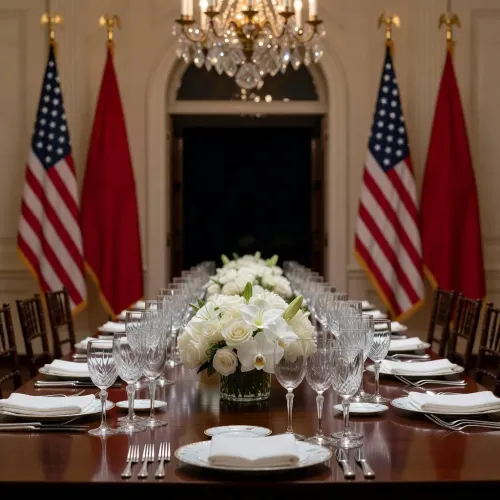
Nvidia CEO Jensen Huang , AMD CEO Lisa Su , Apple executive chairman Tim Cook , and Tesla CEO Elon Musk sat at the head table with President Xi Jinping and US President Donald Trump at a White House state dinner on 25 September 2026 .
The four executives hold a combined personal net worth of over US$1 trillion .
Their four companies carried a combined market capitalisation of more than US$12 trillion at market close on Thursday .
Analysts said the seating arrangement reflected Washington's view that the US-China relationship is now primarily framed through the lens of technology and AI infrastructure.
Both Nvidia and AMD have faced US government restrictions on advanced chip exports to China , making their executives' presence at a formal state dinner diplomatically significant.
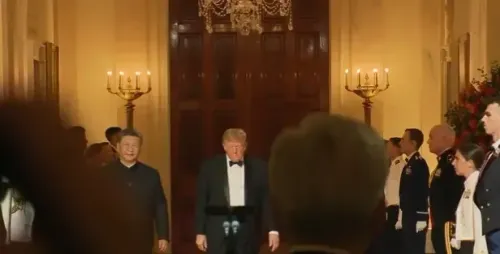
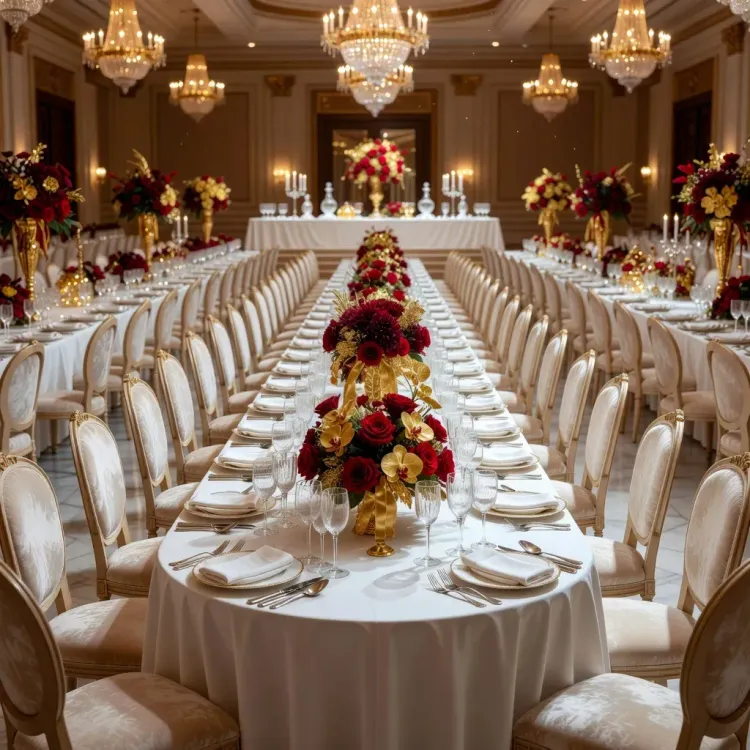
Washington has placed its relationship with Beijing squarely in the hands of the technology industry, as four of America's most powerful tech executives sat at the head table alongside President Xi Jinping and US President Donald Trump at a White House state dinner on Thursday, 25 September 2026. The seating arrangement — deliberate in the choreography of state diplomacy — sent an unmistakable signal about which sector now dominates the US-China strategic conversation.
Who sat at the table
Joining Xi, Chinese first lady Peng Liyuan, Trump, and Melania Trump were Nvidia CEO Jensen Huang, Advanced Micro Devices (AMD) CEO Lisa Su, Apple executive chairman Tim Cook, and Tesla CEO Elon Musk. The four executives command a combined personal net worth of over US$1 trillion, according to reports, while their respective companies held a combined market capitalisation of more than US$12 trillion at market close on Thursday.
Why it matters
Analysts said the seating arrangement underscored how tech industry titans driving the global AI infrastructure boom are actively working to pull the two economic superpowers closer together, even as trade and chip-export tensions remain unresolved. The presence of Huang and Su — whose companies are at the centre of US semiconductor export restrictions on China — is particularly striking. It suggests that industry leaders, not just diplomats, are now primary interlocutors in US-China negotiations.
The competitive backdrop
The dinner arrives at a pivotal moment for the global semiconductor and AI industry. Nvidia and AMD have both faced restrictions on exporting advanced chips to China, a market that historically accounted for a significant share of their revenue. Apple maintains one of the deepest supply-chain dependencies on China among major US tech firms, while Tesla operates a flagship gigafactory in Shanghai that is central to its global production strategy. Each executive carries enormous commercial stakes in the bilateral relationship.
What's next
Industry observers will closely watch whether the symbolic alignment on display at the dinner translates into concrete policy shifts — particularly on chip-export licensing, tariff structures, and technology-transfer rules. The participation of Huang and Su at a formal state event alongside Xi may signal quiet behind-the-scenes lobbying for a recalibration of semiconductor restrictions. Whether Washington follows through with tangible regulatory relief, or whether the dinner remains a soft-power gesture, will define its legacy for the AI and semiconductor sectors in the months ahead.
Point of View
Huang and Su, lead companies whose flagship products are actively restricted from sale in China, yet they are being deployed as goodwill emissaries. This duality reflects the broader paradox of the chip war — Washington weaponises semiconductor access while simultaneously relying on the same companies to stabilise bilateral relations. The dinner could presage a softening of export controls, or it could simply be optics ahead of a harder decoupling; the outcome will depend on whether commercial lobbying translates into regulatory change.
NationPress
25 Sept 2026
Frequently Asked Questions
Which tech executives attended the Xi-Trump White House dinner?
Nvidia CEO Jensen Huang , AMD CEO Lisa Su , Apple executive chairman Tim Cook , and Tesla CEO Elon Musk all attended the White House state dinner on 25 September 2026 and were seated at the head table alongside President Xi Jinping and US President Donald Trump .
What is the combined market cap of the companies represented at the dinner?
The four companies — Nvidia , AMD , Apple , and Tesla — held a combined market capitalisation of more than US$12 trillion at market close on Thursday, 25 September 2026 . Their executives also collectively hold a personal net worth exceeding US$1 trillion .
Why does the seating arrangement at the state dinner matter?
In state diplomacy, head-table placement is a deliberate signal of priority and alliance. Analysts noted it reflects Washington 's view that the US-China relationship is now primarily framed through the prism of technology and AI infrastructure, with private-sector leaders serving as key interlocutors.
What does this mean for US chip export restrictions on China?
The presence of Jensen Huang and Lisa Su — whose companies face US export restrictions on advanced semiconductors to China — at a formal state event alongside Xi Jinping may indicate behind-the-scenes lobbying for a recalibration of those controls. No regulatory changes have been announced.
What commercial stakes do these executives have in US-China relations?
Nvidia and AMD have historically derived significant revenue from China 's data-centre and AI market; export restrictions have curtailed those sales. Apple depends heavily on its China supply chain and consumer market, while Tesla operates a major gigafactory in Shanghai central to its global output.