MP CM touts PM MITRA Park, Dhar as jobs and farm hub
Synopsis
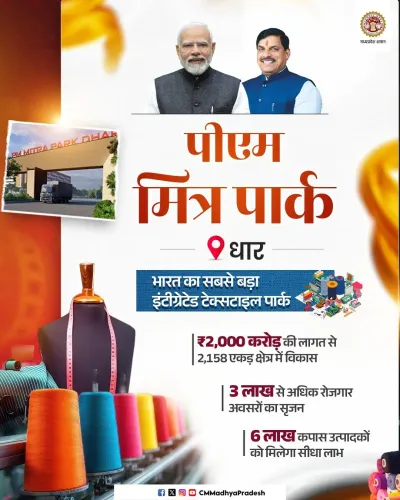
The Chief Minister's Office of Madhya Pradesh has highlighted PM MITRA Park in Dhar as a major jobs and farmer-welfare hub, projecting employment for 3 lakh people and benefits for 6 lakh cotton growers under the Centre's flagship integrated textile park scheme.
Key Takeaways
PM MITRA Park, Dhar has been declared a 'new centre of employment and prosperity' by the Chief Minister's Office of Madhya Pradesh on 21 November 2026 .
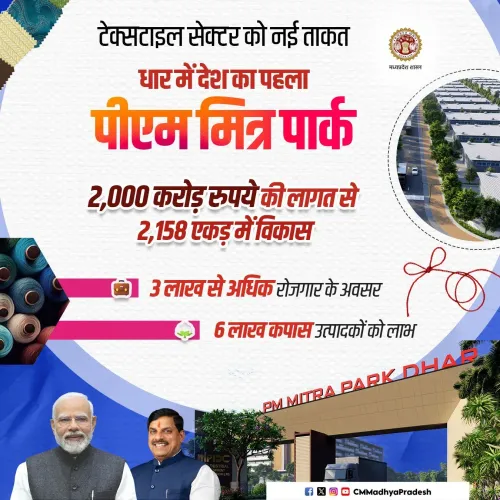
The park is projected to generate employment for approximately 3 lakh people at full capacity.
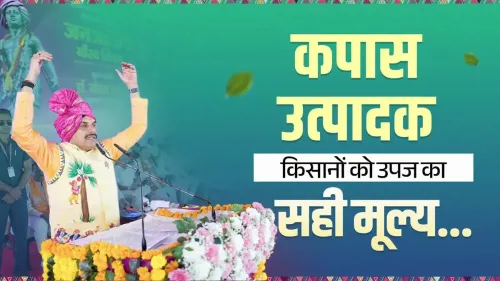
Around 6 lakh cotton-growing farmers in the Dhar region are expected to benefit through strengthened supply-chain linkages.
PM MITRA — Mega Integrated Textile Region and Apparel — was launched under the Union Budget 2021-22 to develop seven integrated textile parks across India.
Dhar district in western Madhya Pradesh was chosen for its proximity to cotton cultivation zones, enabling a fibre-to-garment value chain in one location.
Key milestones to watch include land finalisation, infrastructure phases, and the first unit operationalisation at the site.
A sprawling textile park on the outskirts of Dhar district in western Madhya Pradesh is being positioned as one of the state's most consequential industrial bets — a site where cotton grown in the fields is meant to travel all the way to finished garments without leaving the region. On Saturday, 21 November 2026, the Chief Minister's Office of Madhya Pradesh declared PM MITRA Park, Dhar a 'new centre of employment and prosperity,' claiming it will generate jobs for approximately 3 lakh people and directly benefit 6 lakh cotton-growing farmers in the surrounding region.
What PM MITRA Dhar promises — and why Dhar?
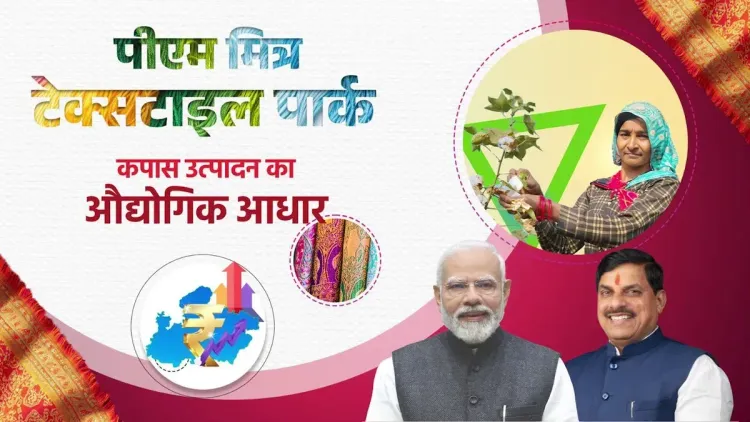
The post, shared from the official handle of the Chief Minister's Office and tagging Chief Minister Dr. Mohan Yadav and the Ministry of Textiles, framed the park as a transformational anchor for the district. The original text reads: 'पीएम मित्र पार्क, धार — रोजगार और समृद्धि का नया केंद्र' ('PM MITRA Park, Dhar — a new centre of employment and prosperity').
Dhar sits in the cotton belt of western Madhya Pradesh, making it a natural fit for a facility designed to convert raw fibre into value-added textiles and apparel. The district's agricultural economy has historically delivered cotton to distant mills; the park's logic is to collapse that supply chain inward and capture the manufacturing margin locally.
The PM MITRA scheme: fibre-to-fashion in one campus
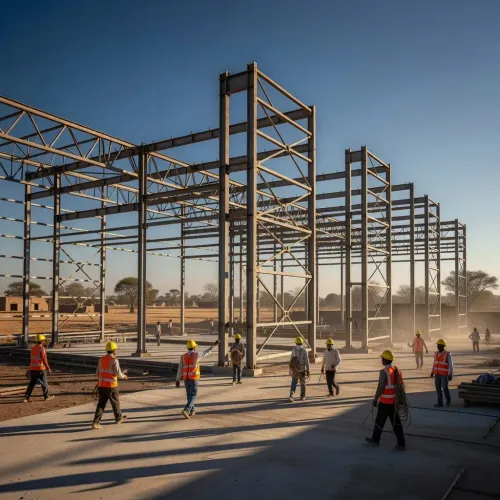
The PM MITRA (Mega Integrated Textile Region and Apparel) scheme was unveiled in the Union Budget 2021-22 with an ambition to build seven integrated textile parks across India, each offering plug-and-play infrastructure — from spinning and weaving to dyeing, finishing, and garmenting — under a single roof. The idea is not new: India has chased integrated textile clusters since the 2005 Scheme for Integrated Textile Parks. What PM MITRA adds is scale, central funding, and an explicit mandate to stitch together the full value chain from fibre to export-ready garment.
Madhya Pradesh, as one of India's significant cotton-producing states, was brought into the PM MITRA fold to leverage its agricultural base for a manufacturing cluster. The Dhar location puts the park within reach of the cotton fields that feed it — a geography-first logic that planners argue cuts raw-material logistics costs and strengthens farmer income linkages.
3 lakh jobs, 6 lakh farmers — the numbers behind the claim
The two headline figures — 3 lakh direct and indirect jobs and 6 lakh cotton farmers set to benefit — are the government's own projections for the park at full build-out. Textile parks of this scale typically generate employment across spinning, weaving, processing, packaging, and ancillary services, though actual realisation depends on how quickly units are commissioned and investment MoUs are translated into operational factories.
What is not yet publicly confirmed: exact timelines for land finalisation, infrastructure completion phases, and the first operational unit at the Dhar site. Those milestones will be the real test of whether the numbers become ground reality.
CM Mohan Yadav's industrial push meets the textile moment
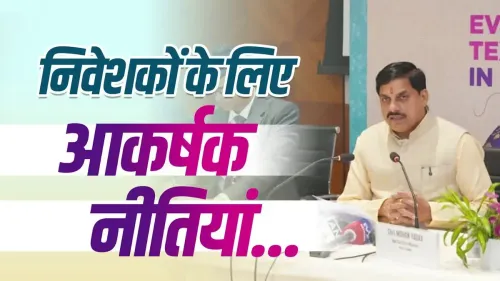
Dr. Mohan Yadav, who became Chief Minister of Madhya Pradesh in December 2023, has consistently framed large-scale industrial investment as a pillar of his administration's economic agenda. PM MITRA Dhar fits that template — a central scheme amplified by state-level visibility, with the farmer-to-factory narrative bridging rural and urban constituencies simultaneously.
India's broader textile export ambitions — particularly as global buyers diversify away from Chinese supply chains — give parks like Dhar a window that may not stay open indefinitely. Whether the Dhar park can operationalise fast enough to capitalise on that moment is the question the next set of investment announcements will begin to answer.
Point of View
Dhar, is a calculated alignment of a central scheme with state-level political capital — CM Mohan Yadav gets a headline employment number while the Centre's textile ambitions gain a regional champion. The farmer-to-factory framing is deliberate: textile parks that can credibly promise upstream benefits to cotton growers carry far more political durability than pure urban industrial announcements. India's window to capture textile export share is real, but the history of integrated textile schemes — going back to 2005 — is littered with parks that announced large employment figures and took years to operationalise even a fraction of them. The Dhar park's credibility will ultimately rest on how fast investment MoUs convert into running machines.
NationPress
21 Nov 2026
Frequently Asked Questions
What is PM MITRA Park in Dhar, Madhya Pradesh?
PM MITRA Park, Dhar is one of seven integrated textile parks being developed across India under the central PM MITRA (Mega Integrated Textile Region and Apparel) scheme, announced in the Union Budget 2021-22. It is designed to host the full textile value chain — from spinning and weaving to finished garments — in a single location in Dhar district of western Madhya Pradesh.
How many jobs will PM MITRA Park Dhar create?
The Chief Minister's Office of Madhya Pradesh has projected that PM MITRA Park, Dhar will generate employment for approximately 3 lakh (300,000) people. This is a government projection for full build-out and has not been independently verified.
How will PM MITRA Park Dhar benefit cotton farmers?
The park is projected to benefit around 6 lakh cotton-growing farmers in the Dhar region by creating a local industrial demand for their produce, reducing dependence on distant mills and potentially improving price realisation through a shorter, more integrated supply chain.
What is the PM MITRA scheme and who launched it?
The PM MITRA scheme was announced by the central government in the Union Budget 2021-22 to develop seven Mega Integrated Textile Region and Apparel parks across India with plug-and-play infrastructure covering the entire fibre-to-fashion value chain. The Ministry of Textiles oversees the scheme.
Why was Dhar district chosen for a PM MITRA Park?
Dhar district in western Madhya Pradesh is located within a major cotton-growing belt, making it geographically suited for an integrated textile park that can source raw cotton locally and process it into finished garments, reducing logistics costs and linking farmers directly to manufacturing value addition.